

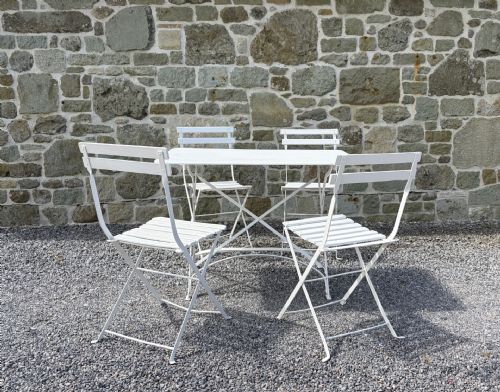


Patio Dining Chairs
These patio dining chairs bring enduring garden utility and outdoor seating character to terraces and lawns, built to withstand the elements.
Patio Dining Chairs
When you search for patio dining chairs, you are looking at robust outdoor seating designed for exterior entertaining and garden dining across various historical periods.
The versions you are most likely to meet on this page span from Victorian and 19th century examples to 1920s, 1930s, and 1950s designs, encompassing garden chairs, bistro sets, and full dining sets.
Origins represented include French country, French chateau, and Gothic revival styles, alongside wirework and art deco pieces.
How they were made
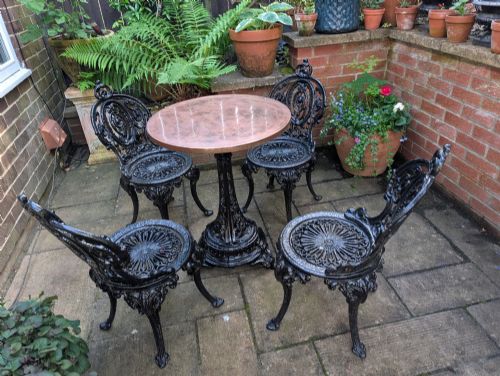
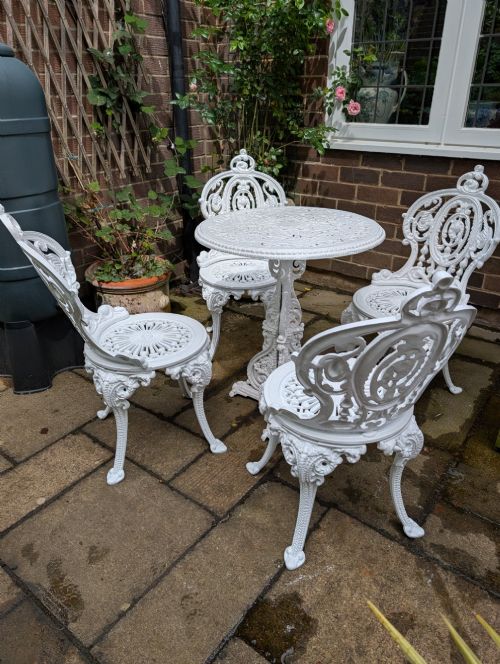
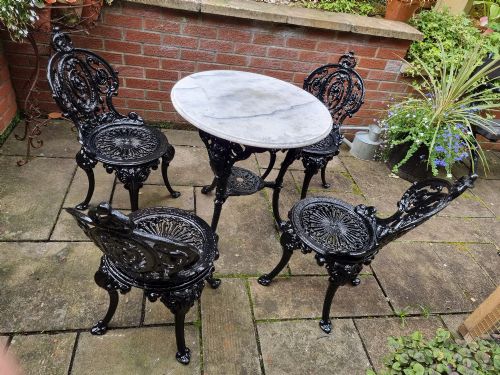
Construction relies heavily on cast iron and wrought iron, frequently shaped into intricate patterns, heavy frames, and supportive garden dining chair structures.
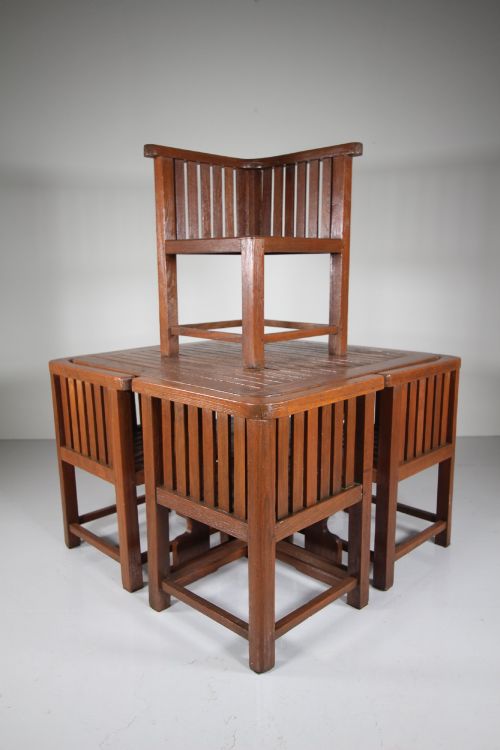
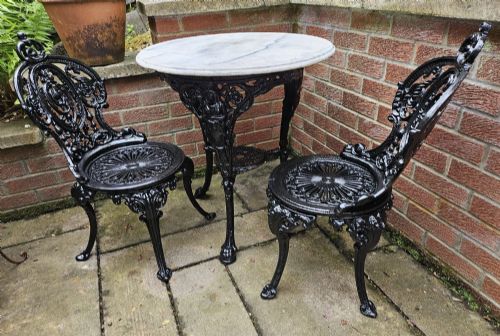
Materials are often combined with wood, marble, zinc, and copper for tabletops, whilst paint provides surface protection and fabric adds seating comfort.
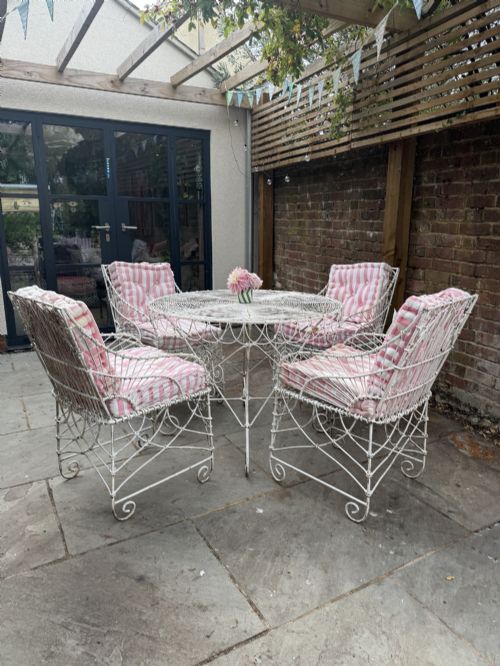
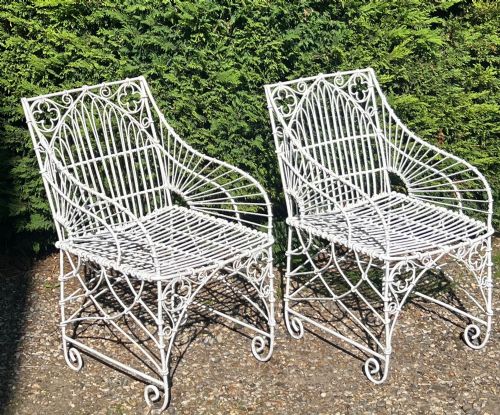
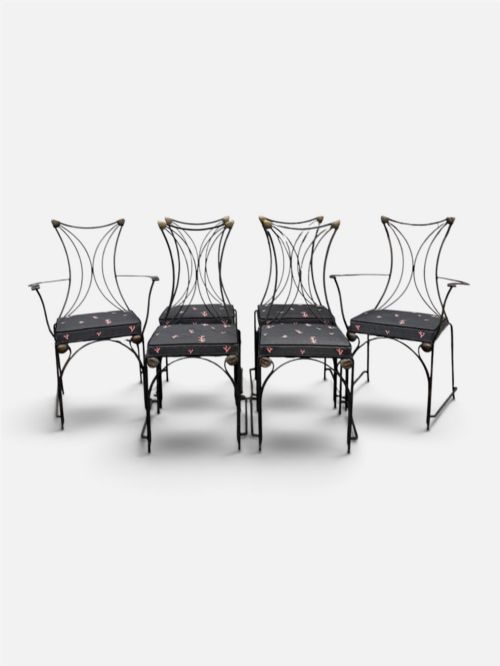
Specialised techniques include wirework bending and brass shell detailing, visible in mid-century French sets and Victorian pieces.
Patio Dining Chairs Retail Price Guide 2026
Typical asking prices for patio dining chairs among the pieces listed under this phrase on Sellingantiques today, from the lower quarter to the upper quarter. They describe what is for sale here now, not the wider market.
Materials utilised across the available inventory include wrought iron, cast iron, paint, fabric, marble, wood, wirework, and copper.
What varies in quality
Quality separates through the intricacy of the metalwork, distinguishing simple utilitarian iron frames from detailed Gothic revival or shell-patterned castings.
The integrity of combined materials, such as marble or zinc tabletops paired with iron bases, dictates the refinement of the piece.
Subtleties in French provincial shaping and art deco geometric execution demonstrate the artisan's hand.
Christopher Dresser
The Patio Dining Chairs Glossary
- Cast iron
- Iron poured into a mould to create rigid, highly decorative garden furniture frames. It provides the heavy structure seen in Victorian and 1930s sets.
- Wrought iron
- Iron heated and hammered into shape by hand, resulting in strong yet flexible patio dining chairs. This material often appears in French country designs.
- Wirework
- Metal strands intertwined to form lightweight, lattice-patterned garden seats. Victorian wirework is particularly noted for its intricate open structures.
- Bistro set
- A small outdoor table accompanied by matching chairs, designed for compact garden spaces. These sets frequently feature marble or iron tops.
- Gothic Revival
- An architectural and decorative style drawing on medieval forms, featuring pointed arches and ornate tracery. This style appears on early twentieth-century iron garden chairs.
Patio Dining Chairs: Frequently Asked Questions
How do I care for iron patio dining chairs?
Keep the metal protected with suitable exterior paint treatments to prevent rust accumulation during wetter winter months.
Store fabric elements indoors when not in use to preserve the materials against prolonged moisture exposure.
Were these chairs originally meant for outdoor use?
Most of these pieces were engineered specifically for exterior garden and terrace dining using durable metals.
Some lighter folding variants and zinc-topped tables served dual purposes in both interior and garden settings.
How do I identify a Victorian garden chair?
Victorian pieces typically display heavy cast iron construction with distinct period ornamentation, such as fern or scroll motifs.
Compare the casting weight and stylistic rigidity against later 1920s and art deco interpretations.
Can these dining sets remain outside all year?
Cast and wrought iron furniture withstands natural weathering well, developing an authentic patinated surface over time.
Protect items with vulnerable wooden components or marble tops by moving them under shelter during harsh weather.