

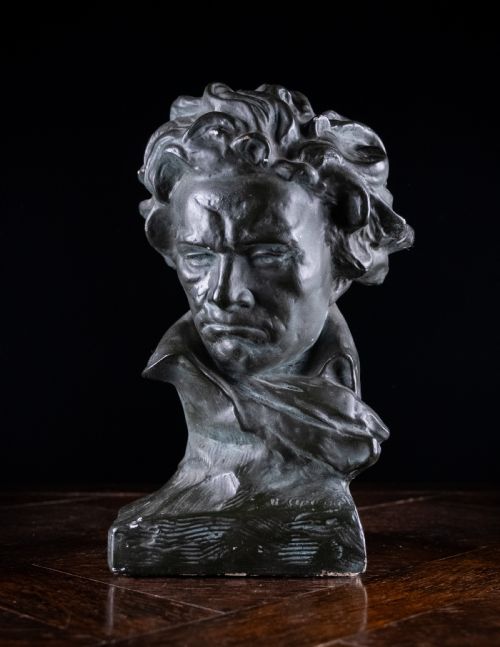
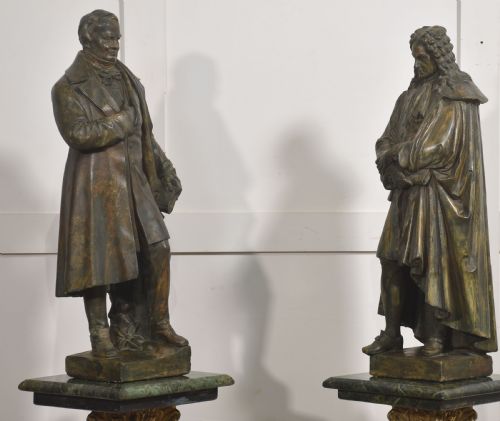


Patinated Plaster Sculpture
Patinated plaster sculpture offers the rich gravity of metal or stone through modelled chalk and pigment, bringing classical presence and character studies into the room.
Patinated Plaster Sculpture
Patinated plaster sculpture encompasses portrait busts, classical figures, wall plaques and statuettes shaped from gypsum plaster and finished to resemble bronze, terracotta or aged stone. When you search for patinated plaster sculpture, you enter a field populated largely by nineteenth-century studies, Grand Tour souvenirs and early twentieth-century portraits.
The objects span neoclassical revivals, Victorian academic realism, Edwardian works and Art Deco pieces. You encounter subjects ranging from Beethoven and cellists to David, dancing fauns and mothers with children.
The forms vary from intimate wall reliefs to substantial freestanding busts and figures. These pieces capture the texture of historical subjects through modelled surfaces and applied pigment or bronze patina.
How they were made
Makers shaped these pieces using gypsum plaster, sometimes supported by interior metal wire for stability. The wet material was cast in moulds or modelled directly by hand.
Surfaces received specialised finishes including paint, dark pigment and bronze patina to simulate heavier metals or aged stone. Some examples combine chalkware with applied colour to achieve distinct tonal depth.
Patinated Plaster Sculpture Retail Price Guide 2026
Typical asking prices for patinated plaster sculpture among the pieces listed under this phrase on Sellingantiques today, from the lower quarter to the upper quarter. They describe what is for sale here now, not the wider market.
The listings on this site span the nineteenth century, the Edwardian era, and the 1920s and 1930s.
What varies in quality
Quality rests in the fidelity of the modelling and the sensitivity of the surface finish. A sharp, well-defined casting preserves the crisp details of the original face or drapery without losing definition in the edges.
The subtlety of the patination dictates visual success. Layered pigments and thoughtful application of bronze paint create depth and shadow that elevate a simple plaster cast into a compelling portrait.
Dopmeier·B. Rezl
The Patinated Plaster Sculpture Glossary
- Patinated plaster
- Plaster finished with paint, pigment or metallic coatings to simulate bronze, terracotta or aged stone. This treatment gives the lightweight material the visual weight of metal.
- Chalkware
- A popular nineteenth-century medium made from gypsum plaster that is poured into moulds and painted. It offers a more accessible alternative to solid stone or bronze.
- Grand Tour
- Souvenirs and classical reproductions purchased by travellers exploring European cultural centres during the nineteenth century. These pieces often replicate famous antique sculptures in miniature.
- Portrait relief
- A sculpted portrait projecting from a flat background panel rather than standing in the round. These wall-mounted pieces focus attention entirely on profile and modelling.
Patinated Plaster Sculpture: Frequently Asked Questions
What is patinated plaster sculpture?
These pieces are sculptural works cast or modelled from gypsum plaster and finished with paint, pigment or bronze patination to resemble metal or stone. They include portrait busts, classical figures and wall plaques from the nineteenth and early twentieth centuries.
Buyers choose them to bring classical dignity and detailed character studies into interior spaces without the heavier weight and cost of solid bronze.
How do I care for plaster sculpture?
Plaster is a relatively soft and porous material that requires gentle dusting with a dry, soft brush. Avoid moisture and liquid cleaners, which can dissolve the surface pigment and damage the delicate patination.
Keep pieces out of direct sunlight and high humidity to prevent the paint from fading or the plaster from weakening over time.
How do I date a plaster bust?
Dating relies on stylistic clues, costume details, hair styling and any inscribed dates, foundry marks or artist signatures found on the base or reverse. Nineteenth-century pieces often reflect academic realism or neoclassical revivals, while 1930 examples show early twentieth-century modernism or Art Deco influences.
The materials themselves, such as the specific type of wooden base or underlying metal wire, also offer clues to the period of production.
Where were these sculptures displayed?
Historically, these sculptures served as affordable academic studies, library decorations and souvenirs for collectors travelling through Europe. They filled nineteenth-century drawing rooms and studies to signal cultural learning and an appreciation for classical antiquity.
Today, they work well on bookshelves, mantels and pedestals where their patinated surfaces can catch natural light.