

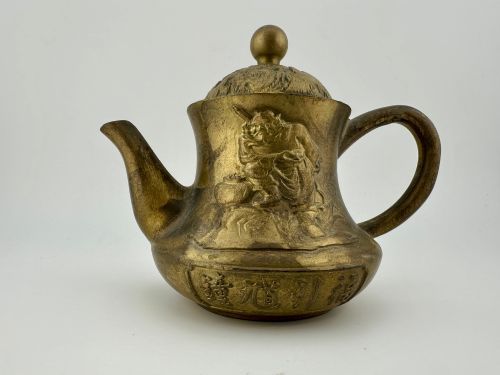
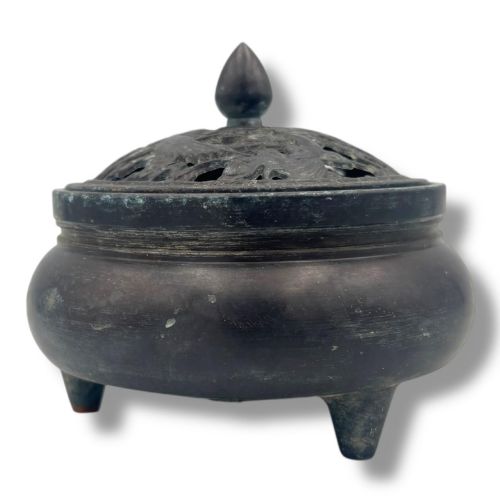
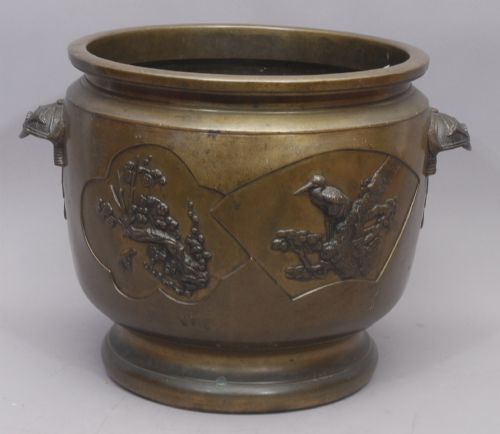
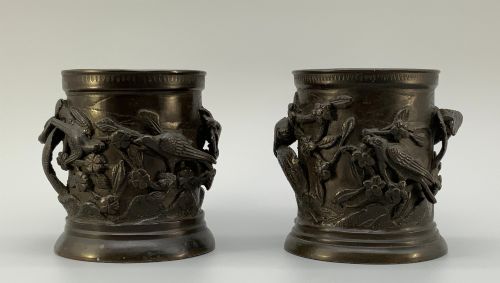


Patinated Bronze Pot
These patinated bronze pots span centuries of ritual and domestic craft, offering tactile surfaces and sculptural weight that anchor a room.
Patinated Bronze Pot
A patinated bronze pot encompasses vessels designed for ritual, display, and utility across Asian, European, and African traditions. When exploring this selection, buyers encounter utilitarian mortars, ritual vessels, and generous jardinieres.
The objects stem from diverse periods, including the sixteenth-century Ming dynasty and nineteenth-century Japanese Meiji production. Chinese censers, Persian ritual vessels, and English apothecary mortars dominate the available forms.
Scholar's objects and tea vessels sit alongside large planters and urns. Each piece reflects the specific domestic or ceremonial practices of its origin, shaped by centuries of metalworking traditions.
Markers of Distinction
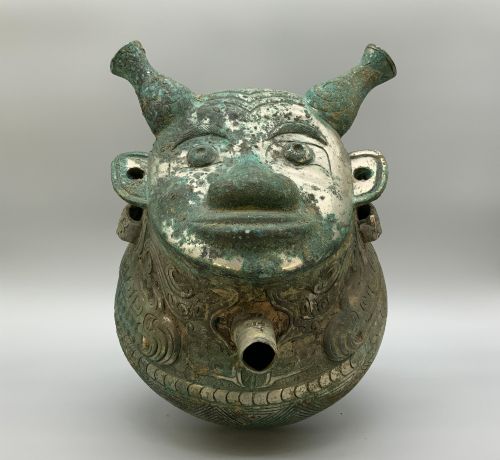
The clarity of cast decoration separates standard containers from exceptional ritual pieces. Sharp relief on dragon finials and human faces indicates skilled mould preparation and careful post-casting chase work.
Surface integrity and depth of patina dictate visual success. Stable verdigris and uniform dark oxidation enhance the sculptural form without obscuring the underlying metalwork.
Patinated Bronze Pot Retail Price Guide 2026
Typical asking prices for patinated bronze pot among the pieces listed under this phrase on Sellingantiques today, from the lower quarter to the upper quarter. They describe what is for sale here now, not the wider market.
Several vessels feature fierce mythical creatures guarding simple household herbs.
The Patinated Bronze Pot Glossary
- Patination
- The chemical or natural process that alters the surface colour of bronze over time. This treatment protects the metal and creates varied brown, green, or black tones.
- Censer
- A vessel specifically constructed for burning incense. These often feature tripod legs, pierced covers, and zoomorphic finials such as fu lions or qilin.
- Champleve
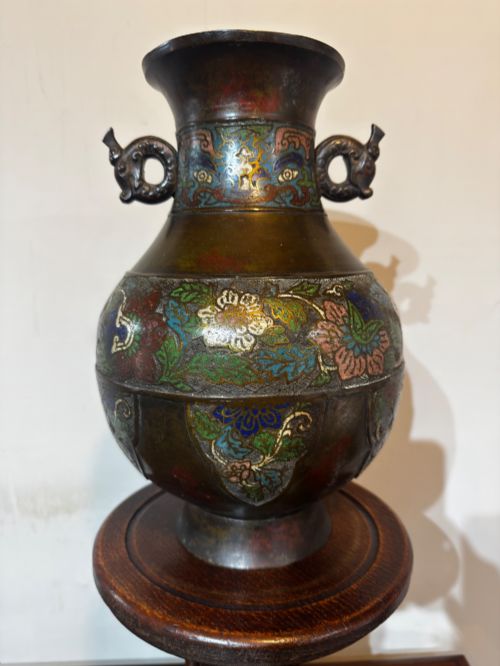
- An enamelling technique where troughs are carved into the bronze surface and filled with vitreous enamel paste before firing. The metal partitions remain visible between the coloured areas.
- Jardiniere
- A large ornamental pot designed to hold live plants or floral arrangements. They appear frequently in nineteenth-century Japanese and European metalwork.
- Tripod
- A vessel configuration supported by three legs. This construction provides stability for ceremonial censers and cauldrons on uneven surfaces.
Patinated Bronze Pot: Frequently Asked Questions
What is a patinated bronze pot?
A patinated bronze pot is a metal vessel finished with a chemical or aged surface treatment. The selection includes items ranging from English apothecary mortars to Chinese ritual censers.
These pieces combine utilitarian function with sculptural ornament. The varied surfaces reflect centuries of global metalworking techniques.
How do I care for bronze?
Bronze requires minimal intervention to maintain its surface character. Dusting with a soft dry cloth prevents particulate accumulation.
Avoid commercial polishes that strip historical patination. Gentle handling preserves the oxidation layer built up over generations.
Where were these pots made?
The pieces originate from diverse workshops across China, Japan, India, Persia, and Europe. Each region developed distinct casting traditions and decorative repertoires.
Sino-Islamic pieces and English domestic mortars demonstrate the global scope of bronze production. Geographic origins dictate the specific form and surface ornamentation.