




Patinated Bronze Pitchers
Patinated bronze pitchers bring historic weight and sculptural presence to an interior, shaped by centuries of stylistic revival and metalwork skill.
Patinated Bronze Pitchers
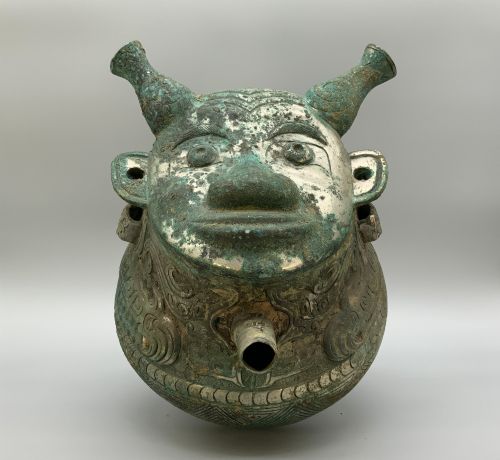
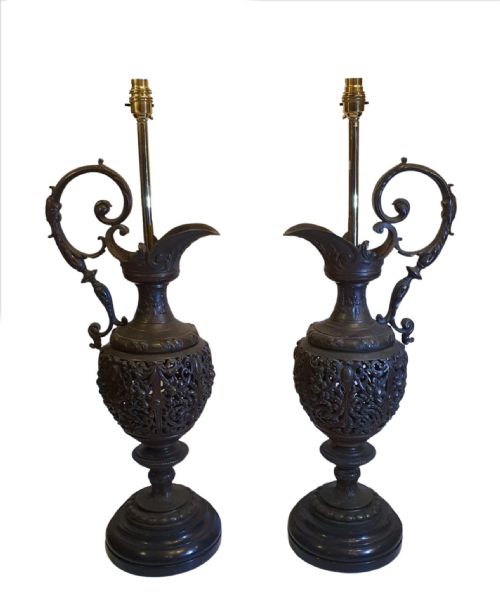
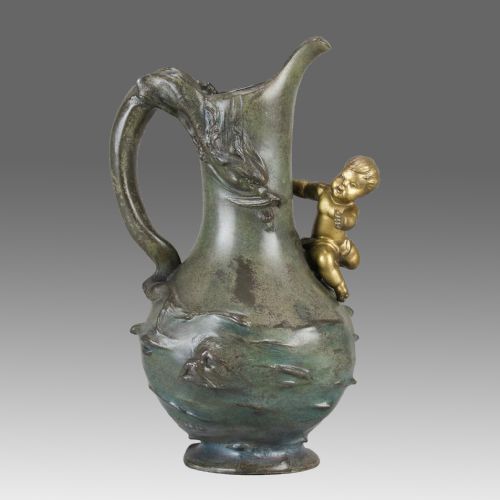
When you search for patinated bronze pitchers, you encounter vessel forms that span decorative ewers, ritual wine vessels, and table lamps cast in bronze and gilt bronze. These pieces draw on historical vocabularies ranging from Renaissance Revival and Victorian Rococo to Art Nouveau and Shang Dynasty styles.
The examples most commonly met on this page include French decorative pieces from the late nineteenth century alongside Indian aftabas and early twentieth-century jugs. Makers and founders utilised classical mythologies, human faces, and zoomorphic handles like the makara to enrich the functional jug form into a sculptural object.
Moulded through traditional casting techniques, these vessels often incorporate deliberate surface treatments such as verdigris patina and ormolu highlights. Their origins stretch from nineteenth-century France to India, reflecting diverse decorative traditions applied to metal pouring vessels.
How they were made
Makers formed these pitchers primarily through metal casting, utilising bronze, gilt bronze, and cast brass to achieve solid structural bodies. Artisans applied chemical patination and verdigris treatments to the surface, creating aged dark tones and green oxidation effects that accentuate the cast details.
Surface ornamentation involved chasing, ormolu highlights, and intricate figural modelling, seen in handles depicting Dionysus or mythical creatures. Some vessels combine metal bodies with porcelain elements or terracotta, reflecting diverse material pairings within nineteenth-century workshops.
Listings feature bronze, gilt bronze, and cast metal pieces spanning the nineteenth century alongside early twentieth-century Art Nouveau examples.
What varies in quality
The sophistication of the patination itself dictates much of the visual success, with master metalworkers achieving nuanced tonal transitions rather than flat, uniform colour. Furthermore, the structural integration of applied handles and bases indicates the maker's technical capability.
Georges Van De Voorde·Jules Dalou·Susse Freres·Frederic Goldscheider
The Patinated Bronze Pitchers Glossary
- Patinated bronze
- Bronze that has been treated chemically or environmentally to produce a coloured surface layer. This process enhances the visual depth and conceals raw metal shine.
- Ewer
- A large jug with a wide spout and curved handle, traditionally used for holding water or wine. In decorative arts, it serves primarily as an ornamental sculptural form.
- Ormolu
- Finely ground high-carat gold applied to a bronze object using a mercury amalgamation technique. It provides a bright, durable golden finish on nineteenth-century decorative metalwork.
- Verdigris patina
- A green crust or patina formed on copper, brass, or bronze through atmospheric oxidation or chemical agents. It mimics ancient weathering on revival pieces.
- Aftaba
- A traditional Indian long-spouted metal ewer used for ritual washing or pouring liquids. They frequently feature elaborate handles shaped like mythical beasts such as the makara.
Patinated Bronze Pitchers: Frequently Asked Questions
How should I clean a patinated bronze pitcher?
Dusting gently with a dry, soft cloth is sufficient for maintaining the surface stability of patinated bronze. Avoid commercial metal polishes, as abrasive compounds strip away the aged chemical finish and destroy the valuable surface character.
Moisture and harsh cleaning agents damage verdigris and gilt highlights, so keeping them in stable indoor environments preserves the metalwork safely.
Were these pitchers originally used for serving wine?
While forms like the ritual bronze 'HE' vessel or classical ewers derive from ancient wine-serving containers, many nineteenth-century pieces were created strictly as decorative ornaments. Some later examples were adapted into table lamps as domestic lighting technologies evolved.
Examining the interior of the vessel often reveals whether it held liquids or served purely as a display object in a Victorian interior.
How can I tell a nineteenth-century revival piece from an older original?
Nineteenth-century revival pieces display specific casting technology and stylistic traits characteristic of periods like the Renaissance Revival or Victorian Rococo. Artisans of this era reinterpreted historical forms using contemporary foundry methods and chemical patination techniques.
Maker marks, foundry stamps, and specific casting seams help date these decorative vessels accurately within the 1800s and early 1900s.