



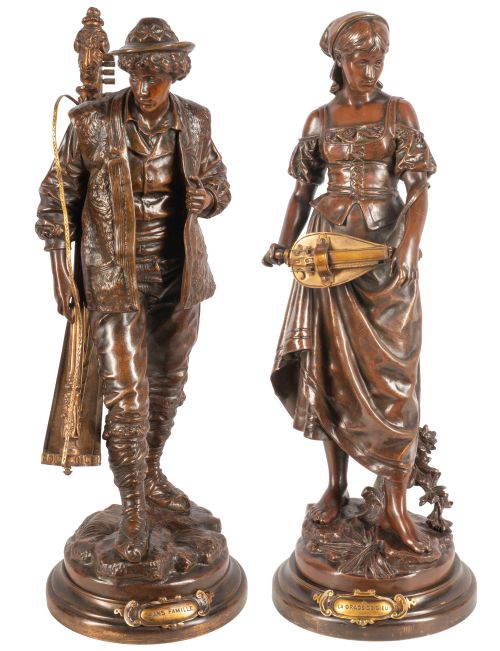

Patinated Bronze Figurine Pair
A patinated bronze figurine pair brings classical presence and matched balance to a room, offering sculptural depth cast in metal.
Patinated Bronze Figurine Pair
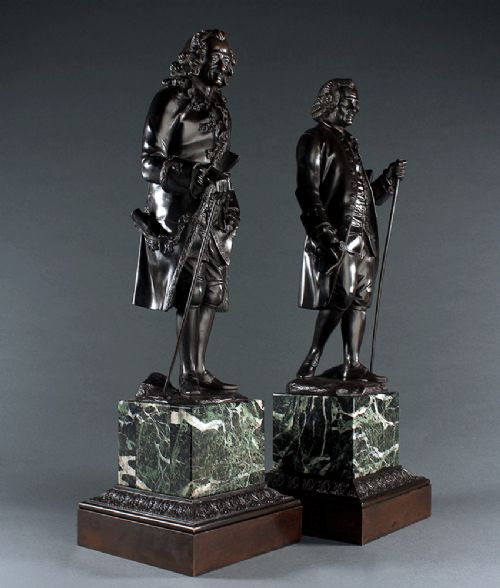
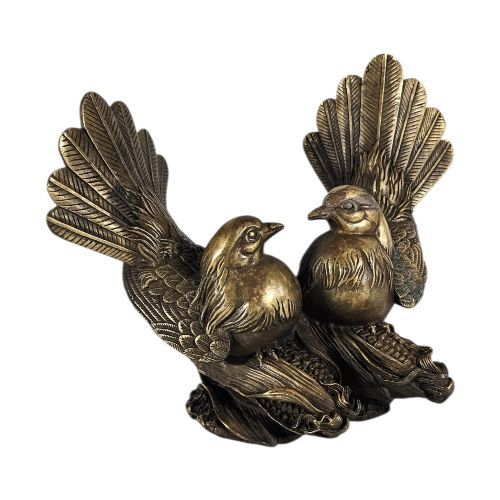
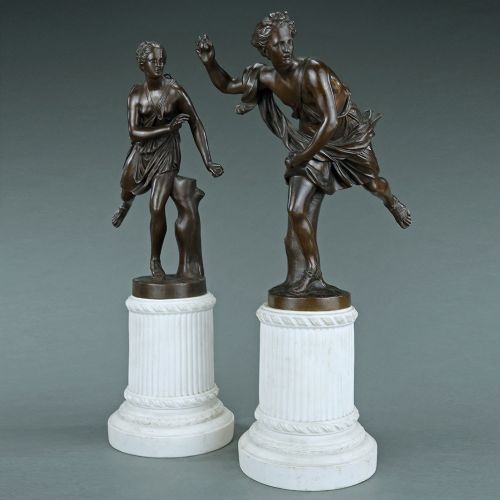
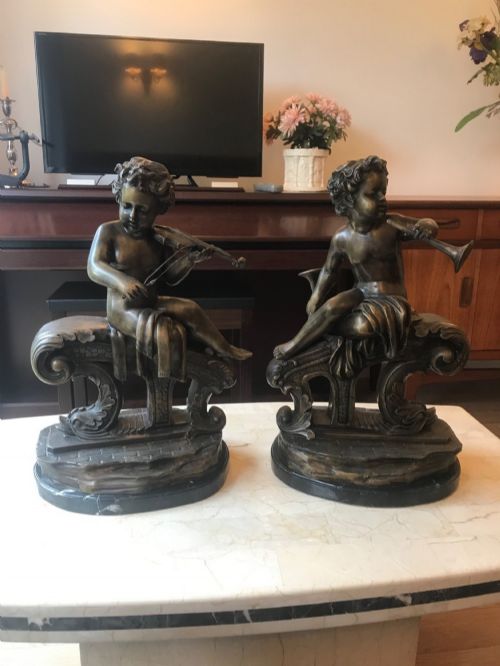
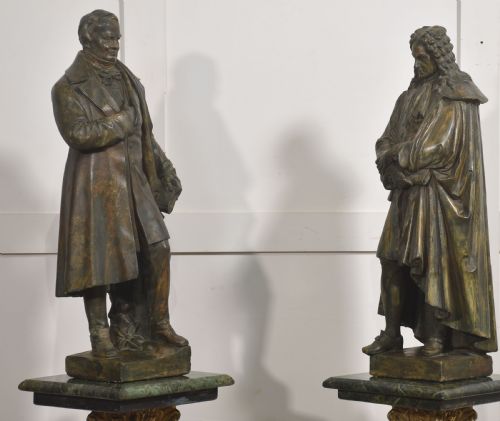
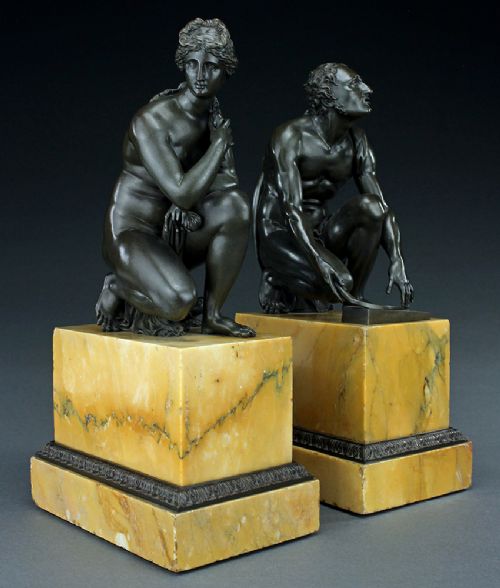
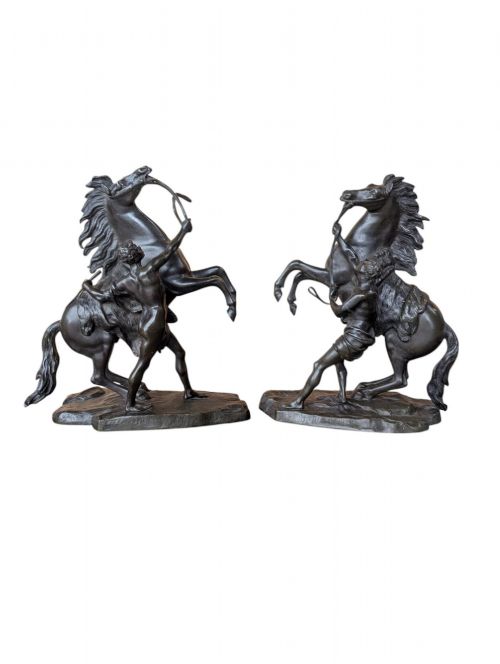
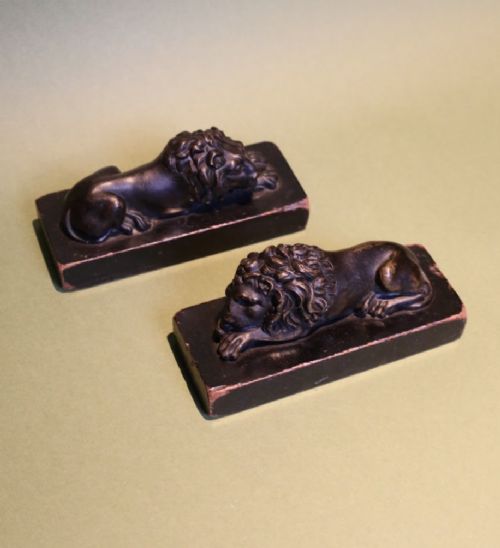
A patinated bronze figurine pair consists of matching sculptural figures cast in metal, frequently depicting mythological subjects, literary figures, animals, or human forms. When you search for a patinated bronze figurine pair, you encounter matched groupings that date predominantly from the nineteenth century, including Victorian and French Neoclassical examples.
The objects take various forms, functioning as standalone mantel decorations, grand tour souvenirs, candelabras, or companion bookends. Many pieces emerge from French foundries, capturing classical deities, historical authors, or allegorical dancers in mirrored left-and-right configurations.
Beyond standard bronze, selections incorporate related mediums such as spelter or chalkware finished with surface patination to emulate heavier metalwork. These matched pairs provide symmetrical decoration, designed originally for formal display on pedestals, sideboards, or fireplace mantels.
Evaluating sculptural distinction
Quality in these matched pairs rests heavily on the crispness of the chase work and the subtlety of the surface patina. Superior examples retain fine facial expressions, legible drapery folds, and sharp details in hair or musculature that lesser castings lose during reproduction.
The integrity of the foundry mark or artist signature adds authority, alongside the quality of the supporting base, such as polished Siena marble rather than simpler plaster or chalk. Balance between the two individual figures in the pair determines overall visual harmony when displayed together.
Patinated Bronze Figurine Pair Retail Price Guide 2026
Typical asking prices for patinated bronze figurine pair among the pieces listed under this phrase on Sellingantiques today, from the lower quarter to the upper quarter. They describe what is for sale here now, not the wider market.
Listings feature 19th-century periods including 1860, 1870, 1880, 1890, and 1900 alongside Victorian and French Restauration styles.
Barbedienne·Alfred Grevin·C Dopmeyer·Louis Riche·Francisque Joseph Duret
The Patinated Bronze Figurine Pair Glossary
- Patination
- The chemical or natural surface treatment applied to bronze to produce specific colours ranging from deep brown to verdigris green. This finish protects the underlying metal while defining highlights and shadows.
- Spelter
- A zinc-based alloy commonly used as a cost-effective substitute for bronze in nineteenth-century figures. It is lighter in weight and often finished with a dark bronze-look coating.
- Grand Tour
- A cultural journey undertaken by wealthy Europeans in the nineteenth century, acquiring small classical bronzes and architectural models as souvenirs. These pieces often replicated famous museum sculptures.
- Electrotype
- A manufacturing process using electrical deposition to create metal shells or figures. It allowed nineteenth-century makers to produce detailed hollow sculptures efficiently.
- Restauration
- A French stylistic period spanning the early nineteenth century between the fall of the Empire and the July Monarchy. Pieces from this era often feature restrained classical motifs.
Patinated Bronze Figurine Pair: Frequently Asked Questions
How were these pairs displayed?
Nineteenth-century interiors typically featured these matched figures on fireplace mantels, flanking a central clock, or placed symmetrically on pedestals and sideboards.
Their balanced left-and-right compositions were intentionally designed to anchor either end of a formal surface.
What is the difference between bronze and spelter?
Bronze is a heavy, durable copper alloy that accepts chemical patination well and holds fine sculptural detail across centuries.
Spelter is a softer zinc alloy that feels lighter and requires careful handling to avoid surface wear or bending.
How do I care for a patinated bronze?
Dust the figures gently with a soft, dry brush and avoid applying commercial metal polishes, which can strip away the historic patina.
Keep the pieces away from direct moisture and extreme temperature fluctuations to protect the metal and any marble bases.
Why are some figures mounted on marble?
Foundries frequently mounted bronze figures onto heavy stone plinths like Siena marble to provide physical stability and a formal visual boundary.
This mounting style was standard practice for nineteenth-century mantel ornaments and grand tour souvenirs.