
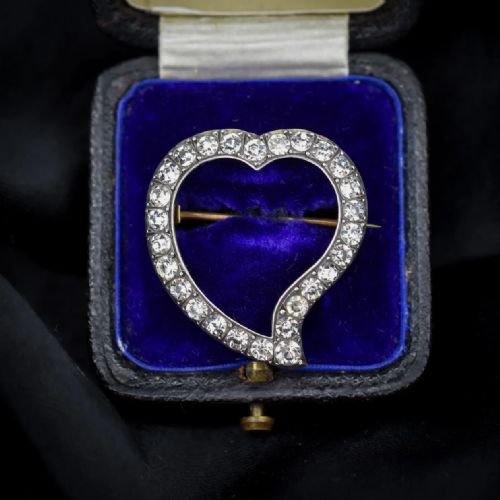


Paste Stone Brooch
These paste stone brooch designs catch the eye with their brilliance, offering the elegance of fine gemstones through skilled glasswork.
Paste Stone Brooch
A paste stone brooch relies on high-lead glass to mimic precious gemstones, bringing together sparkle and colour in wearable forms. Buyers searching for a paste stone brooch encounter pieces shaped into lizards, flower baskets, crescents, and hearts.
Makers set these glass stones into silver, sterling silver, gold, and gilt metals to create durable jewellery. Some configurations even form part of matching jewellery sets alongside earrings.
How they were made
Artisans cut and polished heavy lead glass by hand to imitate diamonds, garnets, chalcedony, and emeralds. These vibrant stones were then secured into metal settings using traditional collet or prong techniques.
Metalsmiths shaped sterling silver, fine silver, 9ct gold, and silver gilt into intricate forms like witches hearts, lizards, and floral baskets. The backings and mounts often reflect the prevailing metalworking standards of their specific century.
Detailed soldering and metal manipulation allowed makers to produce dimensional jewellery, from Etruscan Revival motifs to sleek Art Deco geometries.
The listings show pieces spanning the 18th, 19th, and 20th centuries, utilising paste, silver, gold, and glass.
What varies in quality
The precision of the stone cutting determines how well the glass captures and reflects light. Superior examples feature individually faceted stones that display crisp edges and deep brilliance.
Metalwork complexity also sets pieces apart, as seen in the distinction between simple pins and elaborate silver gilt or multi-stone arrangements. The integration of precious metals like gold and fine silver elevates the overall construction.
The integrity of the original setting and the condition of the glass stones influence the character of each piece. Superior craftsmanship ensures that every individual stone remains secure and aligned within its mount.
John Barry
The Paste Stone Brooch Glossary
- Paste
- High-refractive-index lead glass cut and polished to imitate gemstones. This material allows for brilliant sparkle and rich colours.
- Giardinetti
- A jewellery design depicting a small garden or flower basket filled with various stones. These pieces often feature colourful floral arrangements.
- Silver Gilt
- Silver covered with a thin layer of gold. This technique provides the warm appearance of gold while utilising a silver base.
- Collet
- A flat-backed metal collar that holds a stone in place. This secure setting style is common in older jewellery manufacturing.
- Etruscan Revival
- A 19th-century design style inspired by ancient archaeological discoveries. It typically incorporates granulation and intricate wirework.
Paste Stone Brooch: Frequently Asked Questions
What is a paste stone brooch?
A paste stone brooch is a piece of jewellery featuring hand-cut lead glass stones mounted in metals such as silver or gold. These items were created to provide the look of fine gemstone jewellery.
Craftsmen shaped the glass into various forms, including floral baskets, animals, and geometric patterns, depending on the stylistic period.
How do I date a paste brooch?
Dating relies on observing the mounting style, metal types, and overall design motifs. Victorian examples often feature intricate silverwork or naturalistic themes.
Art Deco pieces display clean geometric lines typical of the 1920s, while Georgian styles utilise closed-back settings and specific gemstone arrangements.
How should I care for my brooch?
Store your jewellery safely away from moisture and harsh chemicals to protect both the metal settings and the glass stones. Gentle cleaning with a soft cloth maintains the surface.
Avoid submerging older paste jewellery in liquid cleaners, as moisture can seep behind the stones and discolour the foil backs.
What metals were used for settings?
Makers utilised silver, sterling silver, fine silver, 9ct gold, and silver gilt for these mountings. The choice of metal often reflects the era of production.
Victorian and Edwardian pieces frequently feature silver or gold, while gilt finishes provide a rich golden appearance over a silver base.