



Paste and Glass Earrings
Paste and glass earrings combine sparkling historical glamour with versatile metalwork, offering striking brilliance for everyday wear.
Paste and Glass Earrings
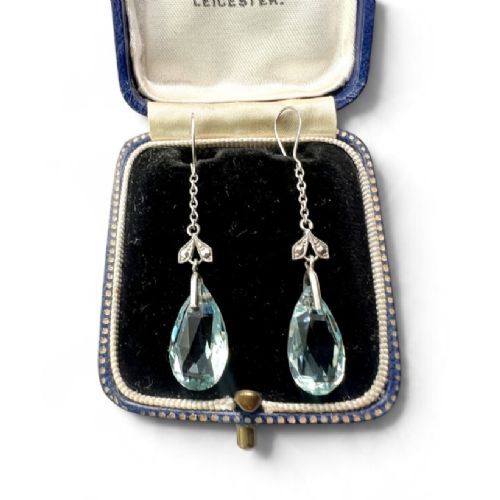
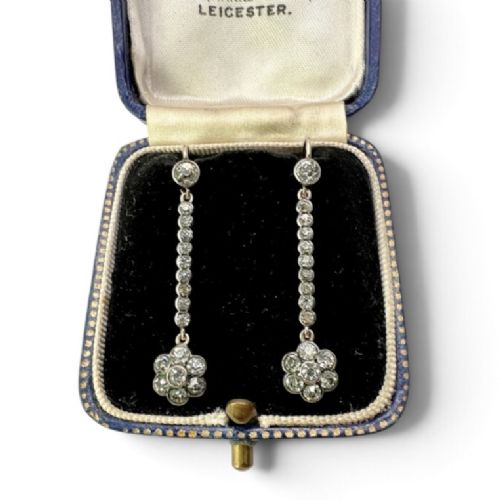
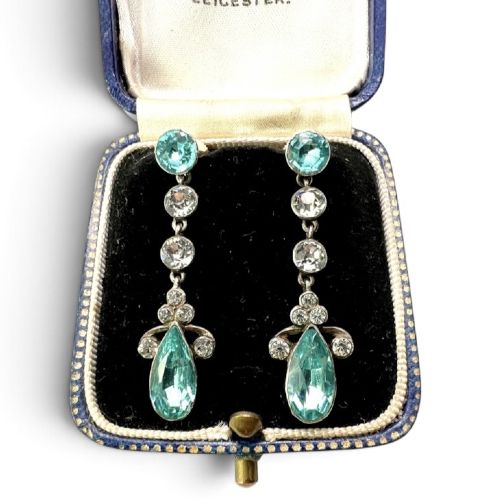
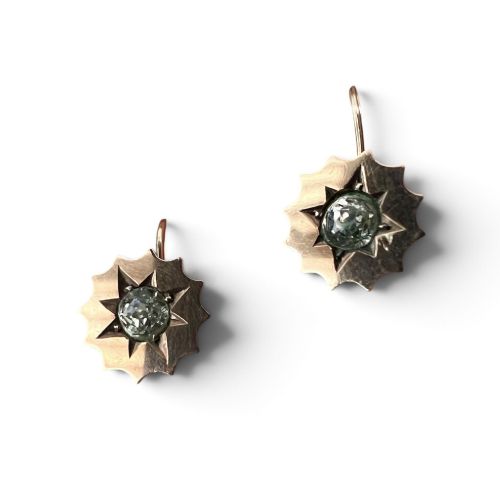
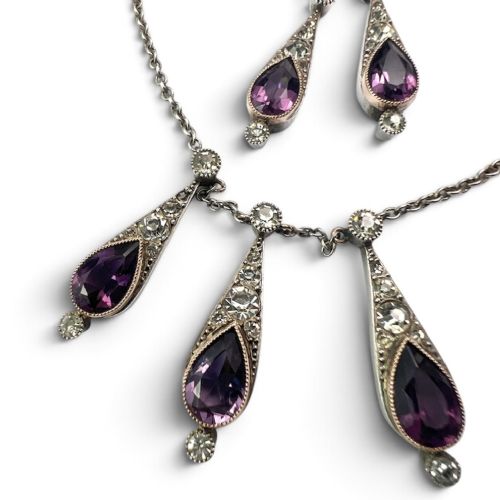
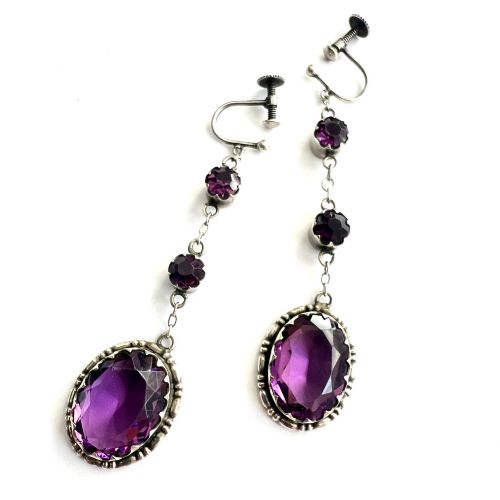
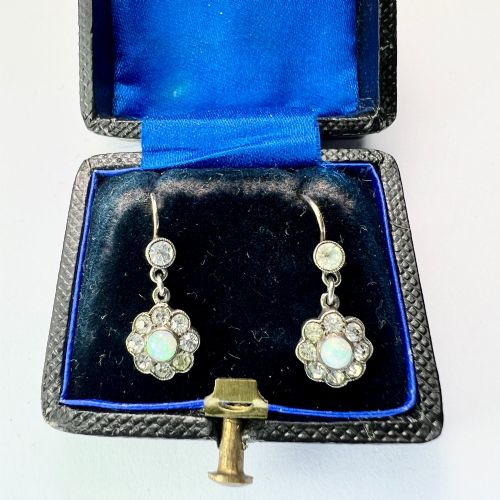
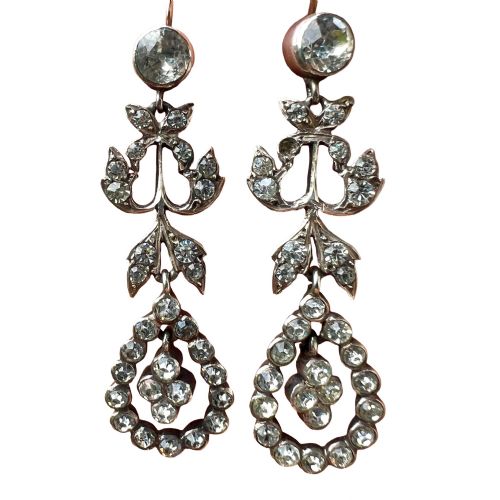
Paste and glass earrings encompass drop, dangling, chandelier, and screwback designs spanning Georgian, Victorian, Edwardian, and Art Deco periods. These pieces utilise imitation stones cut and polished by hand to mimic precious gems like diamonds, aquamarines, amethysts, sapphires, and citrines.
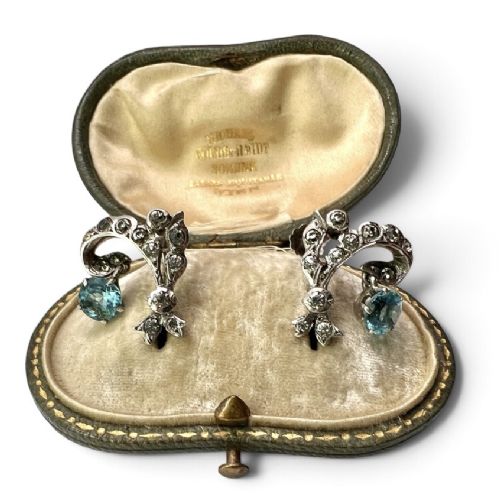
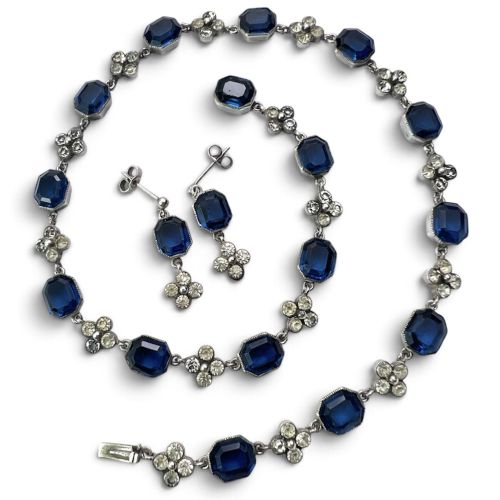
The most common examples encountered on this page date from the Victorian and Edwardian eras, frequently pairing silver with gold or utilising screwback mechanisms. Buyers frequently discover matching jewellery sets and demi-parures that include coordinating rings, necklaces, and brooches alongside the earrings.
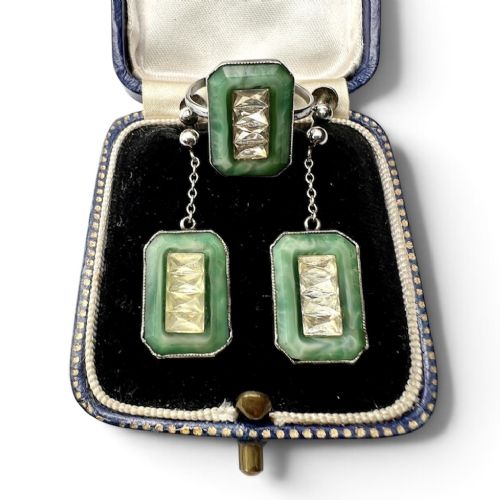
Earrings from the 1920s and 1930s bring geometric Art Deco styling into the mix, featuring jade glass and coloured paste stones set in silver. Earlier Georgian and 19th-century variants showcase intricate flower drop shapes and black dot paste techniques.
Materials and construction
Maker construction relies heavily on combinations of silver and gold, often mounting stones in closed-back settings with foil linings to enhance reflectivity. Paste glass stones are carefully hand-faceted to capture light in the manner of genuine diamonds and coloured gemstones.
Specialised fittings such as screwbacks appear alongside standard drop and chandelier configurations, demonstrating the evolution of jewellery fastenings across the 19th and 20th centuries. Gemstone enhancements like black dot paste and opal accents integrate directly into the metal frameworks.
Paste and Glass Earrings Retail Price Guide 2026
Typical asking prices for paste and glass earrings among the pieces listed under this phrase on Sellingantiques today, from the lower quarter to the upper quarter. They describe what is for sale here now, not the wider market.
Listings feature pieces spanning the Georgian, Victorian, Edwardian, and Art Deco periods, utilising silver, gold, paste glass, opal, and citrine.
Assessing quality in paste and glass earrings
Quality differentiates by the precision of stone cutting and the integrity of the foil backing beneath the paste. Finer examples retain exceptional clarity and sparkle without cloudiness in the glass.
The sophistication of the metalwork, particularly in Edwardian filigree and Art Deco geometric settings, marks the distinction between standard production and superior craftsmanship. Secure settings and well-preserved screwback or drop mechanisms indicate higher execution standards.
Knoll and Pregizer
The Paste and Glass Earrings Glossary
- Paste
- A heavy, high-refractive-index glass hand-cut and polished to imitate gemstones. It has been utilised in fine jewellery since the Georgian era.
- Black dot paste
- A specific Georgian technique where a tiny dark spot is painted on the culet of a glass stone to simulate the old mine-cut diamond culet.
- Demi parure
- A matched set of jewellery consisting of two or three pieces, commonly earrings paired with a brooch or necklace.
- Screwback
- A mechanical earring fastening utilising a threaded post and screw mechanism, popular before the widespread adoption of modern clip-on or pierced fittings.
- Chandelier drop
- An elaborate, multi-tiered earring design resembling a hanging light fixture, constructed with cascading stone clusters.
Paste and Glass Earrings: Frequently Asked Questions
How do I care for antique paste earrings?
Clean paste and glass earrings gently with a dry, soft cloth to protect the delicate foil backings behind the stones. Avoid immersing them in water, as moisture can seep behind the glass and ruin the reflective foil.
Store each pair separately in a lined box to prevent the metal settings and glass facets from scratching against other items.
Were all paste earrings originally for pierced ears?
Many historical earrings were originally designed for pierced lobes, though conversion work and screwback mechanisms became common in later periods. Edwardian and Victorian makers frequently utilised screwback fittings to accommodate wearers without pierced ears.
Checking the reverse of the setting often reveals whether a screwback mechanism is original to the period or a later addition.
What is the difference between paste and glass?
Paste is a specific type of dense, lead-rich glass that is hand-cut and polished specifically to imitate gemstones. Ordinary glass lacks this high lead content and the precise faceted cutting associated with fine paste jewellery.
Both materials appear frequently across Georgian, Victorian, and Art Deco designs to achieve brilliant sparkle without using mined precious stones.
How can I date my paste earrings?
Dating relies on examining the metal combinations, such as gold-on-silver settings typical of Georgian and Victorian pieces, alongside the fastener type. Screwbacks and platinum-topped gold point towards the Edwardian era, while geometric lines indicate Art Deco origins.
The overall silhouette, from floral drops to cascading chandelier forms, also aligns with specific historical design movements.