
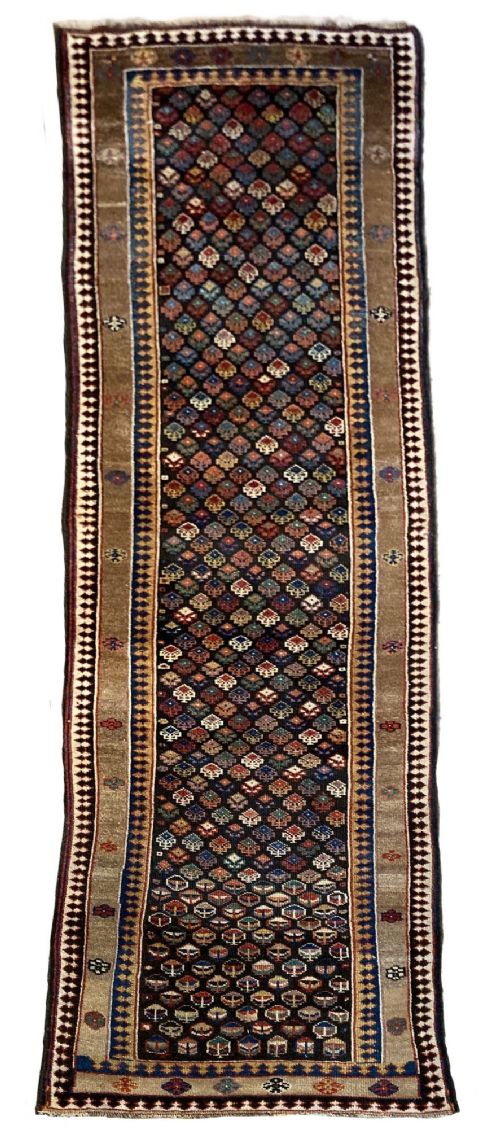


Passage Runner Rug
A passage runner rug brings warmth and rhythm to a narrow hall, uniting spaces with traditional motifs and hand-knotted structure.
Passage Runner Rug
A passage runner rug is a long, narrow carpet designed specifically for corridors, staircases and galleries. These pieces bring pattern and protection to high-traffic floor spaces.
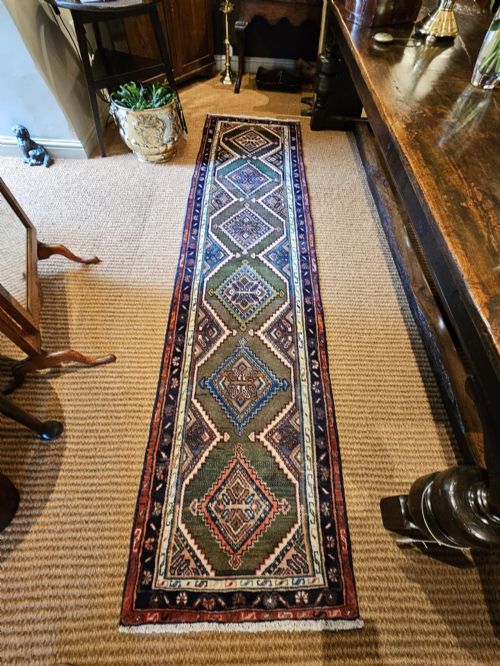
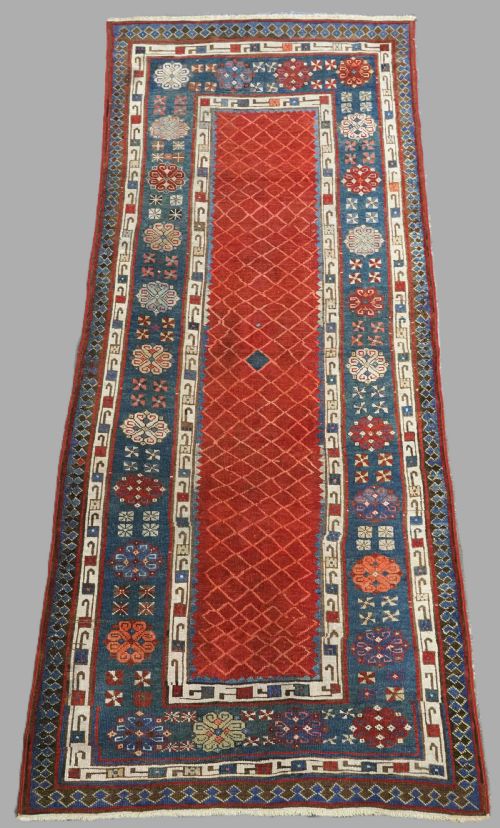
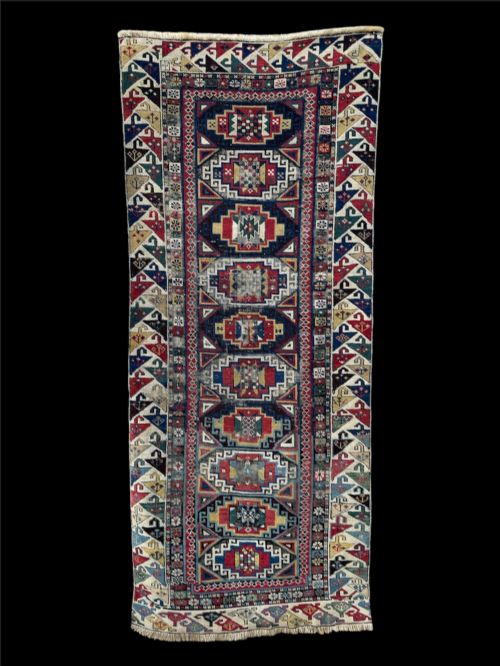
The passage runner rug selection relies heavily on traditional Persian and Caucasian designs from the nineteenth and early twentieth centuries. Pieces span styles such as Heriz, Kurdish, Shirvan and Talish.
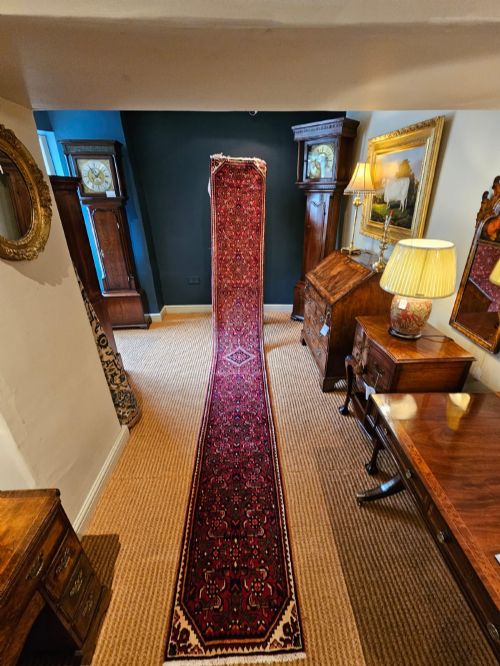
Narrow formats dominate the available examples, often stretching several metres in length with compact widths. Buyers encounter everything from concise apartment runners to substantial gallery carpets.
How they were made
Weaving tradition relies on natural materials, with pure wool piles set onto cotton foundations for structural stability. This combination provides durability underfoot while holding deep natural dye colours.
Dye absorption and knot density dictate the tactile quality of the pile. Traditional workshops utilised local wool yielding rich variations in tone across each length.
Listings span periods from the nineteenth century through to 1930, utilising wool and cotton across Caucasian and Persian styles.
What varies in quality
Precision of design and consistency of wool pile determine the standing of an individual piece. Finer knots permit intricate lattice, shrub and boteh motifs to remain crisp along long proportions.
Depth of colour and harmony of secondary shades separate standard room lengths from exceptional examples. Age-softened wool brings a mellow character that alters the visual weight of a narrow corridor.
The Passage Runner Rug Glossary
- Runner
- A long, narrow carpet format intended for corridors, hallways and stairs. Its proportions balance length against restricted width.
- Pile
- The upright yarn loops or tufts forming the surface of the rug. Density in this layer dictates wear resistance and texture.
- Boteh
- A stylised almond or paisley motif representing a seed or floral sprout. It appears frequently across Persian and Kurdish weaving.
- Lattice
- An intersecting network of lines forming a grid pattern across the field. This geometric layout structures many traditional tribal designs.
- Ground
- The main background colour of the central field behind the primary motifs. It anchors the palette of the entire piece.
Passage Runner Rug: Frequently Asked Questions
Where should I place a passage runner rug?
These long formats suit hallways, corridors and landings where floor protection and visual interest are needed. They direct movement and soften sound on bare wooden floorboards.
Measuring the exact clearance of doors and baseboards ensures the narrow proportions sit comfortably without obstructing daily traffic.
How do I care for a wool runner?
Regular gentle vacuuming without a rotating brush roll keeps dust from settling into the wool pile. Professional cleaning maintains the natural lanolin and dyed fibres.
Using a suitable underlay prevents sliding on hard floors and reduces friction between the cotton foundation and the boards beneath.
What periods do these runners come from?
The available selection spans the nineteenth century and the early decades of the twentieth century. Pieces represent traditional workshops active from the 1880s through to the 1930s.
Design motifs and structure help attribute these older floor coverings to specific regional weaving traditions.
Are these runners made of wool?
The pile is spun from pure wool, providing a soft yet resilient surface for heavy foot traffic. Cotton foundations offer the necessary tensile strength for long, narrow formats.
Natural materials absorb traditional dyes uniformly, resulting in the mellow palette characteristic of older woven carpets.