




Parquetry Tallboy
These pieces of parquetry tallboy furniture offer generous vertical storage wrapped in geometric wood veneers, combining practical utility with centuries of decorative cabinet-making.
Parquetry Tallboy
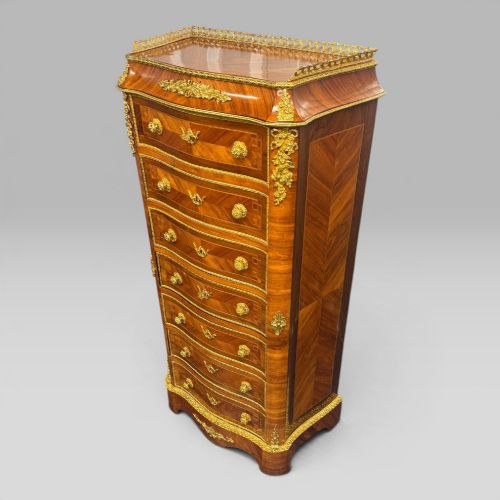
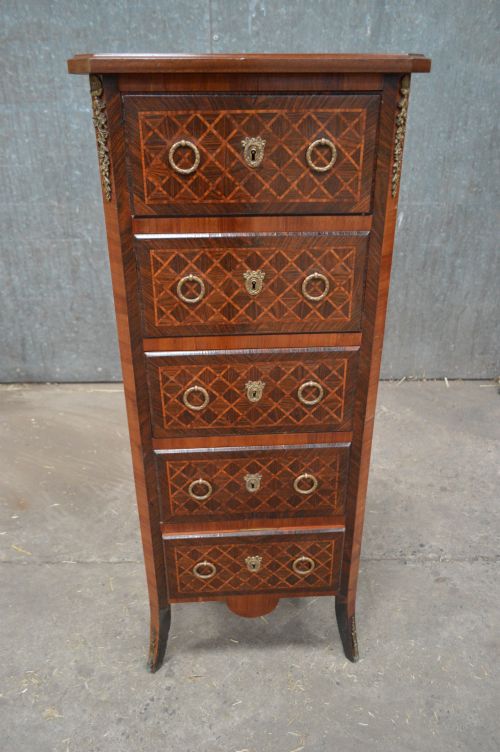
A parquetry tallboy represents a distinct class of tall storage furniture, appearing primarily as cabinets, semainieres, and multi-drawer chests. These pieces use vertical space efficiently while providing surface decoration through patterned wood veneers.
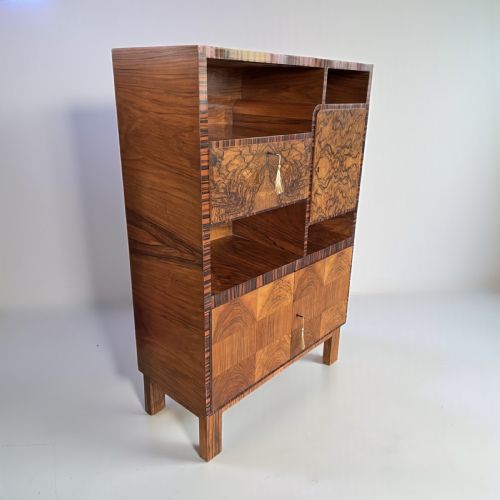
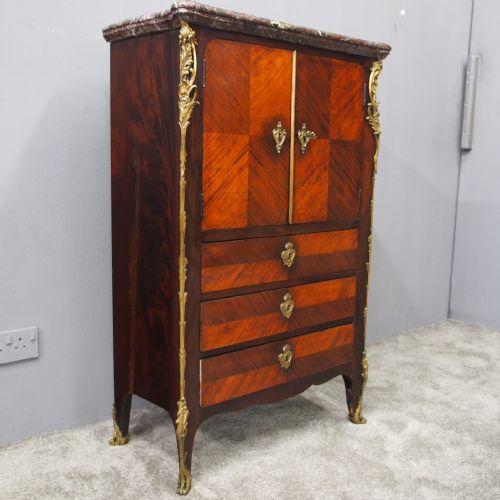
The versions most commonly met in these listings span several distinct periods, notably the eighteenth century, nineteenth century, and early twentieth century. Examples frequently display French design influences such as Louis XV style, Art Deco, and French transitional forms.
Makers and workshops utilised specific timber configurations, such as walnut, rosewood, kingwood, and tulipwood, often paired with marble tops and brass or ormolu mounts. The core form remains a tall chest or cabinet designed to hold clothing and valuables.
How they were made
Cabinet-makers constructed these pieces using solid timber frames overlaid with fine wood veneers, meticulously cutting individual pieces of walnut, kingwood, rosewood, and tulipwood to create geometric parquetry patterns. Oyster veneering also appears, using circular cross-sections of branches to form repeating natural motifs across the surface.
Structural embellishments frequently include cast brass and ormolu mounts affixed to corners, handles, and escutcheons, complementing the polished wood grain. Many examples incorporate fitted marble slabs set into the top surface for durability and visual contrast.
Parquetry Tallboy Retail Price Guide 2026
Typical asking prices for parquetry tallboy among the pieces listed under this phrase on Sellingantiques today, from the lower quarter to the upper quarter. They describe what is for sale here now, not the wider market.
Listings feature walnut veneer, kingwood, rosewood, and marble across eighteenth, nineteenth, and twentieth-century French styles.
What varies in quality
The standard of a parquetry tallboy rests upon the precision of the veneer work and the complexity of the geometric patterns across the drawer fronts and sides. Tighter joints and more intricate timber selections distinguish finer cabinet-making from simpler production.
Hardware integration and secondary materials also dictate overall quality, where heavier ormolu mounts, original marble tops, and branded cabinet stamps indicate higher workshops of origin. The crispness of the timber's grain and the stability of the tall carcase govern the piece's standing.
Leonard Boudin
The Parquetry Tallboy Glossary
- Parquetry
- A geometric mosaic of wood veneers used to cover floors or furniture surfaces. It creates repeating patterns like cubes or herringbone.
- Semainiere
- A tall narrow chest of seven drawers traditionally designed to hold a week of clothing. This form is common in French case furniture.
- Ormolu
- Gilded bronze mounts and decorative elements applied to furniture. It provides metallic contrast against dark timber veneers.
- Oyster Veneer
- Wood veneer cut across the branch to show circular growth rings. This technique creates distinct marbled patterns across cabinet fronts.
Parquetry Tallboy: Frequently Asked Questions
What is a parquetry tallboy used for?
These tall chests and cabinets provide vertical storage for clothing, linens, and personal items while occupying a compact floor footprint.
Their multiple drawers and compartments make them practical for bedrooms and dressing rooms where horizontal surface space is limited.
How do I identify French styles?
French cabinet-making styles often feature curved cabriole legs, symmetrical ormolu mounts, and delicate floral or geometric veneers.
Pieces from periods such as Louis XV or the Art Deco era display characteristic silhouettes and decorative restraint respective to their decade of manufacture.
Are marble tops original to these cabinets?
Many nineteenth and twentieth-century French chests and bedside tables were fitted with marble slabs to provide a durable and luxurious surface.
These stone tops are typically heavy, unattached or resting within a wooden rebate, and match the proportions of the carcase below.
How do I care for wood veneers?
Protect antique wood surfaces by keeping them away from direct sunlight and maintaining stable room humidity to prevent veneer lifting.
Dust regularly with a soft dry cloth and avoid silicone-based polishes that can degrade the historic polish over time.