



Parquetry Round Table
A parquetry round table brings geometric precision to domestic spaces, offering a stable circular surface defined by interlocking wooden tiles.
Parquetry Round Table
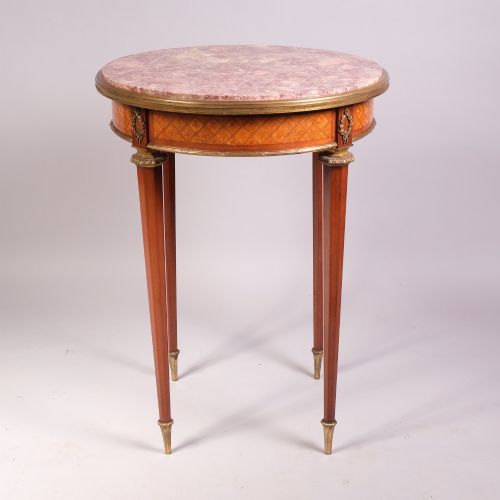
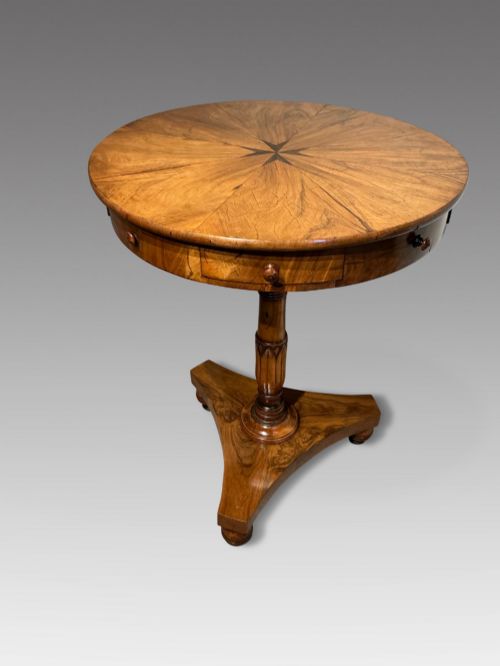
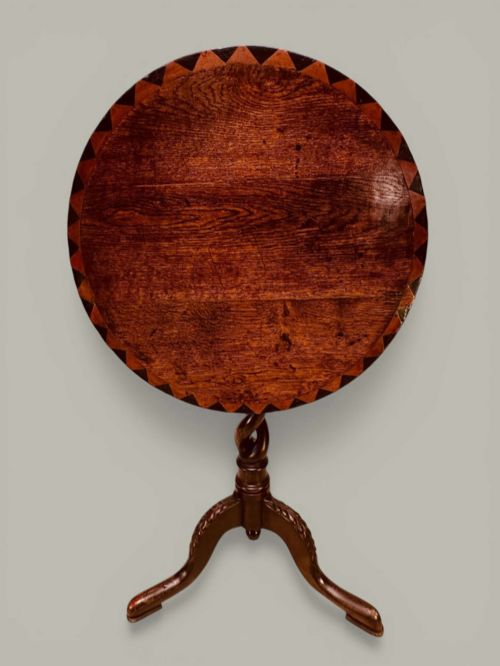
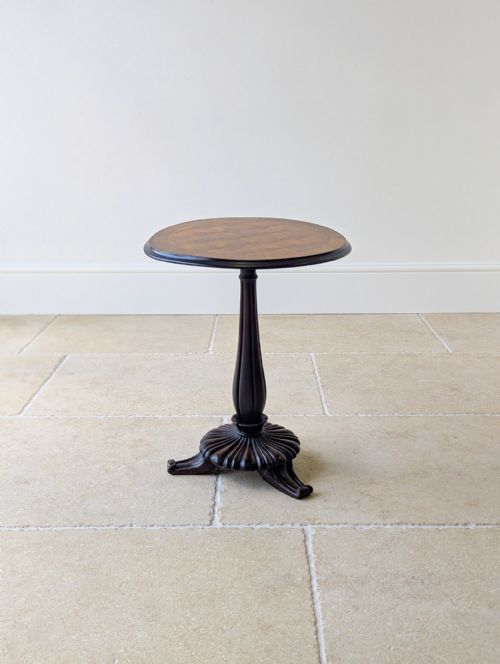
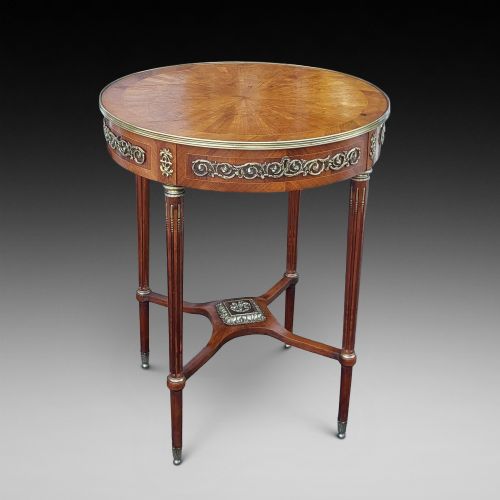
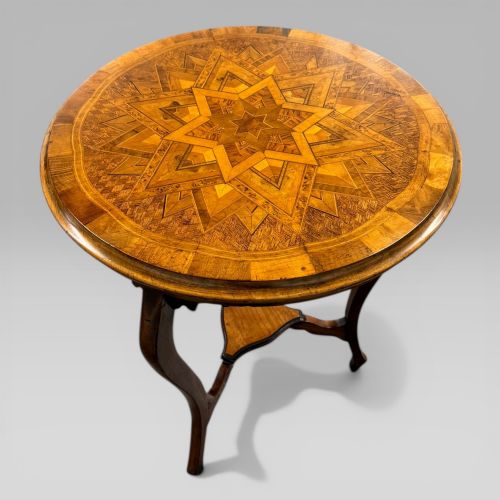
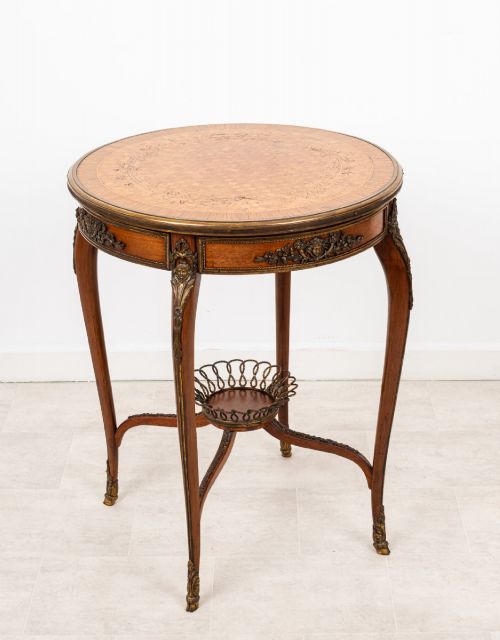
A parquetry round table unites geometric timber patterns with a circular top, appearing in forms from compact bedside cabinets and wine tables to large centre tables. Buyers searching for a parquetry round table encounter diverse interpretations spanning nineteenth-century French designs and William IV pieces.
The selection ranges from small occasional tables with two tiers to substantial marble-topped bouillotte tables and tripod bases. Oak, walnut, and kingwood feature prominently across these circular formats, often displaying intricate sunburst or specimen wood inlays.
French nineteenth-century influences dominate the selection, including gueridon tables and revival styles reminiscent of Louis XV work. These pieces function primarily as centre tables, side tables, or lamp tables within traditional and eclectic interiors.
Materials and construction methods
Craftsmen built these tables using dense hardwoods such as mahogany, walnut, and rosewood for structural stability, applying finer timbers like kingwood as surface veneers. Geometric patterns were meticulously sawn and fitted together by hand before being secured to underlying carcases of oak or pine.
Veneered surfaces frequently incorporated contrasting brass details or marble inserts, particularly on bouillotte and gueridon forms. Carved oak and turned wooden pedestals provided support for the heavier circular tops, while tripod legs stabilised smaller wine and lamp tables.
Parquetry Round Table Retail Price Guide 2026
Typical asking prices for parquetry round table among the pieces listed under this phrase on Sellingantiques today, from the lower quarter to the upper quarter. They describe what is for sale here now, not the wider market.
Current listings feature nineteenth-century French gueridon and bouillotte forms constructed from kingwood, oak, and marble.
Distinctions in craftsmanship
Quality rests in the precision of the geometric joints and the selection of figured timbers used for the parquetry surface. Finer examples display seamless alignment where the wood grain meets, alongside disciplined use of brass mounts and carved details.
Tables produced in the manner of notable makers or within specialised nineteenth-century workshops generally exhibit superior timber selection and structural joinery compared to standard utility pieces. The harmony between the base construction and the decorative top determines the overall standard of the piece.
François Linke·Anton Seuffert
The Parquetry Round Table Glossary
- Parquetry
- A geometric mosaic of wood pieces used for decorative floors and furniture tops. It relies on precise cutting of contrasting timber species to create repeating patterns.
- Bouillotte table
- A small French circular table featuring a raised gallery edge designed to hold counters during card games. They frequently incorporate marble tops and brass details.
- Gueridon
- A small French table supported by one or more columns, originating in the seventeenth century. These circular pieces often function as centre or occasional tables.
- Specimen wood
- Furniture surfaces constructed from numerous distinct botanical timber varieties, often displayed for their natural colour and grain variations. This technique highlights botanical diversity.
- Tripod table
- A small occasional table supported by three individual legs radiating from a central pillar. This configuration ensures stability on uneven domestic floors.
Parquetry Round Table: Frequently Asked Questions
How were bouillotte tables used?
Bouillotte tables were originally designed for a French card game of the same name during the eighteenth and nineteenth centuries. The raised brass gallery around the marble top prevented counters and coins from rolling off.
Over time, these tables transitioned into general use as elegant side or lamp tables in drawing rooms. Their compact circular proportions make them adaptable for modern residential layouts.
What is the difference between parquetry and marquetry?
Parquetry consists of geometric or angular wooden tiles fitted together to form repeating patterns like cubes, chequers, or basket weaves. It emphasises architectural symmetry and structural harmony.
Marquetry employs varied timber veneers to create pictorial scenes, floral motifs, or scrolls. While parquetry focuses on repeating lines, marquetry illustrates figurative or organic designs.
How do I identify a gueridon table?
A gueridon is a distinct type of small French circular table supported by a central column or pillar, often resting on a tripod base. Nineteenth-century examples frequently feature marble tops and gilt-bronze mounts.
They are typically smaller than dining tables and were designed to be easily moved around a room. Their primary function was holding candlesticks, vases, or decorative objects.
Where should I place a round occasional table?
A round occasional table fits well beside seating areas, in hallways, or as a central feature in smaller rooms. Its curved perimeter softens linear architectural lines and improves traffic flow.
Tables with drawers or multiple tiers offer practical storage alongside surface space for lamps or books. Pairing them with appropriate seating creates a balanced interior arrangement.