






Parquetry Library Desk
A parquetry library desk brings geometric timberwork and leather-lined writing surfaces straight to your study, led by French nineteenth-century bureau plat forms.
Parquetry Library Desk
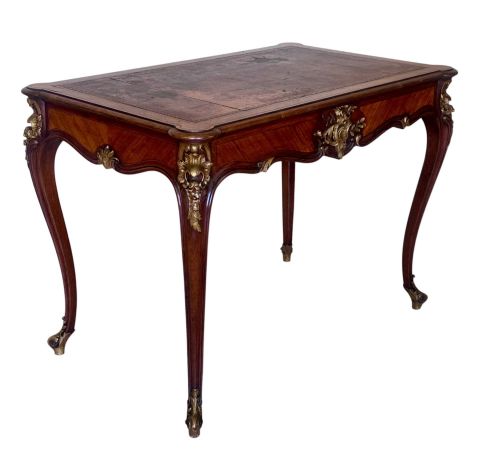
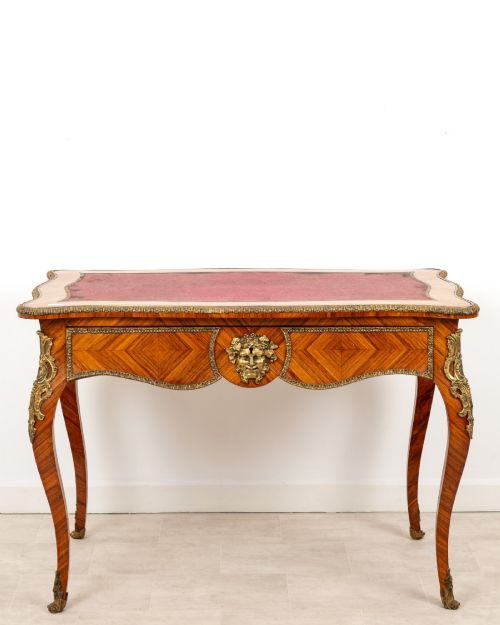
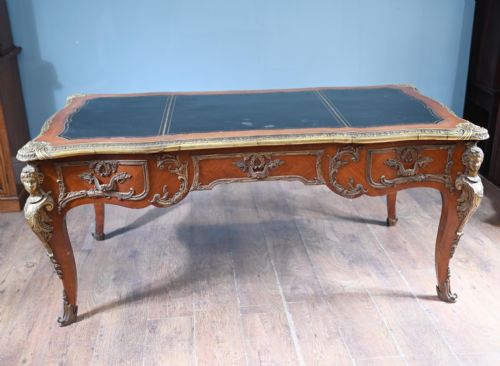
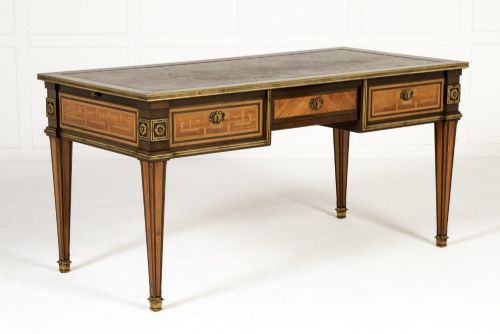
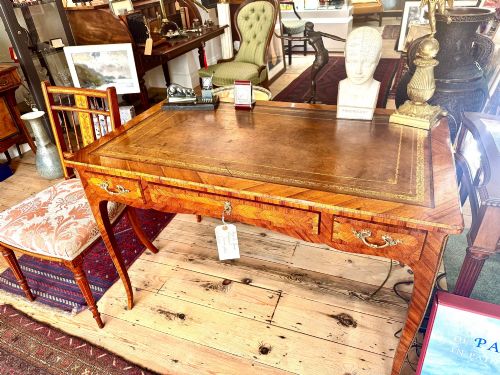
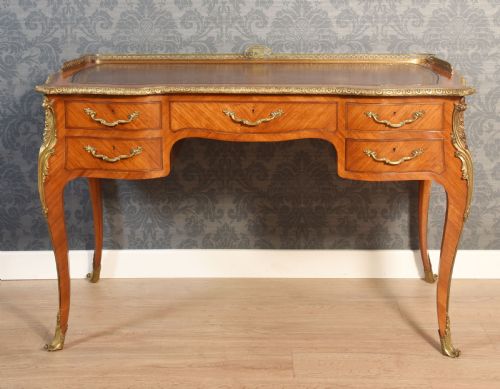
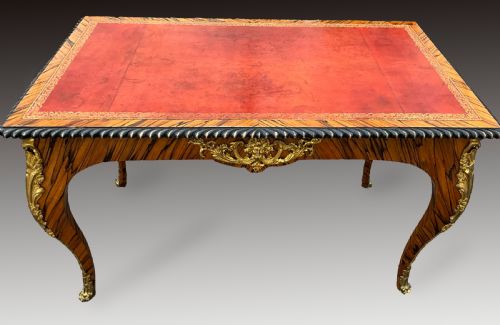
A parquetry library desk is a fitted writing surface, most often seen here as a French bureau plat originating from the nineteenth century. These pieces combine geometric wood veneers with leather writing inserts and generous proportions for study use.
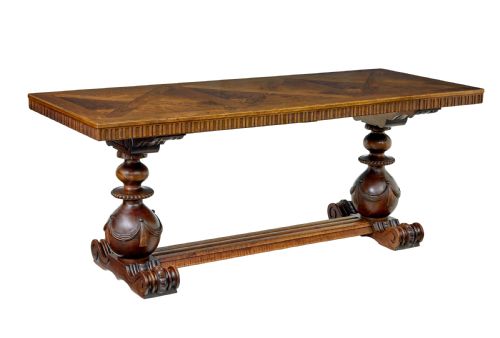
The selections on this page span from eighteenth-century revivals through Victorian and Edwardian examples up to early twentieth-century Scandinavian and Arts and Craft interpretations. Most pieces emerge from French workshops working in Louis XV and Louis XVI styles.
Forms include freestanding centre tables and dedicated writing tables alongside bureau plat designs fitted with ormolu mounts. Buyers seeking this phrase typically select between ornate kingwood revival pieces and simpler walnut or oak tables.
How they were made
Cabinetmakers constructed these desks by applying geometric wood veneers, including kingwood, rosewood, zebrawood, and coromandel, over stable structural timbers such as walnut, mahogany, and oak. Parquetry relies on precise cutting of small wood tiles to form intricate patterned surfaces.
Metal ornamentation played a major structural and decorative role, with cast gilt bronze and ormolu mounts fitted to corners, drawers, and legs on French revival pieces. Leather inserts were tooled and glued directly into the wooden top recess to create a writing surface.
Materials span kingwood, rosewood, coromandel, and walnut, accented with gilt bronze, ormolu, brass, and leather.
What varies in quality
Quality rests upon the precision of the veneer work and the crispness of the cast ormolu mounts. Superior desks display seamless geometric alignment across complex curves and drawer fronts without lifting or shrinkage in the timber.
The sophistication of the timber selection dictates the standing of the piece, with figured kingwood and coromandel commanding greater presence than plain walnut or oak. Maker attribution, such as work linked to known Parisian or Victorian workshops, elevates the status of the desk.
CH. Jeanselme and Co·Donald Ross·Francois Linke·Howard and Sons
The Parquetry Library Desk Glossary
- Parquetry
- A geometric mosaic of wood veneers used to cover floors or furniture surfaces. It creates patterned motifs through contrasting timber tones.
- Bureau plat
- A freestanding writing table with drawers in the frieze, typically finished on all sides. This form dominated French writing furniture during the eighteenth and nineteenth centuries.
- Ormolu
- Gilded bronze mounts applied to furniture for decoration and edge protection. It adds metallic contrast to polished timber surfaces.
- Kingwood
- A dense, heavily figured Brazilian timber with dark violet and golden stripes. It was favoured by high-end cabinetmakers for luxury veneer work.
- Centre table
- A freestanding table designed to be viewed from all sides rather than pushed against a wall. Many nineteenth-century writing tables were constructed with finished backs for this purpose.
Parquetry Library Desk: Frequently Asked Questions
What is a bureau plat?
A bureau plat is a specific type of writing table featuring a rectangular top inset with leather and one or more drawers built into the frieze. These tables were designed to sit away from the wall in the middle of a room.
The form originated in France and remains the predominant style found among nineteenth-century parquetry writing desks.
How do I care for leather desk tops?
Leather writing surfaces require gentle cleaning with a slightly damp cloth followed by specialised leather dressings to prevent cracking. Avoid harsh chemical cleaners and excessive moisture.
Keep the desk away from direct sunlight and heat sources to maintain the suppleness of the leather and the stability of the surrounding wood veneer.
Are these desks suitable for daily work?
These desks provide functional writing surfaces with sturdy timber frames and integrated drawers for storage. Their proportions accommodate modern writing equipment while retaining period character.
Protection of the leather top with a blotter or desk pad preserves the historic surface during regular daily use.