



Parisian Street Scene
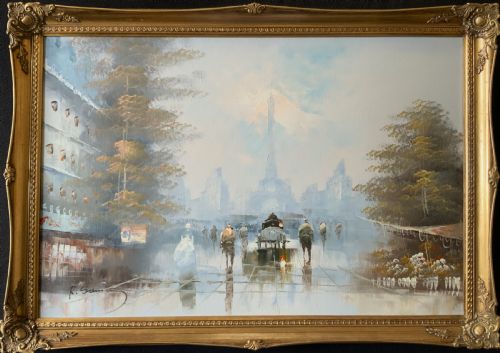
These pieces capture a Parisian street scene on canvas and paper, offering a window into the French capital through historic views and urban life.
Parisian Street Scene
A Parisian street scene brings the urban atmosphere, architecture and daily life of the French capital into an interior space. These artworks capture the character of city thoroughfares, bridges and neighborhoods across various decades.
The works appearing here span from the mid nineteenth century through the mid twentieth century. Buyers encounter oil paintings, watercolours and pastels depicting recognizable locations such as the Eiffel Tower and the Pont Neuf.
Framing is a frequent component of these pieces, with examples housed in wood and gilt wood frames. The visual styles range from French Realism and Impressionism to Post-Impressionism and Mid-Century Modern interpretations.
How they were made
Artists utilised oil paint on canvas or board to build texture and depth in their depictions of city life. The application of pigment ranges from precise brushwork to looser, impressionistic strokes.
Watercolour and pastel on paper provide lighter, more immediate mediums for capturing Parisian views. These works on paper often rely on the tone of the support to unify the composition.
Makers housed many of these works in wood frames, occasionally decorated with gesso and gilt finishes. The combination of the painted surface and the surrounding frame defines the physical presence of each piece.
Parisian Street Scene Retail Price Guide 2026
Typical asking prices for parisian street scene among the pieces listed under this phrase on Sellingantiques today, from the lower quarter to the upper quarter. They describe what is for sale here now, not the wider market.
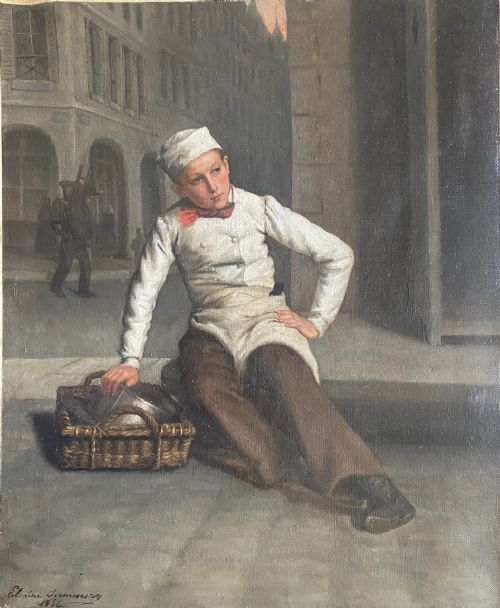
One intrepid apprentice cook manages to take a quiet rest in the middle of a bustling nineteenth century Paris.
What varies in quality
The strength of a composition depends on the artist's ability to render the bustle and light of the city. Works by established named painters often demonstrate a surer command of perspective and atmosphere.
Materials and framing contribute to the overall physical integrity of the piece. Period frames finished in gilt wood enhance the presentation, whereas later replacements can alter the historic character.
The nuance in handling paint or pastel distinguishes more observed studies from formulaic depictions. Attention to atmospheric conditions like winter weather or shifting daylight elevates the visual impact.
Albert Ludovici Jnr·Caroline Burnett·Merio Ameglio·Eduard Leon Cortes
The Parisian Street Scene Glossary
- Impressionism
- A style of painting that focuses on light, ordinary subject matter and open brushwork. It emerged in France during the nineteenth century.
- Post-Impressionism
- An artistic movement that followed Impressionism, extending its use of vivid colours while emphasising geometric forms and expressive qualities. Artists in this tradition pushed beyond strict optical realism.
- Gesso
- A plaster-like mixture applied to wood frames or panels as a base for paint or gilding. It provides a smooth surface for decorative details.
- Pastel
- A dry art medium consisting of powdered pigment and a binder, formed into sticks. It allows for soft gradations of tone on paper.
- Gilt wood
- Wood that has been coated with a thin layer of gold leaf or gold paint. This finish is commonly found on traditional picture frames.
Parisian Street Scene: Frequently Asked Questions
What periods do these paintings cover?
The available pieces span from the mid nineteenth century through the mid twentieth century, encompassing eras such as the Belle Epoque and the mid-century period. This range reflects how artists returned to urban motifs across different generations.
Earlier examples from the nineteenth century sit alongside mid-century interpretations, showing the evolution of urban landscape painting over time.
What mediums were used?
Artists worked primarily in oil paint on canvas or board, capturing the texture and atmosphere of the capital. Other pieces utilise watercolour and pastel on paper for a different graphic quality.
Many of these artworks are housed in wood or gilt wood frames that complement the period of the painting.
How do I identify the style?
The works reflect various movements including French Impressionism, Post-Impressionism, French Realism and Mid-Century Modernism. Brushwork and treatment of light help indicate the artistic approach of the period.
Realist works focus on detailed observation, while impressionist examples prioritize the transient effects of light and weather on the streets.
Where were these scenes painted?
The subjects concentrate on Parisian locations, including cityscapes, specific landmarks like the Pont Neuf and the Eiffel Tower, and neighborhood views such as Montmartre. Some pieces explore Parisian suburbs with figures.
These locations provide a record of how the urban landscape changed across the decades represented in the collection.