






Paris Clock
A paris clock brings nineteenth-century craftsmanship into a room, offering brass carriage cases and ormolu mantel pieces that anchor a space.
Paris Clock
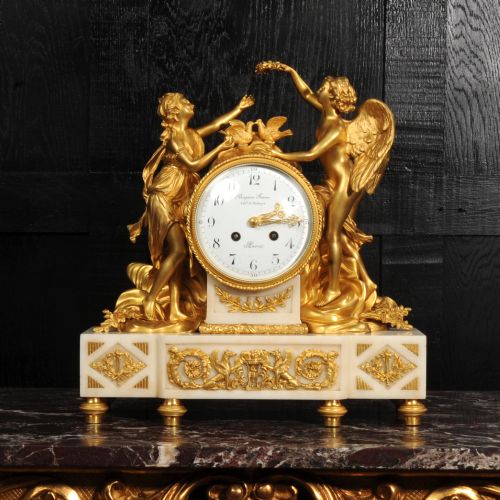
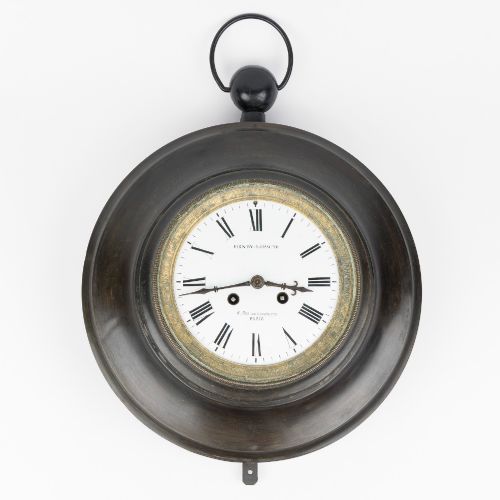
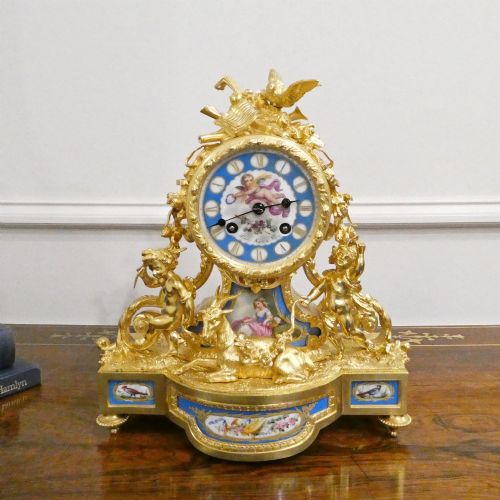
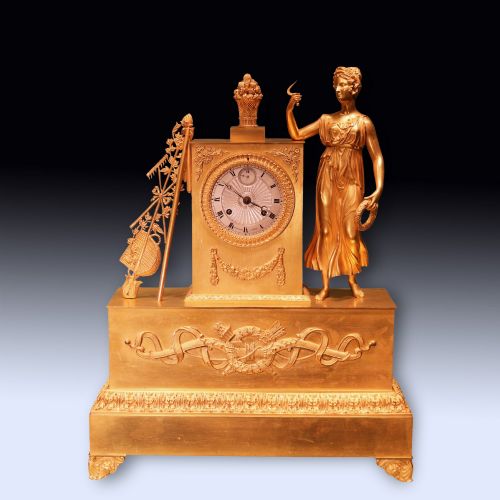
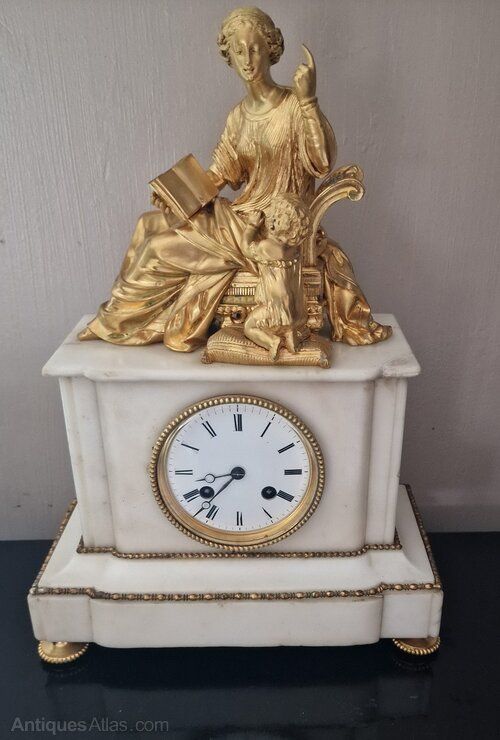
When you search for a paris clock, you encounter a range of nineteenth-century French timepieces spanning mantel clocks, carriage clocks, and wall hung designs. The mantel varieties often display ormolu, bronze, and porcelain, frequently accompanied by matching garniture sets.
Carriage clocks form a substantial portion of these listings, housed in brass gorge cases with glass panels that reveal the internal movement. These portable timepieces date primarily from the Victorian era and the latter decades of the nineteenth century.
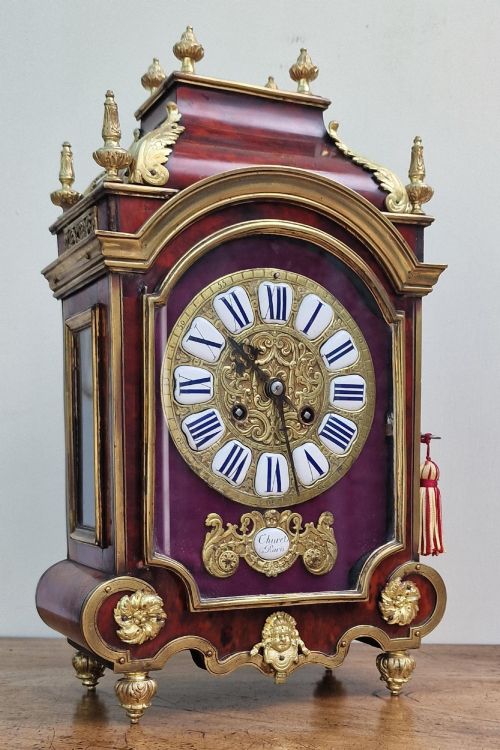
Earlier examples reach back into the eighteenth century, showing tortoiseshell, marquetry, and Boulle work. Architectural marble cases and four-glass designs also appear regularly among the nineteenth-century stock.
Materials and Construction
Maker workshops utilised cast ormolu, gilt bronze, and solid brass to form the structural cases and decorative mounts of these clocks. Enamel dials, often featuring painted numerals, combine with bevelled glass panels in carriage designs and delicate porcelain plaques in mantel variations.
Woodwork forms another key element, with rosewood, mahogany, and tortoiseshell applied to carcasses using marquetry and Boulle inlay techniques. Movement construction involved intricate brass gearing, escapements, and striking mechanisms assembled by hand.
Paris Clock Retail Price Guide 2026
Typical asking prices for paris clock among the pieces listed under this phrase on Sellingantiques today, from the lower quarter to the upper quarter. They describe what is for sale here now, not the wider market.
Listings feature brass carriage clocks, marble mantel pieces, and porcelain-mounted ormolu designs spanning the eighteenth through to the early twentieth century.
Distinctions in Quality
The standard of a paris clock rests upon the precision of its mechanical movement and the depth of detail in its case work. Finer examples display signed movements by noted makers, superior gilt finishes, and crisp chasing on bronze and ormolu mounts.
Secondary pieces show simpler cast components, plainer wooden cases, and standard unembossed dials. The presence of original winding keys, matched garniture pieces, and robust platform escapements elevate the standing of an individual clock.
Henry-Lepaute·Thuret·Henry Marc·Canaillor·Drocourt·C. Detouche·Le Roy·Henri Jacot·Antoine Redier·Philippes·Berger·Louis Goret·Gontard & Bolviller·Thomas A Paris·LE ROY & FILS·Charpentier·Hessen·Finnigan·H Luppens·Paul Garnier·Bourdin·Dehné·Lamy & Lacroix·VINCENTI·Valiant
The Paris Clock Glossary
- Ormolu
- Gilded bronze, produced by applying a mixture of mercury and gold leaf to a cast bronze base. This technique creates a rich golden surface found on many nineteenth-century French mantel clocks.
- Garniture
- A set comprising a central clock flanked by matching decorative objects such as urns or candelabra. These sets were designed to sit together on a mantelpiece.
- Platform escapement
- The tiny horizontal assembly containing the balance wheel and hairspring in a portable clock. It regulates the timekeeping without requiring a stationary pendulum.
- Boulle
- A form of marquetry utilising tortoiseshell and brass inlay developed in France. It appears on select decorative clock cases from earlier periods.
Paris Clock: Frequently Asked Questions
How do I wind a carriage clock?
Most carriage clocks use a dedicated double-ended key inserted into winding squares on the underside or back plate. Turn the key gently until resistance signals the mainspring is fully tensioned.
Avoid over-winding, as this strains the internal brass gear train and can snap the spring mechanism inside.
What is an eight-day movement?
An eight-day movement runs for approximately eight full days on a single winding cycle before the mainspring requires tightening. This configuration reduced the frequency of maintenance required by household timepieces.
Many nineteenth-century carriage and mantel clocks utilise this system for everyday convenience.
How do I date a French mantel clock?
Dating relies on examining the stylistic cues of the case, such as Rococo revival scrolls or neoclassical symmetry, alongside maker signatures recorded on the dial or movement back plate. Materials like ormolu, marble, and porcelain also align with specific manufacturing decades.
Inscription styles and patent stamps help narrow the period further.
Where should I place a marble clock?
Marble and bronze mantel clocks require a sturdy, level surface capable of supporting considerable weight. Heavy stone and metal cases need a stable foundation to prevent tipping and to keep the pendulum swinging evenly.
Keep them away from direct sunlight and damp environments to protect the metal finishes and dial enamel.