



Paris City Art
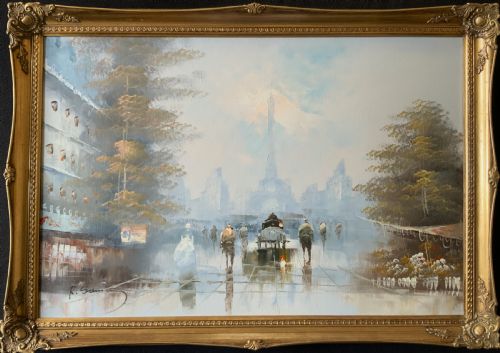
Paris city art captures the enduring allure of the French capital through historic paintings and watercolours depicting iconic streets and monuments.
Paris City Art
Paris city art encompasses paintings, watercolours, and pastels that record the distinctive urban landscape of the French capital across various decades. Buyers searching for paris city art will encounter depictions of landmarks such as the Eiffel Tower, Notre Dame, and the Pont Neuf, alongside bustling street scenes and river views.
The pieces available span from the nineteenth century through the mid-twentieth century, capturing shifts in artistic interpretation from the Belle Epoque to mid-century modern movements. Canvases and paper works range in scale from intimate watercolours to large framed oil paintings suitable for prominent display.
Materials and Techniques
Works in this category are executed primarily in oil paint on canvas or watercolour and pastel on paper, reflecting traditional fine art methods. Painters applied pigment with varying brushwork to capture the atmospheric light and movement of Parisian streets.
Framing forms an integral part of these works, with many pieces housed in period gilt wood or gilded wood frames that complement the aesthetic of the artwork.
Paris City Art Retail Price Guide 2026
Typical asking prices for paris city art among the pieces listed under this phrase on Sellingantiques today, from the lower quarter to the upper quarter. They describe what is for sale here now, not the wider market.
Listings feature works created across eight distinct decades, spanning from the nineteenth century into the nineteen-sixties.
Assessing Quality
Quality in these artworks rests upon the artist's ability to convey depth, light, and atmosphere within the bustling urban setting. Superior pieces demonstrate confident handling of medium, whether through the fluid application of watercolour or the rich texture of oil paint.
The execution of perspective and the depiction of human figures within street scenes distinguish finer works from simpler topographical records. Additionally, the condition of the canvas, paper, and associated framing contributes to the overall integrity of the piece.
Albert Ludovici Jnr·Caroline Burnett·Victor Gabriel Gilbert·Ron Folland·Merio Ameglio·Eduard Leon Cortes·Noel Harry Leaver
The Paris City Art Glossary
- Oil on Canvas
- Pigments bound in a drying oil applied to a stretched canvas support. This technique allows for rich colour blending and textured brushwork.
- Watercolour
- A painting method in which the paints are made of pigments suspended in a water-based solution. It is typically applied to paper to create translucent washes of colour.
- Pastel
- A dry painting medium in the form of a stick, consisting of pure powdered pigment and a binder. It produces velvety marks on paper surfaces.
- Gilt Wood
- Wood that has been treated with a thin layer of gold leaf or gold powder. This finish is commonly found on period frames.
- Impressionism
- A nineteenth-century art movement characterised by relatively small, thin, yet visible brush strokes and an emphasis on accurate depiction of light.
Paris City Art: Frequently Asked Questions
What periods do these paintings cover?
The works span from the nineteenth century through the mid-twentieth century, including pieces from the nineteen-tens, twenties, thirties, forties, fifties, and sixties.
This broad timeline captures various artistic movements from the Belle Epoque to mid-century modern interpretations of the French capital.
How were these artworks created?
Artists utilised traditional media such as oil paint on canvas, watercolour, and pastel on paper to record urban scenes.
Many of these historic pieces retain their original or period-appropriate gilt wood and gilded wood frames.
Which Parisian landmarks appear most often?
Common subjects include the Eiffel Tower, Notre Dame, the River Seine, and the Pont Neuf.
Street scenes featuring local cafes, churches, and bustling crowds during different seasons also feature prominently across the collection.
How do I care for antique paintings on paper?
Works on paper, such as watercolours and pastels, require protection from direct sunlight to prevent fading of the pigments.
Displaying them in stable environmental conditions away from excessive moisture preserves both the paper support and the framing.