






Paper Male Nude
These paper male nude works capture the human form through graphite, charcoal, watercolour, and ink across centuries of academic and modernist study.
Paper Male Nude
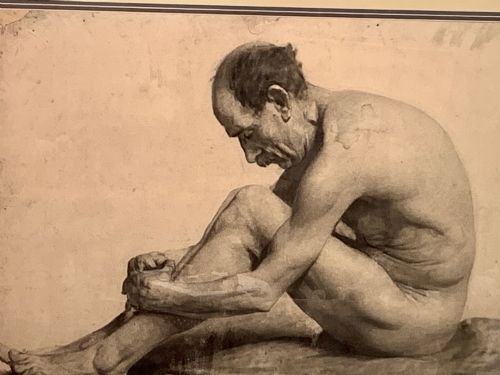
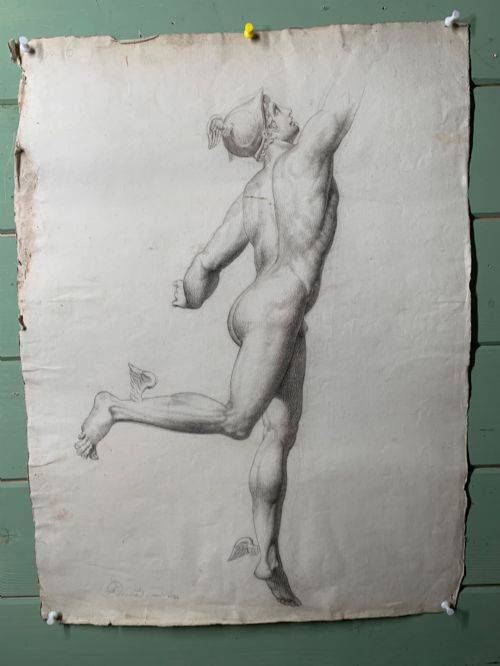
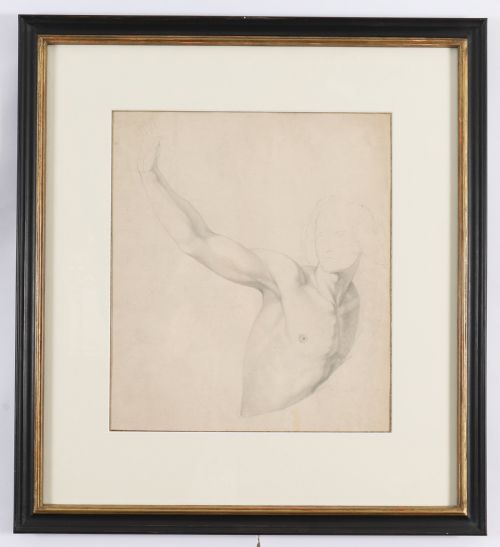
A paper male nude encompasses original drawings, watercolours, engravings, and prints executed across the eighteenth, nineteenth, and twentieth centuries. Buyers searching for a paper male nude typically encounter academic life studies, mythological interpretations, and modernist explorations framed for display.
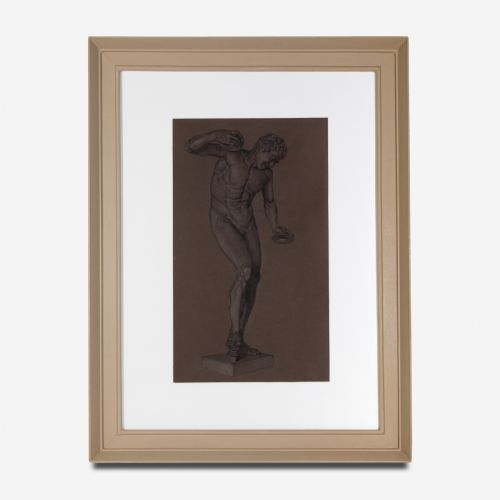
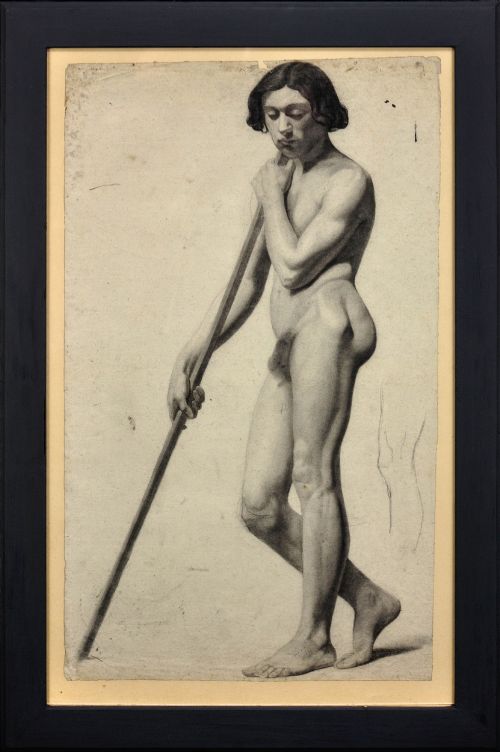
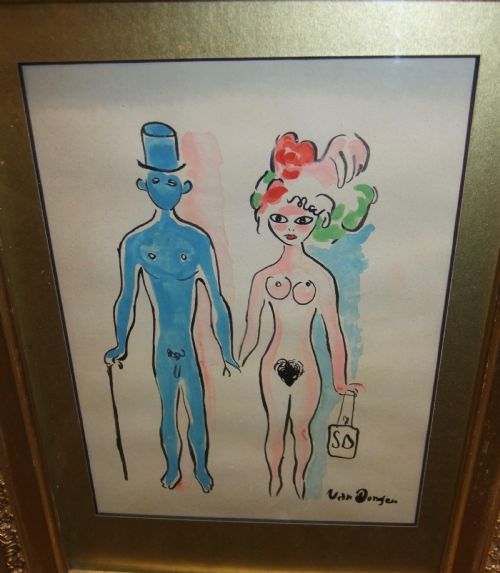
The pieces on this page span diverse stylistic movements including academic realism, neoclassical studies, modern british art, and fauvism. Works range from anonymous figural exercises to dated pieces bearing the hallmarks of structured art academies.
Materials and techniques
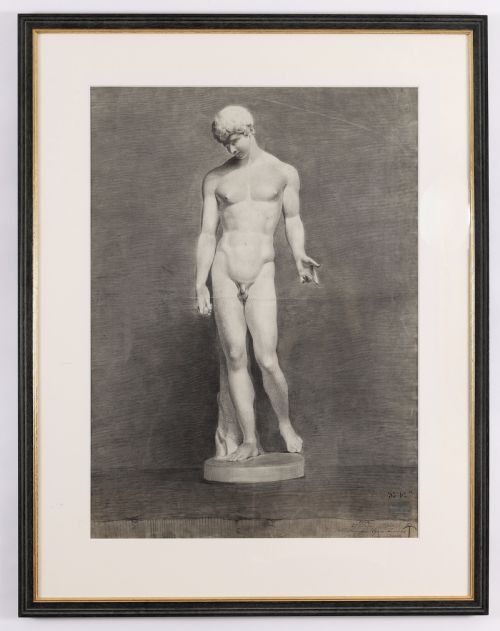
Artists executed these works on paper using media such as graphite, charcoal, ink, wash, and pastel, frequently mounting or framing the sheets in wood and glass. Academic draughtsmen utilised precise pencil and charcoal techniques to render musculature and proportion from life or classical sculpture.
Later twentieth-century examples incorporate watercolour and bolder modernist lines on paper support. Engravings from earlier centuries employed inked plates pressed onto paper to reproduce classical antiquities and grand prix submissions.
Paper Male Nude Retail Price Guide 2026
Typical asking prices for paper male nude among the pieces listed under this phrase on Sellingantiques today, from the lower quarter to the upper quarter. They describe what is for sale here now, not the wider market.
Materials across these listings include charcoal, graphite, ink, wash, and pastel applied to paper.
Factors of quality
Quality rests upon the anatomical precision of the draughtsmanship and the confidence of the line work. Academic life studies that successfully capture tension, weight, and skeletal structure reveal the rigorous training of the artist behind the paper.
The condition of the paper surface and the integrity of early framing also distinguish individual works. Original dated sheets and works attributed to documented figures carry greater historical weight than anonymous student exercises.
Samuel Rabin·Henry Arthur Roberts·Kees van Dongen·James Basire
The Paper Male Nude Glossary
- Academic study
- A rigorous drawing or painting produced within an art academy to train students in anatomy and proportion. These works typically focus on classical figures or live models.
- Graphite
- A form of carbon used as a drawing medium in pencils. It produces grey or black marks capable of fine detail and subtle shading.
- Wash
- A diluted layer of ink or watercolour applied evenly across paper. It provides tonal depth and shadow behind primary lines.
- Neoclassical
- A style rooted in the arts of classical antiquity that prioritised noble simplicity and rigorous contour. It influenced academic figure drawing throughout the eighteenth and nineteenth centuries.
Paper Male Nude: Frequently Asked Questions
What is an academic life study?
An academic life study is a detailed drawing of a human model produced in a structured art school setting. Artists spent hours recording bone structure, musculature, and lighting from observation.
These drawings served as foundational practice for larger history paintings or sculptures. They record the rigorous training methods of past centuries.
How do I date a paper nude drawing?
Dating relies on inscriptions, signatures, watermarks, paper characteristics, and stylistic conventions. Many nineteenth-century academic sheets bear period framing or written dates by the artist.
Changes in artistic style from neoclassical rigidity to twentieth-century modernism also help narrow the period of creation.
How should I display drawings on paper?
Drawings on paper require framing under glass with acid-free mounts to prevent direct contact with the glazing. This protects the delicate charcoal, graphite, or watercolour surface from physical damage and humidity.
Position framed works away from direct sunlight to prevent the paper and ink from fading over time.
What distinguishes an engraving from a drawing?
A drawing is a unique hand-drawn work created directly with media like pencil, ink, or charcoal on paper. An engraving is a printed multiple produced by carving an image into a metal plate and transferring it with ink onto paper.
Engravings often reproduce classical statues or architectural antiquities for wider publication.