
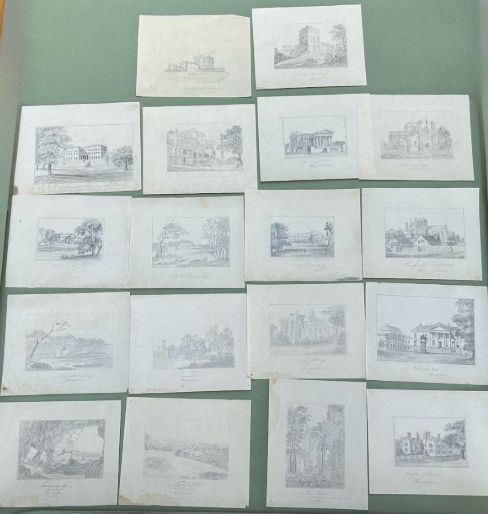
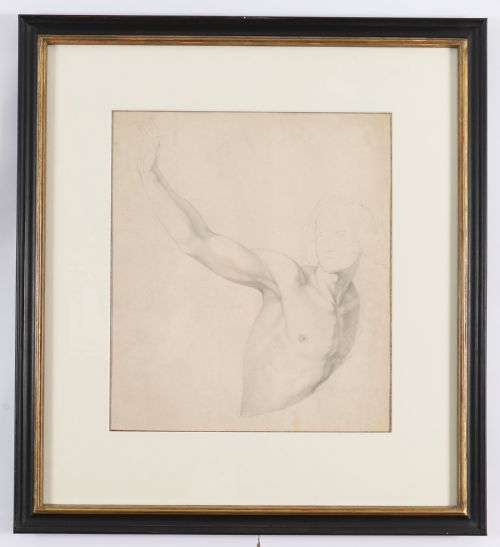
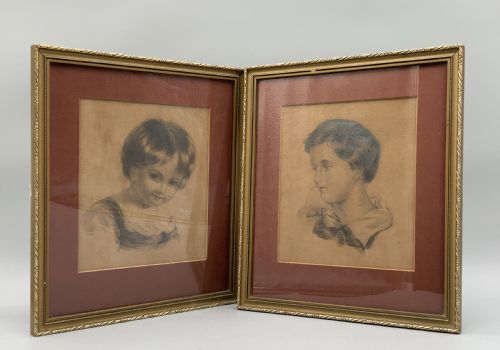


Paper Graphite Sketches
Paper graphite sketches offer direct access to the hand of the artist through intimate line and tone.
Paper Graphite Sketches
Paper graphite sketches encompass original works on paper utilising pencil, graphite, and charcoal to capture portraits, landscapes, and figure studies. Collectors seeking paper graphite sketches encounter diverse formats, ranging from loose academic life studies to finished framed portraits.
The pieces span multiple periods from the eighteenth century through the mid-twentieth century, reflecting changing artistic conventions. Examples frequently appear as individual framed artworks or grouped sets originating from British and European hands.
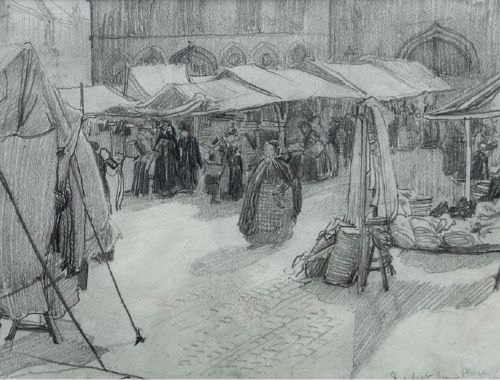
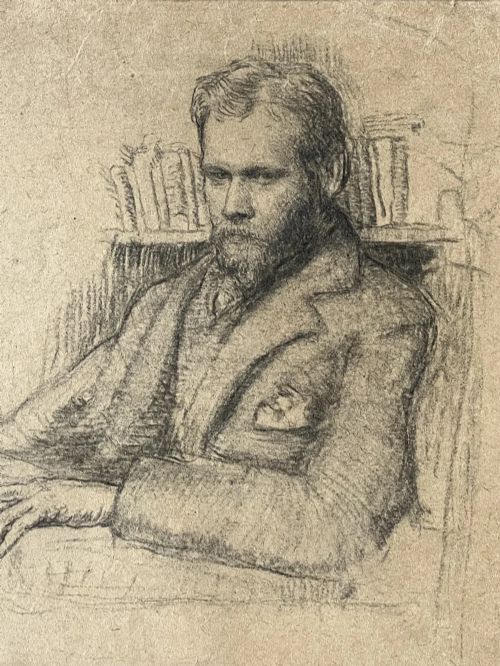
Portraits of sitters, architectural views, and allegorical scenes form the core of the selection available on this page. These works provide tangible insight into historical draftsmanship without the intermediary of print or reproduction.
Evaluating Quality in Drawings
Confidence of line and economy of stroke separate skilled draftsmanship from hesitant execution. A successful sketch conveys form and character swiftly, demonstrating the artist's mastery over the medium.
Condition of the paper surface and stability of the underlying graphite dictate longevity. Well-preserved sheets retain crisp contrast and minimal discolouration around the edges, whereas inferior examples suffer from heavy foxing or brittle paper.
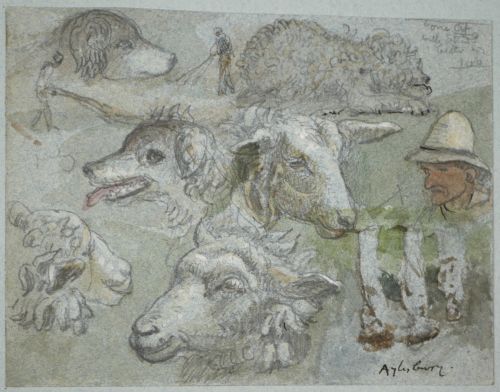
Several drawings preserve the watchful gazes of domestic animals, including spaniels and cheeky kitchen dogs.
Henry Percy Huggill·James Smetham·Augustus John·Sir Francis Leggatt Chantrey·Fred Lawson·Henri Josephe Hesse·Dame Laura Knight·Faeq Hassan
The Paper Graphite Sketches Glossary
- Graphite
- A crystalline form of carbon used in pencils for drawing. It produces marks ranging from silvery grey to deep black depending on the hardness of the grade.
- Academic life study
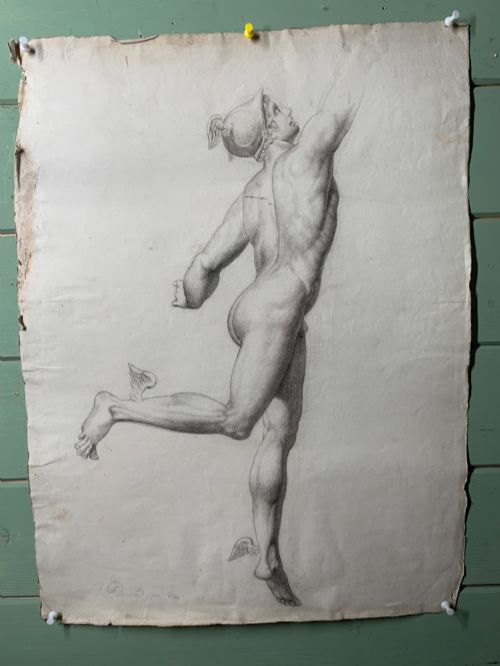
- A drawing executed from a live human model, typically within an academy setting. These exercises emphasise precise anatomical proportion and shadow rendering.
- Foxing
- Brown spots and discolouration caused by chemical reactions in ageing paper. It often develops due to damp storage conditions over long periods.
- Wash
- A thin, transparent layer of diluted ink or watercolour applied with a brush. It establishes broad areas of tone behind or over pencil lines.
- Hatching
- Closely spaced parallel lines used to create tonal depth and shadow in a drawing. Cross-hatching crosses these lines at angles to deepen the effect.
Paper Graphite Sketches: Frequently Asked Questions
How should I frame antique paper sketches?
Protect the paper from direct contact with the glass by using an archival mount or spacer. Acid-free backing boards prevent deterioration over time.
Keep framed drawings away from direct sunlight to avoid fading the graphite and yellowing the paper.
What is the difference between a sketch and a study?
A sketch is typically a rapid, exploratory drawing capturing a fleeting idea or composition. A study involves more detailed observation, often focusing on a specific figure or element.
Both formats reveal the working method of the artist prior to creating a final painted or sculpted piece.
How can I identify the date of a pencil drawing?
Examine the watermark on the paper sheet if visible, alongside the framing materials and style of clothing depicted. Signatures and inscriptions often provide documentary evidence.
Stylistic markers such as academic proportions or modernist abstraction help narrow down the period of execution.
Are these drawings original works of art?
The pieces listed are unique, hand-drawn works rather than printed reproductions or mechanical copies. Each mark on the paper was made directly by the artist.
Signatures, artist stamps, and collector marks frequently accompany these original sheets to confirm provenance.