


Paper Cityscape Painting
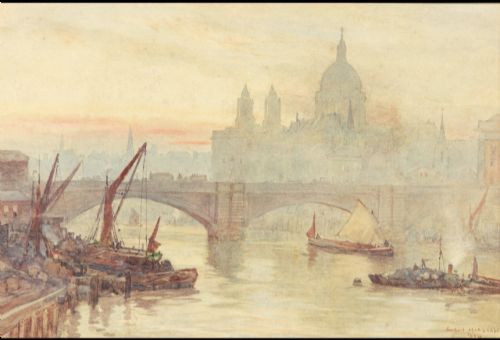
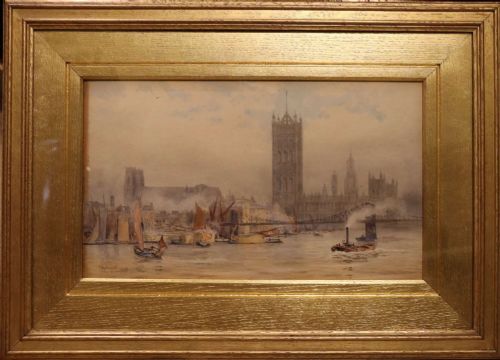
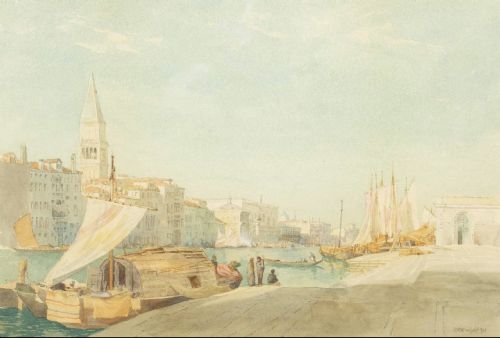
These paper cityscape painting examples capture urban landmarks and waterways in watercolour, pastel, and mixed media from the nineteenth century to the mid-twentieth century.
Paper Cityscape Painting
When you search for a paper cityscape painting, you are looking at works on paper depicting urban views, bridges, canals, and riverbanks. The pieces available here span from the nineteenth century through the Edwardian era and into the mid-twentieth century.
The subjects focus heavily on recognisable river scenes and architectural landmarks in London, Venice, Rome, Paris, and provincial centres like Lincoln and Hereford. You will frequently encounter watercolours depicting the Thames, the Grand Canal, and historic European piazzas.
The forms range from traditional watercolour paintings and fine art wall art to pastel paintings and mixed media works. These pieces offer a direct window into how artists of different periods recorded the changing face of major cities.
How they were made
Artists worked primarily with watercolour paint and pigment applied to paper supports, often building up translucent washes alongside finer ink details. Pastel pigment was also utilised for specific post-impressionist atmospheric effects.
Framing often involved glass protection set within gilt wood frames to preserve the delicate paper surfaces from moisture and atmospheric damage.
Materials documented in these works include traditional paper, watercolour pigment, ink, glass, and gilt wood frames.
What varies in quality
Quality rests in the sureness of the draughtsmanship and the artist's ability to handle light and atmosphere across architectural forms and open water. Stronger works demonstrate confident brushwork and precise topographical perspective rather than stiff, hesitant rendering.
The preservation of the paper and the vibrancy of the pigments also dictate the standing of a piece. Examples that retain their original colour intensity without heavy fading or excessive foxing command greater appreciation.
H. Medlycott·Richard Henry Wright·Fred Lawson·Charles James Lauder·Vittore Zanetti Zilla·David Small·Jack Merriott·Walter Duncan·David Law·Noel Harry Leaver·Ettore Ascenzi·Henry Wimbush·J. Tim Macdonald·Matthew Hale
The Paper Cityscape Painting Glossary
- Watercolour
- A paint consisting of colour suspended in a water-soluble binder, used on paper to create luminous transparent washes. It is the dominant medium found across these urban views.
- Mixed media
- An artwork combining two or more artistic materials, such as watercolour, ink, and pastel on paper. This approach allows artists to layer textures and intensify highlights within a cityscape.
- Gilt wood
- Wood that has been coated with a thin layer of gold leaf or gilt paint, commonly used for period frames. It provides a traditional decorative border that enhances the tones of the painting within.
- Post-impressionism
- An art movement extending roughly from the late nineteenth century that rejected naturalistic depiction in favour of expressive forms and colour. Works in this style focus on subjective interpretation rather than strict topographical accuracy.
- Foxing
- Brown spots or patches that develop on older paper due to chemical reactions over time. Collectors monitor this condition when assessing the overall state of a historic sheet.
Paper Cityscape Painting: Frequently Asked Questions
How do I care for a paper cityscape painting?
Keep these works behind glass and hang them away from direct sunlight to prevent the watercolour pigments and paper support from fading over time.
Maintain a stable room humidity to protect the paper and the original frame from warping or deterioration.
How can I tell the period of a cityscape?
Examine the architectural details, transport methods, and clothing of any figures depicted within the street or river scenes, as these often reflect the fashion of the era.
The artist's signature, framing style, and paper stock also provide reliable clues to the date of execution.
Were these paintings made outdoors?
Many artists produced preliminary sketches and watercolour studies on location in cities like Venice, London, or Rome to capture direct atmospheric effects.
More finished compositions were frequently completed in the studio using these observational studies as reference.
What is the difference between watercolour and pastel?
Watercolour involves fluid, water-soluble pigments applied with a brush to create transparent washes and fine linear details on paper.
Pastel consists of powdered pigment bound into sticks, applied dry to create velvety surfaces with rich, blended colour.