

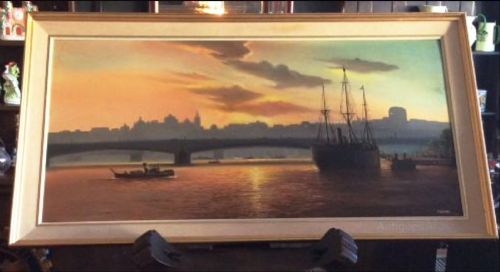


Panoramic Landscape Wall Art
Panoramic landscape wall art captures sweeping vistas across rivers, cities and coasts, offering buyers expansive views rendered in oils and watercolours.
Panoramic Landscape Wall Art
Panoramic landscape wall art encompasses wide-format visual works designed to stretch across interior spaces, presenting broad topographical views and cityscapes. Buyers seeking panoramic landscape wall art encounter a variety of formats, predominantly large oil paintings on canvas and detailed watercolours dating from the eighteenth century through to the mid-twentieth century.
How they were made
Artists created these expansive views primarily using oil on canvas or watercolour on paper, frequently housed within wood frames and gilded wood or giltwood surrounds. The physical construction of the pieces relies on stretched canvas and heavy paper supports capable of holding sweeping horizontal compositions without warping.
Framing techniques involve traditional wood frames, sometimes gilded, which provide structural support and aesthetic definition to the wide proportions of the artworks. The application of oil paint allows for deep tonal variation in marine and industrial subjects, whereas watercolours capture lighter, more translucent atmospheric conditions.
Panoramic Landscape Wall Art Retail Price Guide 2026
Typical asking prices for panoramic landscape wall art among the pieces listed under this phrase on Sellingantiques today, from the lower quarter to the upper quarter. They describe what is for sale here now, not the wider market.
Listings span periods from the eighteenth century to the mid-twentieth century, featuring oil on canvas, paper, wood, glass, and giltwood frames.
What varies in quality
Quality in these wide-format works rests upon the artist's ability to maintain compositional balance across an extended horizontal plane without losing focal clarity. The handling of light, particularly in marine and river scenes, distinguishes masterly brushwork from more mechanical or repetitive topographical recording.
The integration of the frame with the painting further influences the overall integrity of the piece, where period-appropriate giltwood or wood frames enhance the visual weight of the panorama. Additionally, the specificity of topographical detail, such as architectural landmarks or industrial structures, marks the distinction between standard illustrative records and accomplished fine art.
Alexandre Le Bihan·Ron Folland·Sidney Yates Johnson·Edward Henry Holder·Edmund John Niemann
The Panoramic Landscape Wall Art Glossary
- Panorama
- A wide-angle pictorial representation stretching across a broad horizontal plane. This format allows the viewer to take in extensive topographical or maritime vistas in a single glance.
- Giltwood
- Wood that has been coated with a thin layer of gold leaf or gilt powder. It is commonly found on traditional frames surrounding oil paintings.
- Townscape
- An artistic representation of the physical aspects of a town or city. These works often focus on urban architecture, rivers and industrial infrastructure.
- Realism
- An artistic movement focused on the truthful and objective depiction of contemporary life and nature. In these listings, it appears in nineteenth-century interpretations of coastal and river scenes.
Panoramic Landscape Wall Art: Frequently Asked Questions
Where should I hang a panoramic landscape?
These wide horizontal pieces suit long expanses of wall, such as above a sofa, sideboard or fireplace mantel where their breadth can be fully appreciated without competing with vertical architectural elements.
Because many of these works depict expansive rivers, coastal towns or industrial vistas, they anchor large rooms by drawing the eye across the horizontal axis of the space.
How do I care for oil paintings on canvas?
Keep oil paintings out of direct sunlight and away from rapid temperature fluctuations to prevent the canvas from slackening and the paint layers from cracking.
Dust the surface gently with a soft, dry brush and avoid using water or chemical cleaners on either the canvas or the wooden frame.
What is the difference between an oil painting and a watercolour?
Oil paintings utilise pigment suspended in drying oils applied to canvas or wood, offering rich textures, deep saturation and the ability to work in heavy impasto. Watercolours use water-soluble pigments on paper, resulting in transparent washes and a lighter, more luminous surface quality.
Oils are typically framed under glass only if unvarnished or very delicate, whereas watercolours require glass protection to shield the paper from moisture and dust.
How do I date an antique painting?
Dating relies on stylistic markers, the materials used for the canvas or paper support, and any signatures, inscriptions or documentation associated with the artist. Frame construction and framing methods also provide reliable secondary clues regarding the period of the piece.
Comparative study with known works by the same artist or period helps narrow the timeframe of creation.