





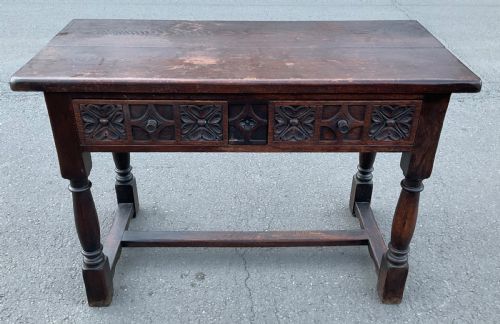


Panelled Oak Desk
Panelled oak desks bring tangible history into a study, combining robust timber construction with traditional joinery.
Panelled Oak Desk
A panelled oak desk is a sturdy writing workstation constructed primarily from solid timber featuring recessed or raised sections within its framework. When searching for a panelled oak desk, buyers encounter forms ranging from pedestal writing tables and kneehole desks to bureau bookcases and rolltop variations spanning several centuries.
The pieces appearing on this page stretch from seventeenth-century origins through Georgian and Victorian interpretations to Edwardian and early twentieth-century examples. Bureau bookcases and kneehole pedestals dominate the selection, offering integrated storage alongside dedicated writing surfaces.
Makers utilised various stylistic revivals, applying Jacobean, Gothic, and Arts and Crafts details to heavy timber frames. These desks served functional roles in country houses, commercial shops, and domestic studies alike, resulting in diverse configurations.
Materials and construction methods
Makers relied on solid oak as the primary structural timber, often complemented by secondary woods and decorative veneers. Workshops incorporated brass handles, escutcheons, and iron hardware to secure drawers and doors.
Joinery methods focused on frame-and-panel construction, allowing the timber to expand and contract naturally without splitting. Carved reliefs, brass mounts, and occasional glass panels finished the exteriors of cabinets and pedestals.
Panelled Oak Desk Retail Price Guide 2026
Typical asking prices for panelled oak desk among the pieces listed under this phrase on Sellingantiques today, from the lower quarter to the upper quarter. They describe what is for sale here now, not the wider market.
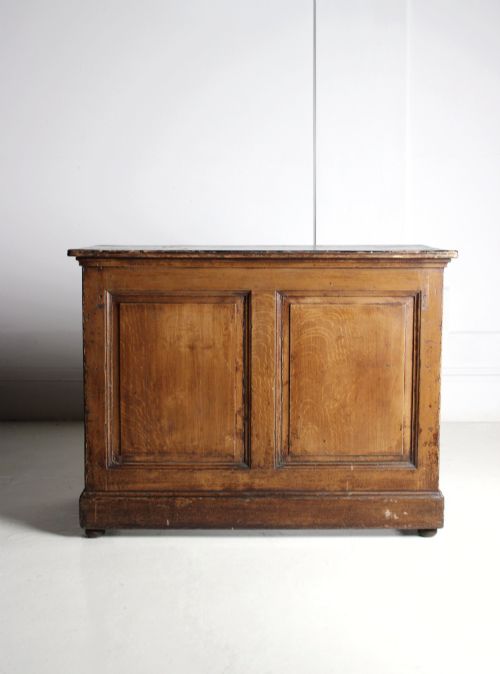
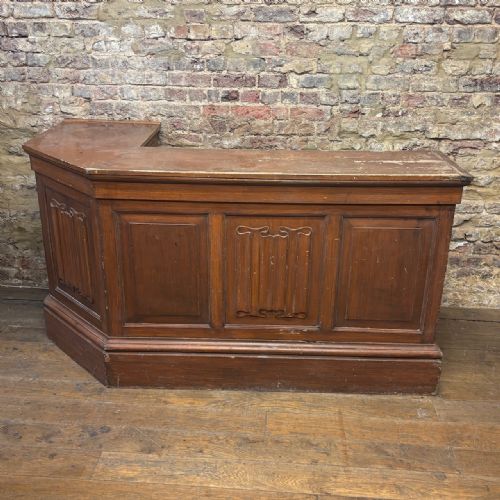
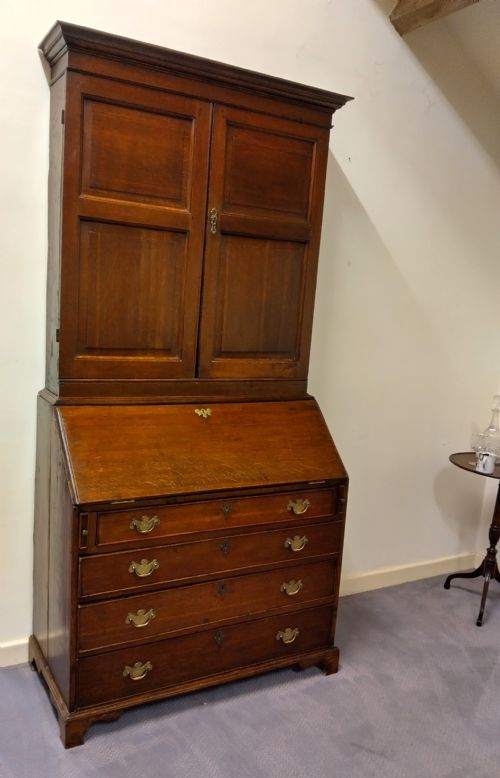
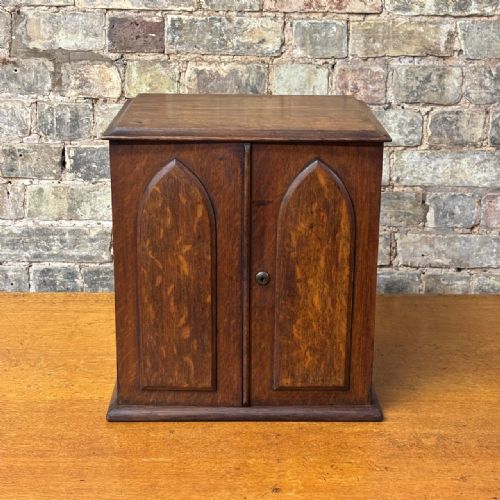
Object types span pedestal desks, bureau bookcases, bible boxes, and commercial shop counters.
Assessing craftsmanship and condition
Quality rests in the precision of the joinery and the selection of the timber grain. Superior examples display tight panel fits, original hardware, and balanced proportions across twin pedestals or bureau sections.
Later alterations, adapted interiors, and mismatched replacement hardware alter the integrity of older items. Pieces retaining their original finish and structural harmony command greater appreciation among collectors.
Wetson and Thexton·Gillows
The Panelled Oak Desk Glossary
- Bureau
- A sloping writing flap opening to reveal pigeonholes and small drawers. This form frequently sits atop a chest of drawers or a pedestal base.
- Pedestal desk
- A large freestanding writing table supported by two banks of drawers. These items often feature panelled sides and backs for placement in the centre of a room.
- Secretaire
- A cabinet or bookcase containing a pull-out writing drawer or drop-front writing surface disguised as a drawer. It conceals compartments for stationery and letters.
- Tambour
- A flexible sliding shutter formed from narrow strips of wood glued to canvas. This mechanism encloses the top section of rolltop desks.
- Kneehole desk
- A compact writing desk featuring a recessed central space for the user's legs, flanked by vertical stacks of drawers. These units suit smaller studies.
Panelled Oak Desk: Frequently Asked Questions
How do I date an oak desk?
Dating relies on examining construction techniques, hardware, and stylistic details. Hand-cut dovetails and pegged joints usually indicate earlier periods.
Machine-sawn timber and mass-produced brass fittings point towards late nineteenth or early twentieth-century production.
Where should I place a partner desk?
Partner desks feature drawers on both long sides, designed for two people to work opposite one another. They require placement in the centre of a room rather than against a wall.
This showcases the panelled backs and allows access from all directions.
Are rolltop desks difficult to maintain?
The wooden slats running on tracks require occasional cleaning and waxing to ensure smooth operation. Avoid placing them in overly dry rooms that cause the wood to warp.
Gentle care keeps the tambour mechanism functioning properly.