
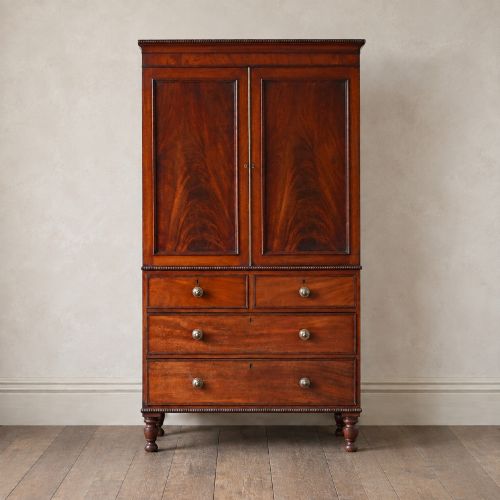
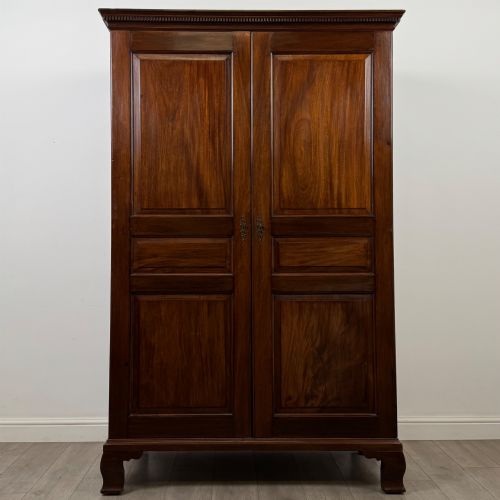
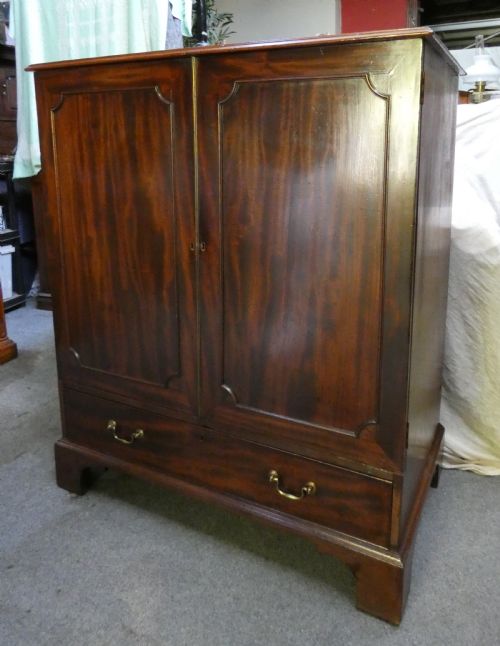
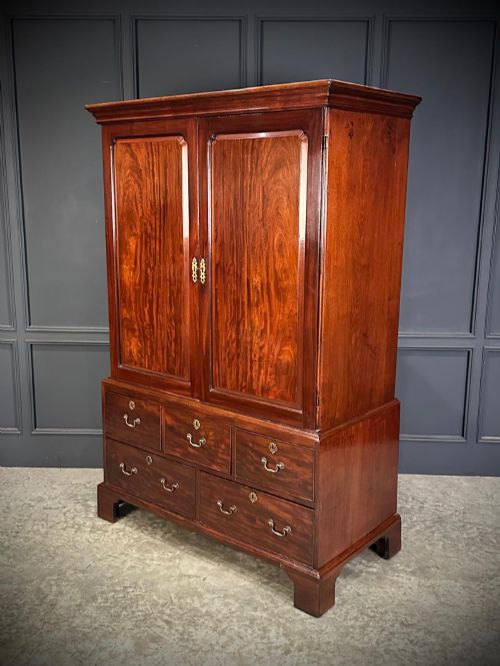


Panelled Mahogany Armoire
These panelled mahogany armoire pieces span Georgian and Victorian periods, offering timber depth and storage utility for traditional interiors.
Panelled Mahogany Armoire
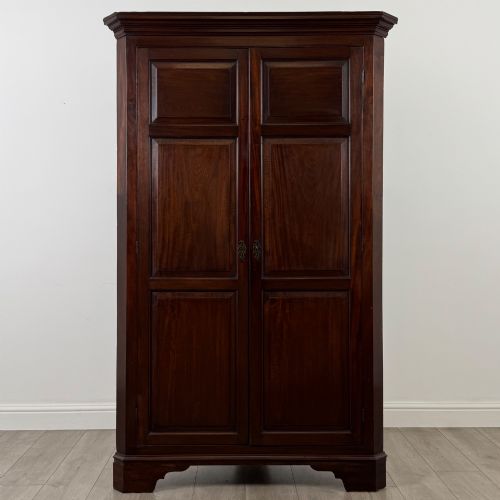
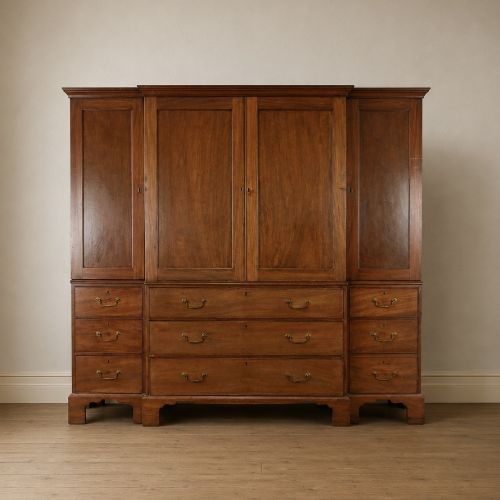
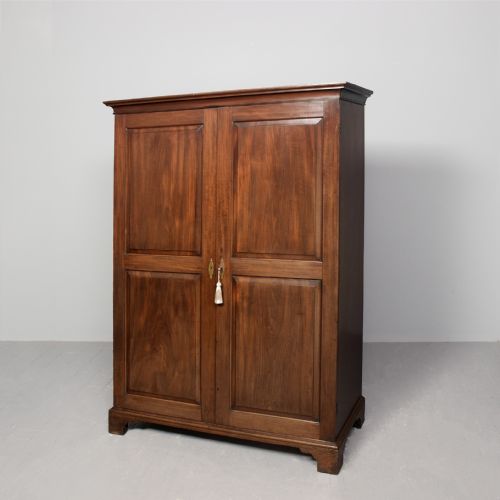
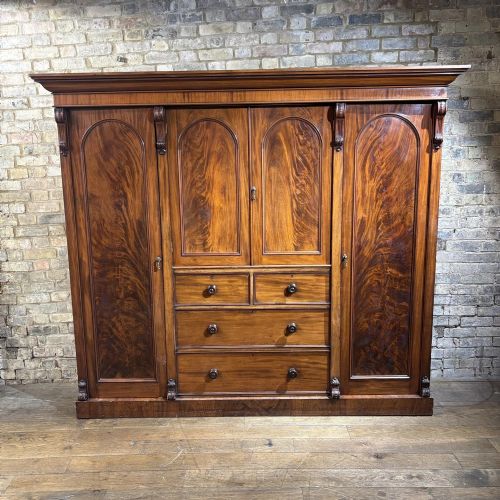
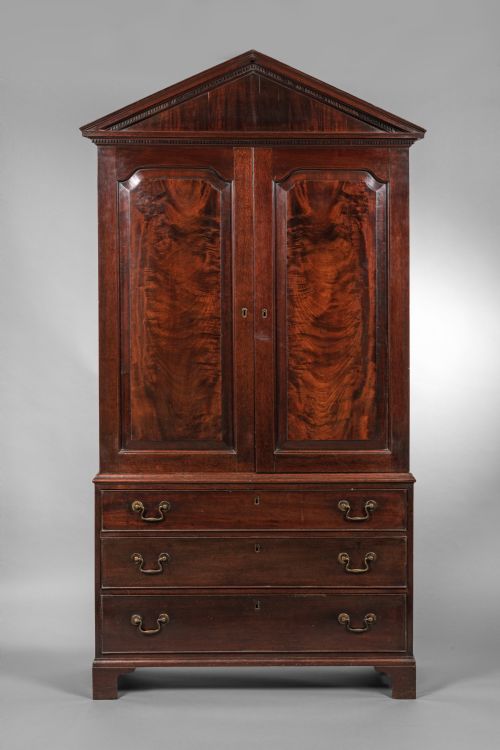
A panelled mahogany armoire represents large-scale timber storage designed for domestic clothes keeping, predominantly appearing on this page as Georgian linen presses, wardrobes, and cupboards. These items originate from periods spanning the eighteenth and nineteenth centuries, taking the form of breakfront wardrobes, press cupboards, and hanging armoires.
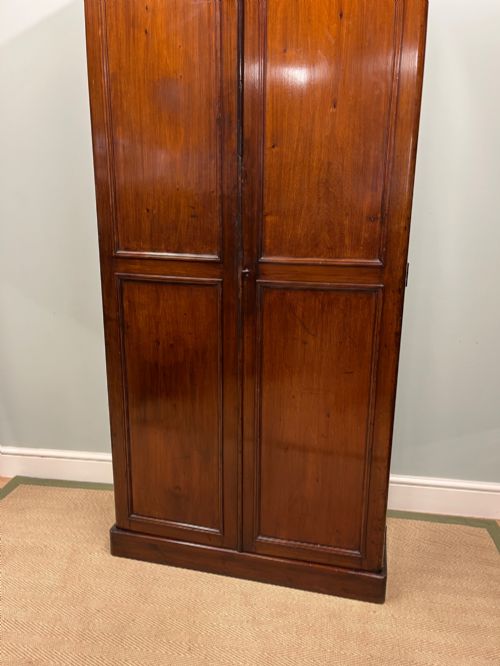
The selection frequently includes George III pieces alongside Victorian examples and regional Channel Islands variations, often incorporating panelled doors and fitted interior shelving or hanging space. Buyers encounter tall slim cupboards, corner cabinets, and multi-door combinations built to house linen, garments, and estate records.
Georgian items form the core of the selection, accompanied by later nineteenth-century adaptations and Edwardian hall robes that maintain traditional timber construction methods. Each form provides substantial bedroom or hallway storage through enclosed panelled doors.
How they were made
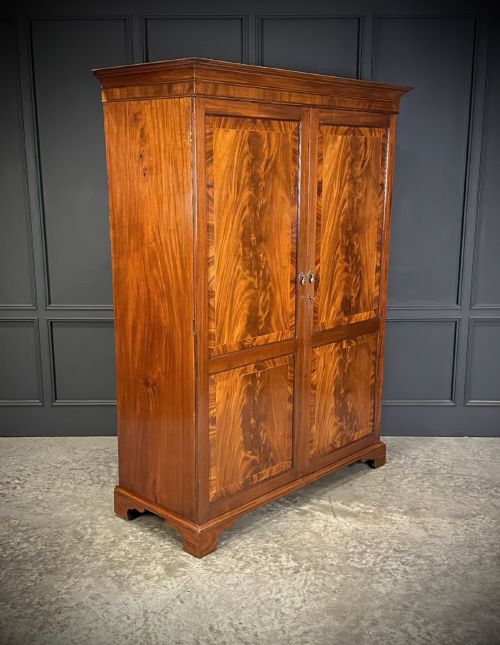
Joiners built these pieces using solid mahogany and pine carcasses overlaid with flame mahogany veneer or satinwood, incorporating rosewood crossbanding for decorative contrast. Brass hardware such as hinges, escutcheons, and handles completed the structural assembly on doors and internal drawers.
Craftsmen utilised traditional frame and panel construction techniques to allow timber movement across large wardrobe doors and breakfront facades. Pediments often featured swan-neck designs atop timber carcases built to withstand heavy domestic use.
The inventory records linen presses, breakfront wardrobes, and corner cabinets spanning three centuries.
What varies in quality
The calibre of timber figure dictates the visual standard, with matched flame mahogany veneer and satinwood inlay creating superior decorative depth compared to plain grain boards. Figured mahogany selections demonstrate careful timber selection by the cabinetmaker.
Structural complexity influences execution, distinguishing breakfront wardrobes and fitted linen presses with internal sliding trays from simpler two-door hanging cupboards. The integration of crossbanding, swan-neck pediments, and brass fittings marks the distinction between standard utility pieces and high-status examples.
Gillows
The Panelled Mahogany Armoire Glossary
- Linen Press
- A tall storage cabinet featuring upper sliding trays or shelves behind doors, positioned above a chest of drawers. This form held folded textiles before modern hanging wardrobes became standard.
- Breakfront
- A piece of furniture where the central section projects forward from the flanking outer sections. This configuration adds architectural depth to large wardrobes and bookcases.
- Crossbanding
- A narrow strip of veneer laid around the border of a panel so the grain runs perpendicular to the central surface. It frames drawer fronts and cabinet doors for decorative contrast.
- Flame Mahogany
- Timber cut from the fork of the mahogany tree where branches meet the trunk, producing a rippling flame pattern. Cabinetmakers prized this veneer for principal door panels.
- Swan-Neck Pediment
- A broken pediment featuring two opposing cyma curves rising to a central scroll or finial. This architectural crest adorns the top of tall Georgian case pieces.
Panelled Mahogany Armoire: Frequently Asked Questions
What is a linen press?
A linen press is a traditional storage cabinet comprising upper sliding trays or shelves enclosed by doors, sitting above a chest of base drawers.
Originally designed for flat-stored household linens, these pieces frequently double as wardrobe storage in modern homes.
How do I date a mahogany armoire?
Dating relies on architectural characteristics, timber choice, and construction methods visible in the carcass and drawers.
Georgian examples display classical pediments and solid framing, while Victorian iterations often present heavier proportions and figured mahogany veneers.
Do these wardrobes dismantle for moving?
Many large period wardrobes and presses feature modular carcase construction designed for dismantling into sections.
This historical engineering allows large estate pieces to pass through domestic doorways during installation.
What is flame mahogany?
Flame mahogany is a decorative veneer harvested from the junction where branches meet the main tree trunk.
This figure creates distinctive fire-like patterns utilised on prominent door panels and drawer fronts.
Where were Channel Islands wardrobes made?
Channel Islands wardrobes originated in the islands between England and France, reflecting regional joinery traditions.
These pieces combine local timber preferences with distinct architectural proportions influenced by cross-Channel trade.