






Panelled Corner Unit
Panelled corner units are practical timber storage pieces shaped to fit idle wall angles, spanning Georgian to Victorian periods in oak, mahogany, and pine.
Panelled Corner Unit
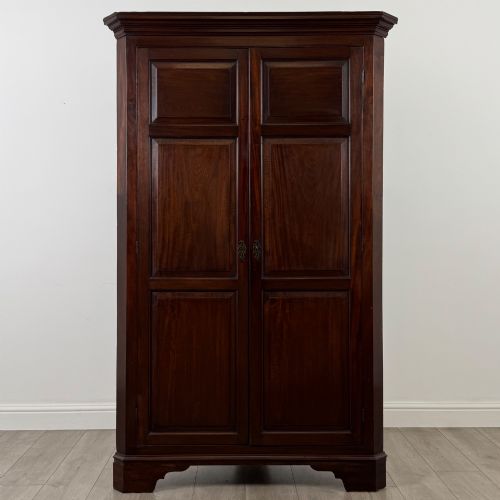
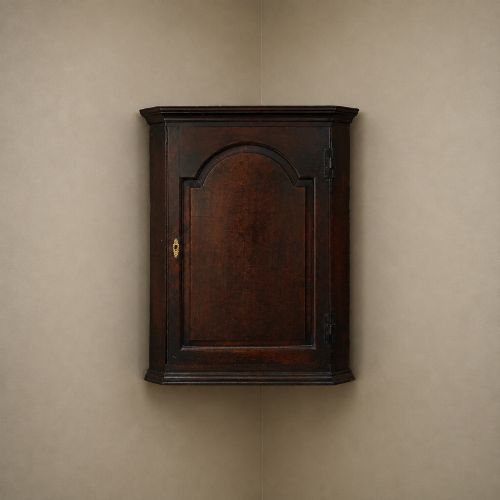
When you search for a panelled corner unit, you encounter fitted timber storage designed specifically to occupy the awkward angles of a room. These pieces appear predominantly as hanging wall cabinets or floor-standing furniture, turning wasted space into functional storage. The format effectively utilises corners that standard square cabinets cannot reach.
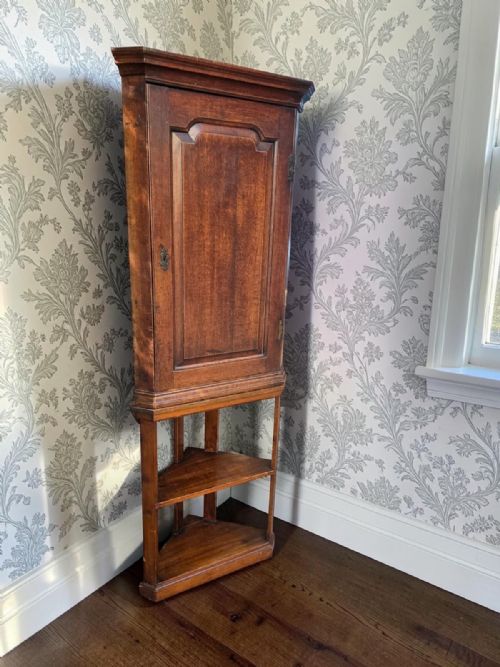
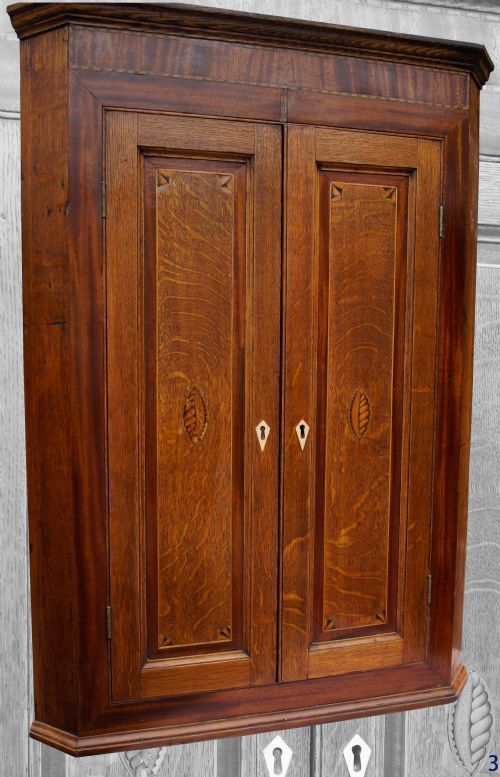
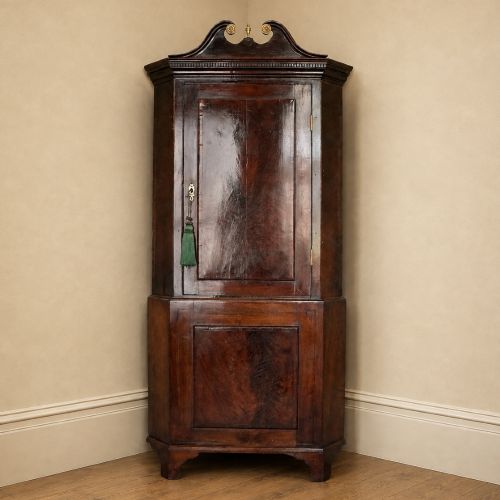
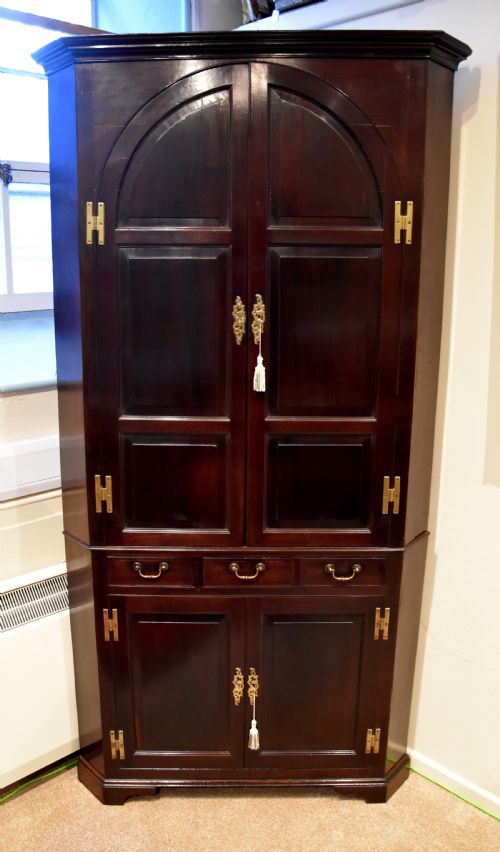
The version you are most likely to meet on this page is the Georgian or Victorian timber corner cupboard, constructed from oak or mahogany. Many examples date from the eighteenth century, presenting panelled wooden doors that open to reveal internal shelving. Wall-hanging variations sit alongside grander floor-standing editions and units mounted on stands.
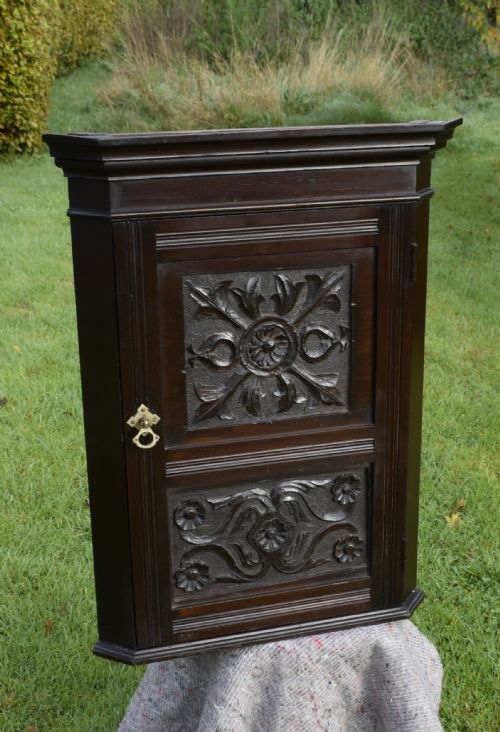
Regional workshops and country makers produced distinct vernacular interpretations using local timber such as fruitwood and pine. Styles range from plain country pieces to revivalist designs including Jacobean and Chippendale influences. Some examples incorporate glazed doors or double-door formats while retaining the essential triangular footprint.
How they were made
Cabinet makers built these units primarily using solid oak, mahogany, and pine, frequently employing Cuban mahogany for finer urban examples and fruitwood or local oak for regional pieces. Timber boards were joined with traditional techniques to form the rigid triangular carcase necessary for corner placement. Panel construction allowed the wood to expand and contract naturally without splitting.
Doors feature fielded panels held within strong frames, sometimes complemented by glazed sections in later revival pieces. Brass hinges and escutcheons secure the doors and provide functional detailing. Surfaces received wax or polish finishes that highlight the natural grain of the hardwood or pine.
Panelled Corner Unit Retail Price Guide 2026
Typical asking prices for panelled corner unit among the pieces listed under this phrase on Sellingantiques today, from the lower quarter to the upper quarter. They describe what is for sale here now, not the wider market.
Recorded forms include wall-hanging cupboards, standing corner cabinets, and multi-part floor-standing editions with timber or glazed doors.
What varies in quality
The choice of timber dictates much of the character, with dense Cuban mahogany and finely figured eighteenth-century oak sitting at the upper end of the scale. Plain pine and simulated painted finishes represent a more utilitarian domestic standard. Cabinet-making precision is evident in how cleanly the mitres meet and how smoothly the panelled doors hang.
Proportion and scale separate standard regional pieces from ambitious country house or standing cabinets. Floor-standing examples in two parts require careful alignment between the upper and lower sections. Finer hardware, such as original brass H-hinges or working locks with keys, elevates the integrity of the piece.
The Panelled Corner Unit Glossary
- Corner cabinet
- A storage unit constructed with a triangular cross-section designed to fit directly into the corner of a room. These pieces utilise space efficiently and appear in both wall-hanging and floor-standing formats.
- Fielded panel
- A central wooden board with bevelled edges set into a surrounding groove within a door frame. This technique reduces overall weight while preventing warping.
- Hinges
- Metal fastenings securing the cabinet doors to the frame, often taking the form of decorative brass H-hinges on earlier country pieces. Original hardware contributes to the historical integrity of the cabinet.
- Carcase
- The main structural body of the furniture piece without the doors or internal loose shelves. The triangular carcase provides the rigidity required for corner installation.
- Revival
- A design style from the nineteenth or early twentieth century that copies earlier historical aesthetics such as Jacobean or Chippendale. These pieces imitate older construction methods and decorative motifs.
Panelled Corner Unit: Frequently Asked Questions
How do I hang a wall cabinet?
Wall-hanging corner cupboards require secure fixings screwed directly into the solid wall studs or masonry behind the plaster. The triangular shape distributes weight towards the back corner.
Ensure the wall brackets inside the carcase can support the heavy timber frame and any contents placed upon the internal shelves.
Are these pieces one part or two?
Corner cupboards appear in both single-piece construction and two-part formats. Smaller wall-hanging units and single floor-standing cupboards form one solid unit.
Larger floor-standing editions often divide into an upper cabinet and a lower base section to assist with transport and positioning.
What is simulated oak?
Simulated oak describes a painted or grained surface treatment applied to cheaper pine timber to imitate the appearance of expensive hardwood. Makers utilised this technique during the Georgian period.
This finish allowed owners to achieve a fashionable aesthetic without the higher cost associated with solid oak materials.
How do I date a corner cupboard?
Dating relies on observing timber types, hinge styles, construction marks, and overall proportions. Eighteenth-century pieces frequently display hand-sawn board marks and pegged joints.
Revival pieces from the Victorian or Edwardian eras incorporate later mechanical fixings and different interior joinery standards.