



Paired Hanging Lights
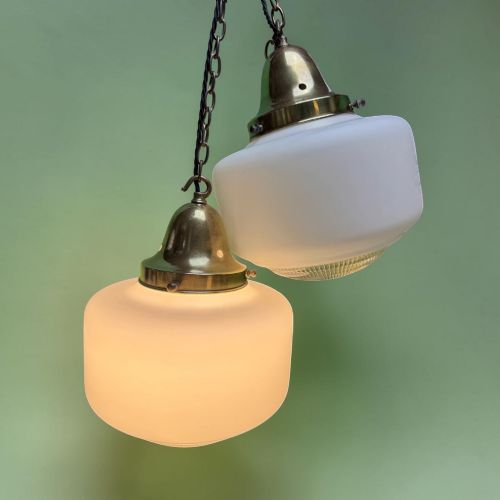
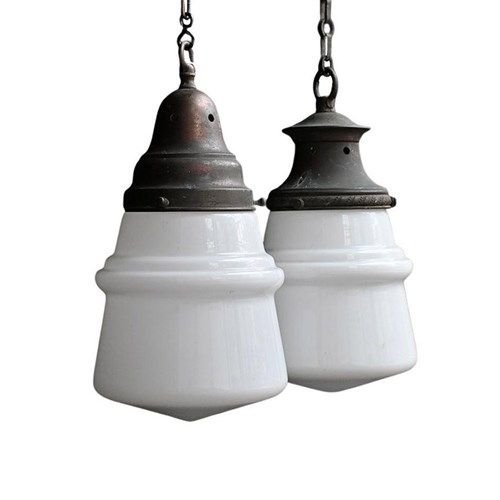
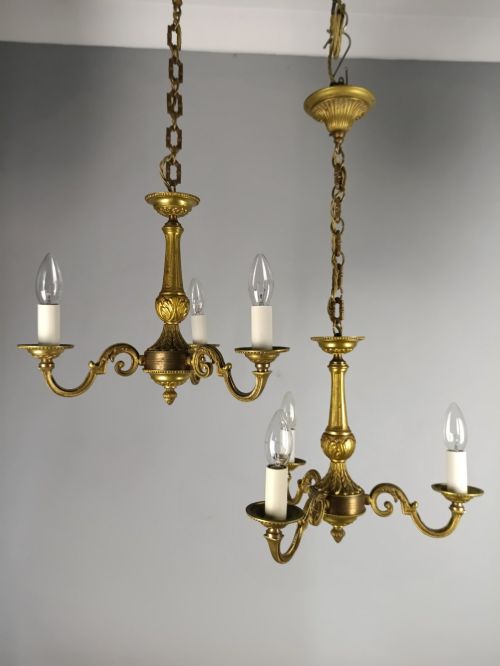
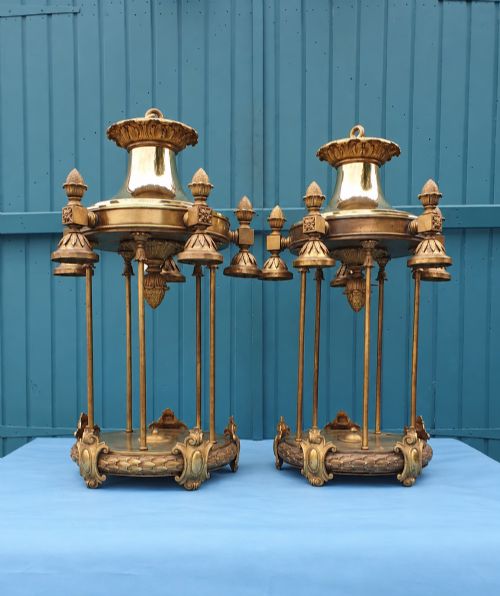
Paired hanging lights deliver balanced symmetry overhead, casting uniform illumination across grand hallways and dining tables alike.
Paired Hanging Lights
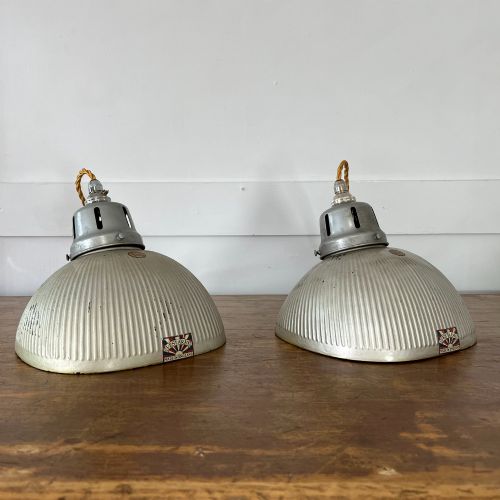
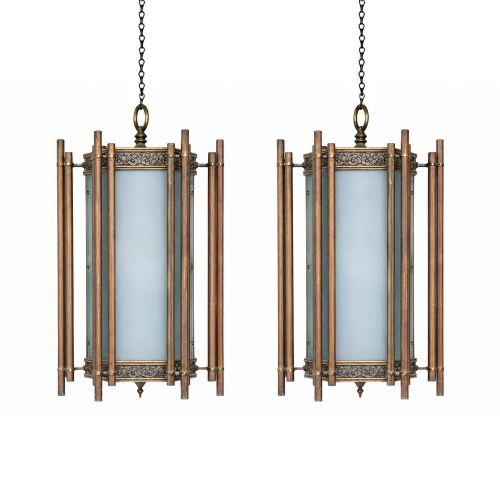
Paired hanging lights span pendant lights, chandeliers, ceiling lights, and hanging lanterns from the nineteenth century through the early twentieth century. These matching fixtures coordinate illumination across larger spaces, maintaining architectural harmony in rooms requiring two focal points.
The selection on this page centres heavily on early twentieth-century examples, including pieces from the 1900s, 1910s, 1920s, and 1930s. Edwardian and Victorian specimens also appear alongside French Chateau, Art Deco, Arts and Crafts, and Neoclassical Revival styles.
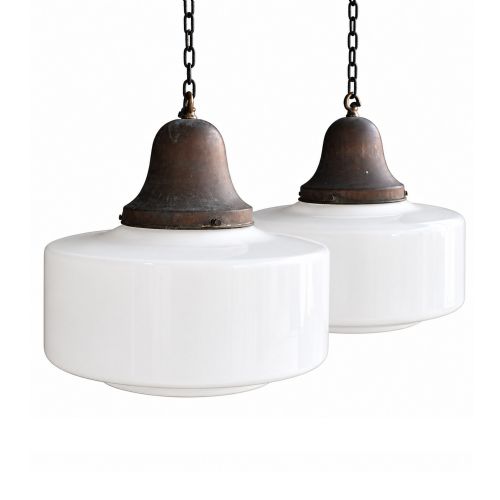
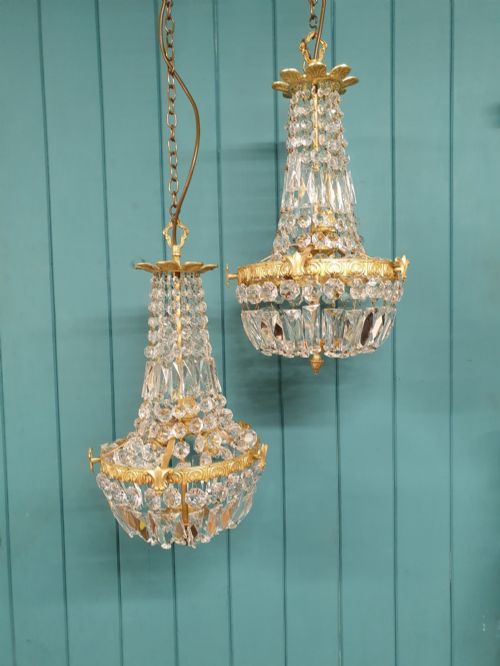
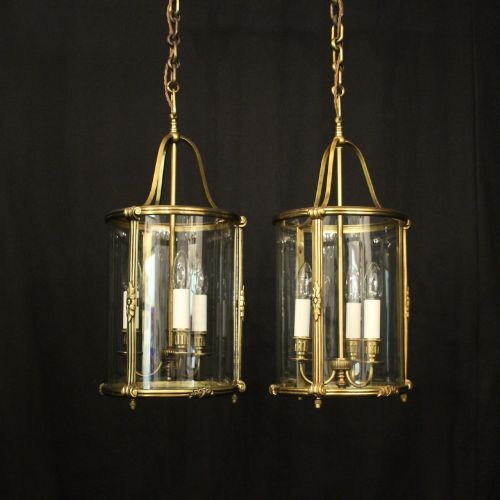
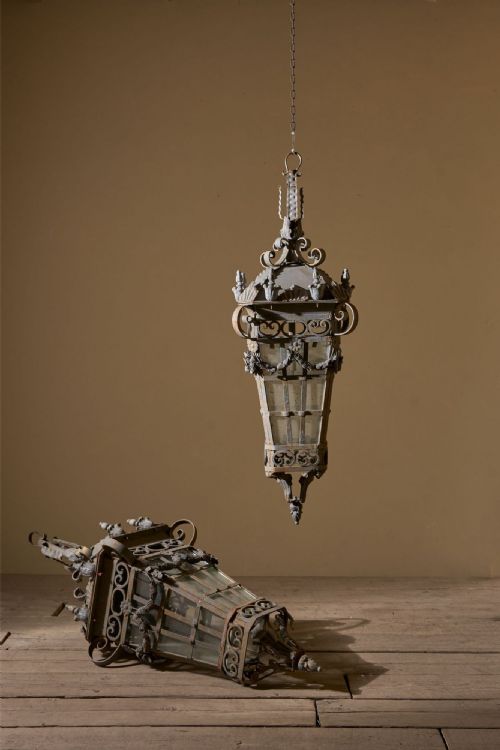
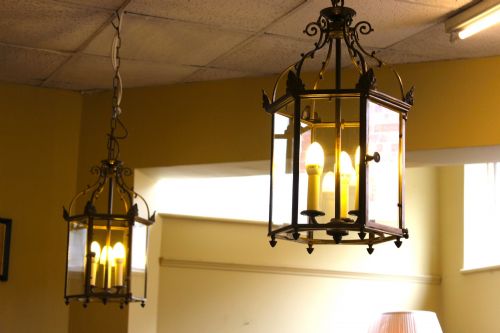
Buyers will encounter substantial brass lanterns, cut glass crystal tent chandeliers, opaline glass pendants, and iron hall lanterns. French gilded bronze and steel combinations represent a significant portion of the available lighting forms.
Materials and construction
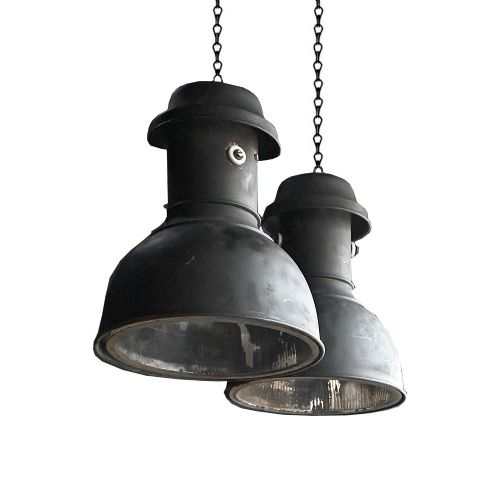
Makers utilised cast and sheet metals including brass, copper, wrought iron, steel, and gilded bronze to form the structural framework of these fixtures. Blacksmith made cast iron and zinc elements provide robust housing for outdoor or utilitarian hall applications.
Transparent and reflective components incorporate cut glass, crystal, opaline glass, and mercury mirrored glass to diffuse light. Ormolu and silver gilded bronze finishes elevate decorative lanterns intended for formal reception rooms.
Paired Hanging Lights Retail Price Guide 2026
Typical asking prices for paired hanging lights among the pieces listed under this phrase on Sellingantiques today, from the lower quarter to the upper quarter. They describe what is for sale here now, not the wider market.
Listings feature brass, glass, wrought iron, steel, cut glass, crystal, gilded bronze, and copper across the Edwardian, Victorian, and Art Deco styles.
Evaluating quality
Quality rests in the architectural integrity of the metalwork, from hand-forged blacksmith iron to crisply chased gilded bronze and ormolu. Substantial gauge brass and copper frames maintain structural rigidity far better than light, stamped alternatives.
The degree of hand-finishing defines the upper tiers, evident in finely cut crystal prisms, precise hexagonal lantern geometry, and intact mercury mirroring on glass pendants. Matched pairs showing uniform patination and original glass panels command greater appreciation than assemblages gathered later.
VESTARAY·Schneider
The Paired Hanging Lights Glossary
- Pendant light
- A single light fixture suspended from the ceiling by a cord, chain, or metal rod. These direct downward illumination onto specific surfaces.
- Chandelier
- A branched decorative ceiling fixture designed to hold multiple lamps or candles. They frequently incorporate crystal drops or glass tents to refract light.
- Hall lantern
- An enclosed hanging light originally designed for entrance passages and corridors. They protect the flame or bulb behind glass panels set within metal frames.
- Opaline glass
- A milky, semi-translucent white glass popular in the nineteenth and early twentieth centuries. It softens light output into a gentle, even glow.
- Ormolu
- Gilding technique applying finely ground high-carat gold-mercury amalgam to a bronze object. It provides a rich, durable golden finish on classical fixtures.
- Mercury glass
- Double-walled blown glass coated on the inside with a silvering mixture. This produces a reflective, mirror-like sheen without using actual mercury.
Paired Hanging Lights: Frequently Asked Questions
Where should I hang paired lights?
These fixtures suit spaces requiring balanced illumination and symmetry, such as long hallways, grand entryways, and over large dining tables. Placing them in tandem prevents dark corners and establishes a formal architectural rhythm.
Ensure ceilings possess adequate height to accommodate the drop of lanterns or chandeliers, particularly in high-traffic corridors where clearance matters.
How do I date an antique hanging light?
Dating relies on observing material combinations, construction techniques, and stylistic markers characteristic of specific decades. Arts and Crafts pieces show hand-hammered copper and straightforward joinery, while 1920s examples often display geometric Art Deco motifs or industrial factory styling.
Hardware details, wiring channels, and glass-cutting patterns further assist in narrowing down periods from Victorian origins through the 1930s.
Are these lights ready for modern wiring?
Many antique fixtures retain older internal components and require inspection or rewiring by a qualified electrician before installation. Modern safety standards necessitate checking that lamp holders and internal channels comply with current regulations.
Retaining the original aesthetic while updating the electrical safety ensures the lights function reliably in daily domestic use.
How do I clean antique glass and brass?
Dust glass panels and crystal prisms regularly with a soft, dry cloth to prevent grime accumulation. Avoid harsh chemical cleaners that strip the aged patination from brass, bronze, and copper surfaces.
Gentle washing with warm water and mild soap suits removable glass shades, provided they are dried thoroughly before reassembly.