
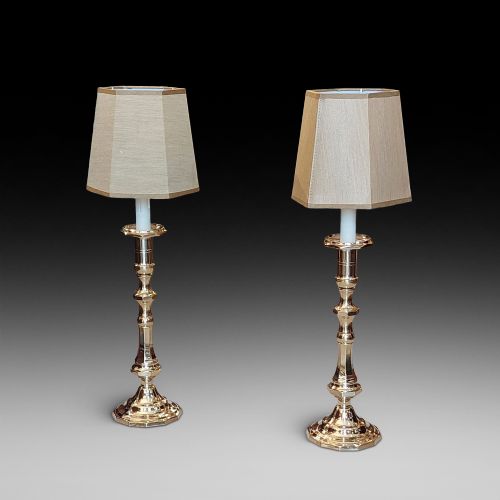
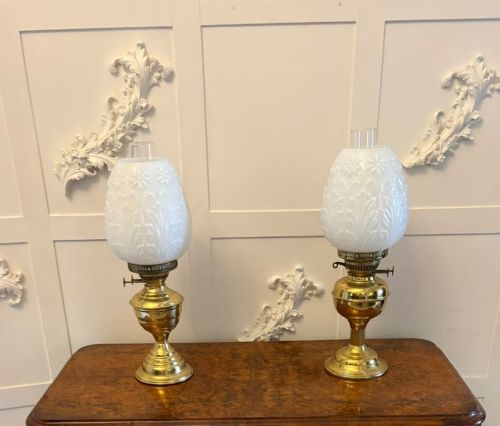
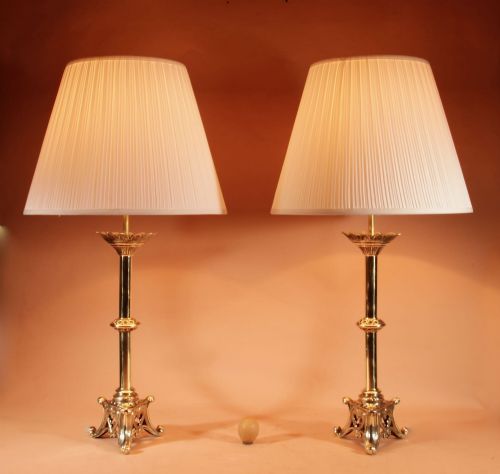
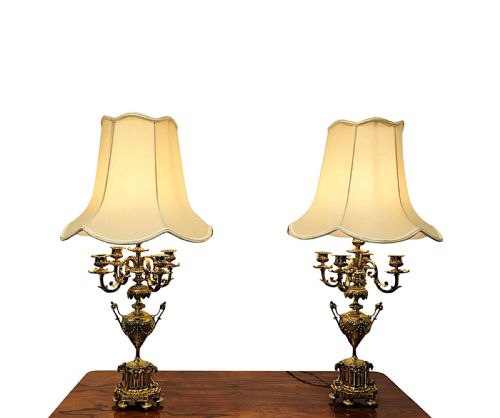
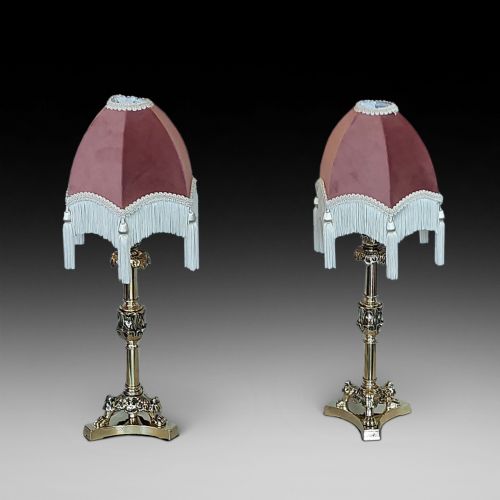


Pair Victorian Brass Lamps
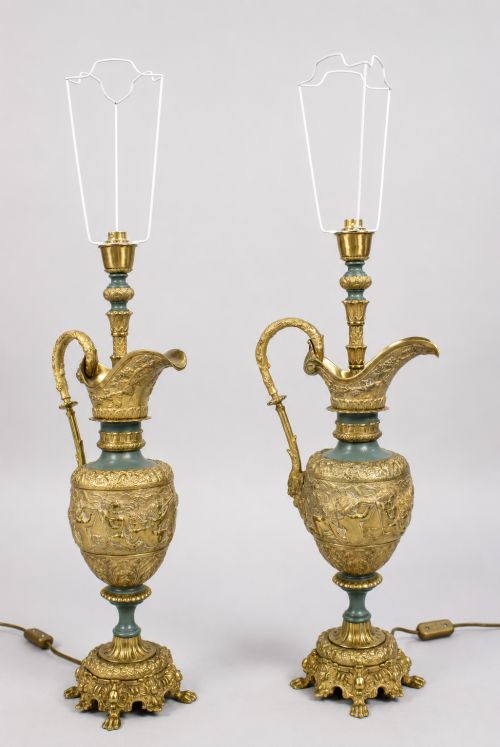
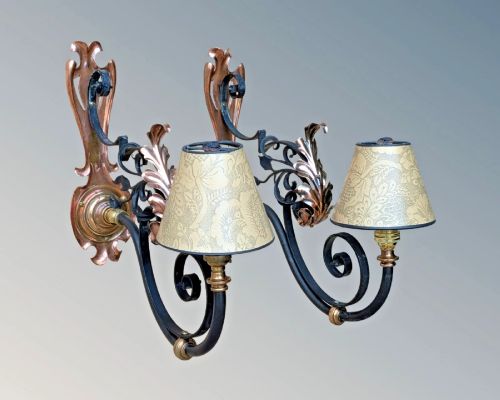
When you search for pair victorian brass lamps, you encounter substantial metal lighting fixtures made for nineteenth-century interiors.
Pair Victorian Brass Lamps
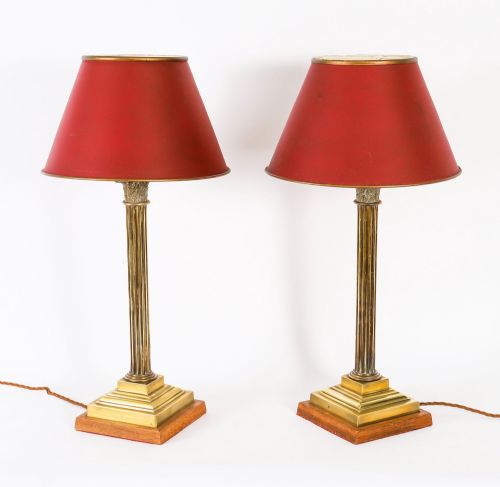
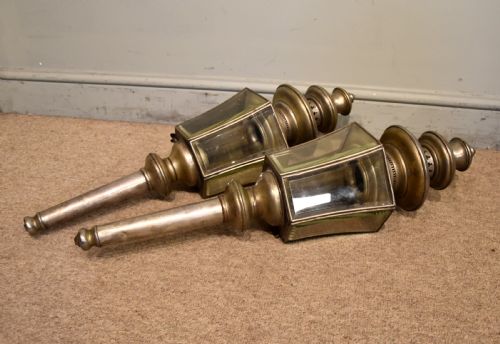
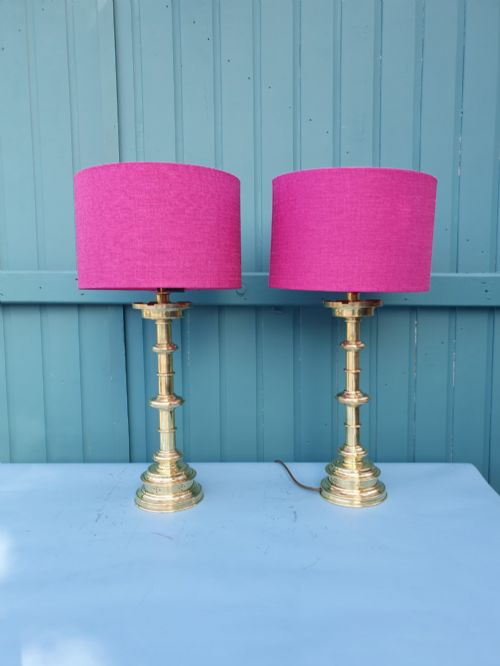
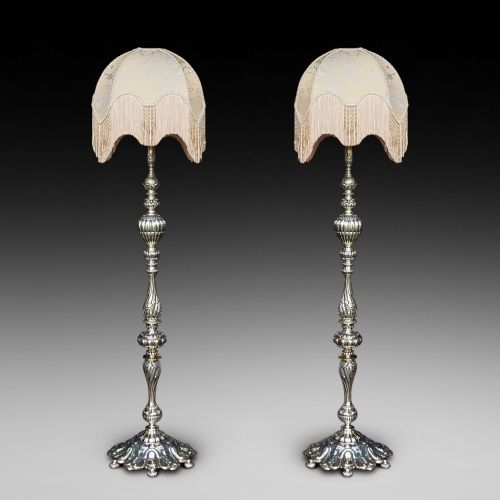
Pair victorian brass lamps encompass a range of double-form lighting fixtures, spanning from heavy cast desk lamps to slender column table lamps and tall standard oil lamps.
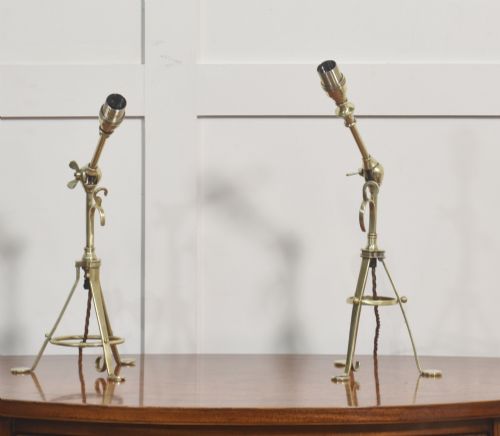
The selections most frequently met on this page include Corinthian column table lamps, converted candlesticks, and adjustable desk lamps originating from the nineteenth century.
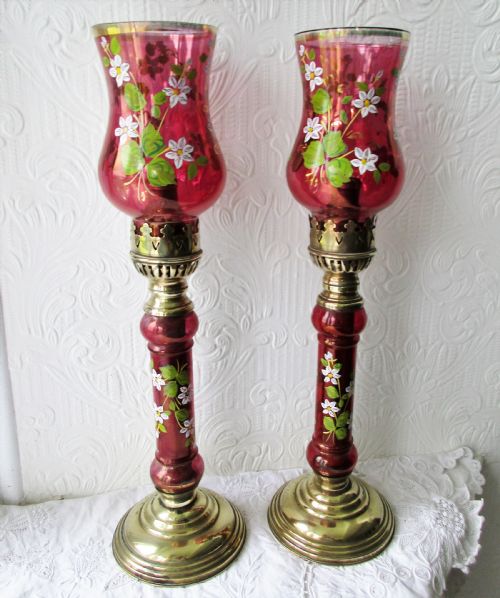
Many examples incorporate period glass components, such as opaline shades, etched chimneys, or ruby glass, alongside their primary metal framework.
Materials and Methods
Makers utilised solid cast and turned brass, frequently combining heavier metal bases with finer structural elements like fluted columns or articulated arms.
Lighting adaptations involved pairing the original metal bodies with blown or moulded glass shades, fabric elements, and later electrical conversions.
Listings feature brass, bronze, copper, porcelain, and various forms of cut and opaline glass across nineteenth-century periods.
Factors of Quality
Mass and thickness of the brass casting separate standard production items from heavier, finer examples that retain crisp channelling and sharp detail.
The integrity of mechanical adjustments, such as telescopic columns or swivel joints, dictates the mechanical standard of adjustable student and desk lamps.
W.A.S. Benson·Wild & Wessel·William McGeoch & Co
The Pair Victorian Brass Lamps Glossary
- Corinthian column
- A classical architectural column form featuring ornate acanthus leaf capitals, frequently utilised as the main shaft for nineteenth-century table lamps.
- Cricklite
- A patented glass candlestick system designed by Clarke, created to burn small safety candles securely within domestic interiors.
- Gimbal
- A pivoted ring mounting that allows a lamp or candleholder to remain level on a ship or desk regardless of movement.
- Opaline glass
- An opaque, milky-white glass popular during the Victorian period for diffusing light softly through decorative lamp shades.
Pair Victorian Brass Lamps: Frequently Asked Questions
Were these always electric lamps?
Most of these fixtures began as oil-burning lamps, candle lamps, or altar candlesticks before being converted to electricity in later decades.
Original burners and fonts were often adapted or replaced to accommodate modern wiring while retaining the historical metal body.
How do I identify a Victorian standard lamp?
Standard lamps from this era feature heavy cast-metal bases supporting tall shafts, sometimes with telescopic height adjustments or weighted iron internal rods.
They were designed to stand directly on the floor, illuminating reading corners or drawing rooms before central ceiling lighting became common.
What is a student lamp?
A student lamp is an adjustable task light designed to focus illumination downward onto a desk or reading table.
These pieces typically incorporate sliding mechanisms or swing arms to alter the height and angle of the burner and shade.
Are original glass shades common?
Original glass shades, such as etched ruby glass or opaline domes, appear on selected pieces but were frequently replaced due to breakage.
Matched pairs often combine period-appropriate glass elements with antique metal bases gathered together over time.