

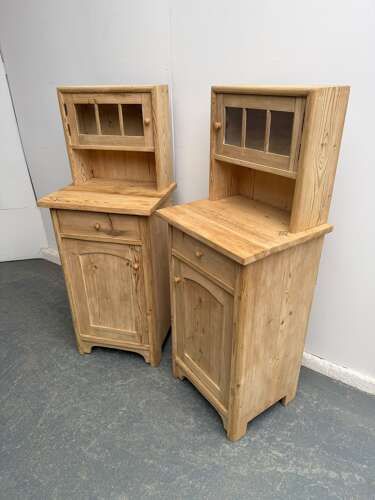

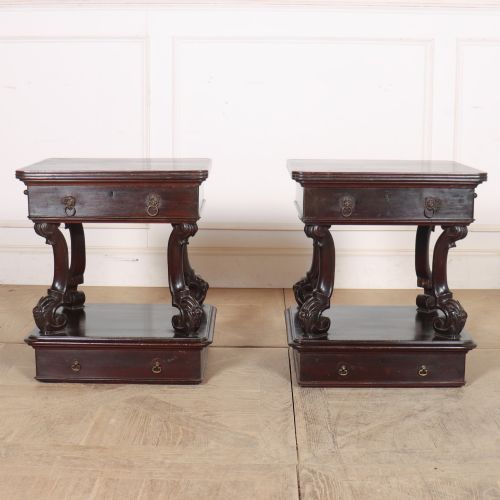


Pair Victorian Bedside Lockers
These pair victorian bedside lockers offer practical storage beside the bed, crafted from rich timbers during the nineteenth century.
Pair Victorian Bedside Lockers
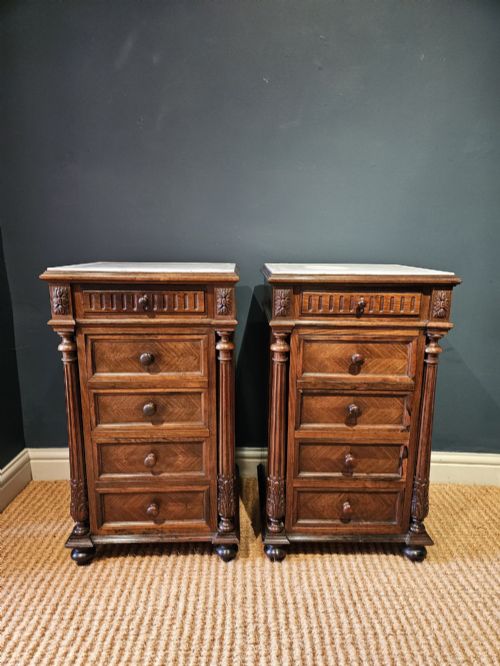
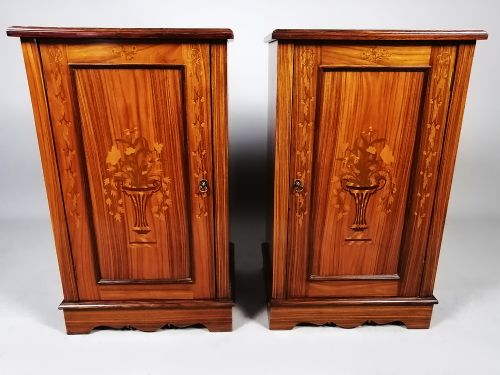
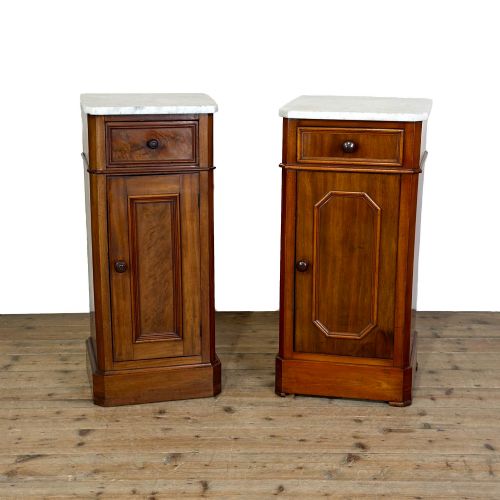
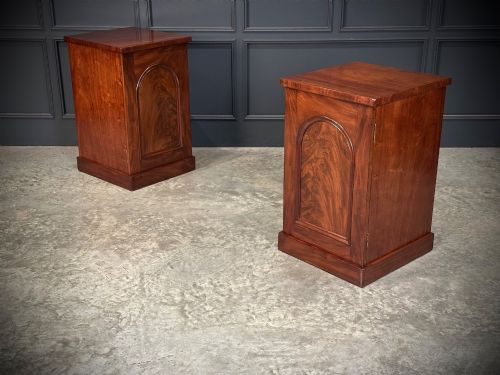
When searching for pair victorian bedside lockers, collectors encounter matched sets of small storage furniture designed to sit beside the bed during the nineteenth century. These objects appear as miniature chests of drawers, pedestal cabinets, and enclosed pot cupboards standing on short legs or plinths.
The versions most frequently met on this page date from the Victorian period, though examples stretch from the Regency era into the early twentieth century. Common forms include flame mahogany veneer chests, burr walnut bedside cabinets, and pine cupboards intended for bedroom use.
Makers utilised various regional timbers and stylistic revivals to construct these pieces, ranging from plain mahogany to elaborate brass-bound military formats. Buyers select them for bedroom symmetry and period character.
How they were made
Cabinet makers constructed these lockers using solid timber carcasses overlaid with choice veneers like burr walnut, flame mahogany, and harewood to create striking grain patterns on the drawer fronts and doors. Carcasses of secondary woods such as pine provided internal stability for the drawers and panels.
Joinery techniques relied on dovetailed drawer construction and mortise and tenon frames, ensuring durability under daily use. Metalwork details, particularly brass handles, hinges, and occasional corner straps, added functional reinforcement to military-style pieces.
Pair Victorian Bedside Lockers Retail Price Guide 2026
Typical asking prices for pair victorian bedside lockers among the pieces listed under this phrase on Sellingantiques today, from the lower quarter to the upper quarter. They describe what is for sale here now, not the wider market.
Some nineteenth-century occupants kept chambers remarkably tidy by hiding their nighttime porcelain inside locked mahogany cubbies.
What varies in quality
Quality in these lockers rests upon the choice of timber veneer and the precision of the cabinet work. Pieces displaying dense, highly figured burr walnut or carefully matched flame mahogany sit at the upper end of the range.
Construction details distinguish finer examples, such as smoothly operating dovetailed drawers, original brass hardware, and well-executed secondary woods. Greater refinement in decorative elements like marquetry inlay or carved mouldings elevates the piece above standard utility items.
Gillows·James Shoolbred
The Pair Victorian Bedside Lockers Glossary
- Burr Walnut
- A beautifully figured wood grain taken from the wart-like growths on walnut trees, prized for its swirling patterns on Victorian cabinet doors.
- Campaign
- A style of portable furniture designed for travel, typically fitted with flush brass handles and corner brackets.
- Pot Cupboard
- A small bedside cabinet originally built to enclose a chamber pot behind a single door.
- Pedestal Cabinet
- A freestanding, single-column storage unit featuring a door or drawers opening from the side.
- Flame Mahogany
- A veneer cut from the fork of a mahogany tree that creates a distinctive flickering flame pattern.
Pair Victorian Bedside Lockers: Frequently Asked Questions
What is a bedside locker?
A bedside locker is a small enclosed cabinet or miniature chest of drawers designed to stand next to a bed for nighttime storage.
These pieces typically feature a cupboard door or multiple small drawers to hold personal items.
How do I tell early and late Victorian pieces apart?
Early Victorian examples often display simpler mahogany veneers and classic proportions reflecting earlier Georgian influences.
Late Victorian lockers frequently utilise burr walnut, richer marquetry, or multi-drawer configurations popular toward the end of the nineteenth century.
Were these always made in pairs?
Many nineteenth-century bedchambers required balanced furniture on either side of a double bed, resulting in matched pairs.
Some surviving sets show slight individual variations due to hand-crafting methods used by period cabinet makers.
How do I care for antique wood furniture?
Maintain these pieces by keeping them away from direct heat sources and sudden humidity changes that can crack veneer.
Apply traditional wax polish occasionally to nourish the timber and preserve the natural sheen of the grain.