

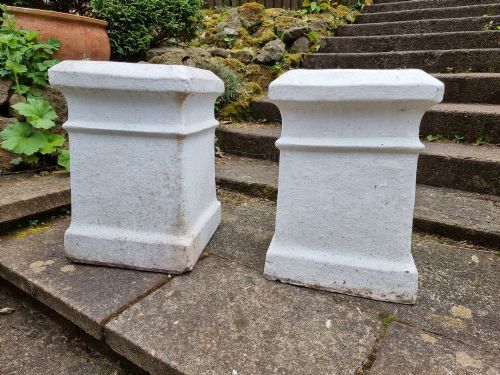
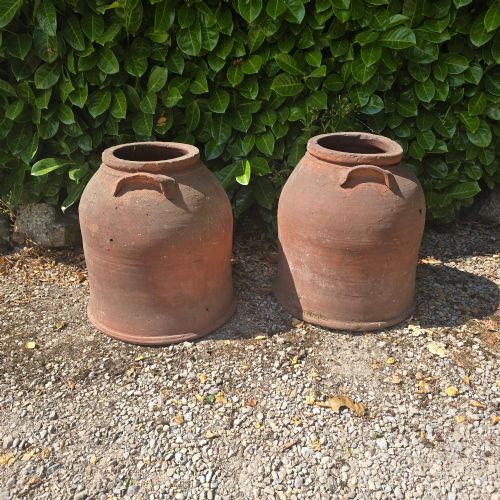
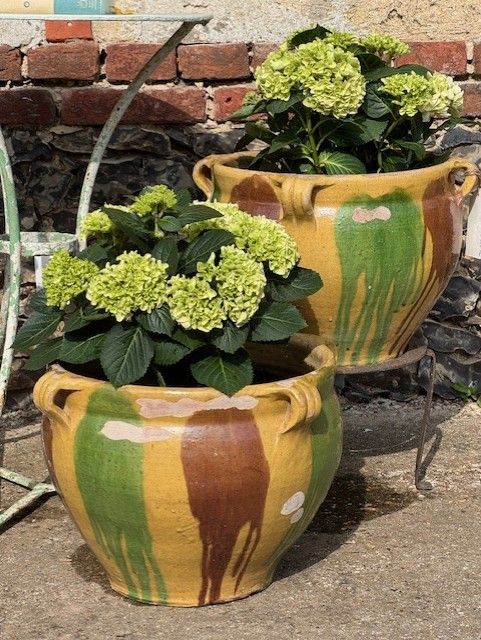


Pair Terracotta Planters
These pair terracotta planters bring architectural weight to a garden, offering durable earthenware forms that weather gracefully outdoors over decades.
Pair Terracotta Planters
When you search for pair terracotta planters, you find matched or near-matched vessels designed for garden spaces, ranging from large campana urns to rhubarb forcers and scroll pots. These matched vessels provide symmetry for pathways, entrances, and formal terraces.
The selections span the nineteenth and twentieth centuries, encompassing Victorian country house styles, French provincial earthenware, and Arts and Crafts influences. Many examples display the warm buff or reddish tones inherent to fired clay, sometimes enhanced by glazes or historic paint layers.
How they were made
The construction relies primarily on earthenware clay and terracotta, shaped into robust vessels intended for botanical use. Potters utilised traditional moulding and throwing techniques to achieve thick walls capable of enduring outdoor conditions.
Surface treatments introduce salt-glazes, dribble glazes, or paint over the clay body, while specific forms incorporate cast iron or wrought iron elements for structural support.
Pair Terracotta Planters Retail Price Guide 2026
Typical asking prices for pair terracotta planters among the pieces listed under this phrase on Sellingantiques today, from the lower quarter to the upper quarter. They describe what is for sale here now, not the wider market.
Strawberry planters include specialised side pockets designed to keep ripening fruit safely away from damp garden soil.
What varies in quality
Quality rests in the crispness of the modelling and the character of the surface, where hand-finished details and kiln-firing variations set superior vessels apart. Finer examples show intentional artistic execution in moulded details like scrollwork and classical motifs.
The integrity of the clay body and the depth of weathering dictate the visual richness of the piece. Authentic age manifests in natural patination and mineral deposits rather than uniform factory perfection.
Dunfermline Clay Company·Compton Pottery
The Pair Terracotta Planters Glossary
- Terracotta
- A porous, brownish-red earthenware clay that is fired in a kiln and valued for garden containers. It develops a soft weathered patina when exposed to moisture over the years.
- Campana Urn
- A bell-shaped garden vessel with a flared rim, frequently mounted on a pedestal. This classic shape derives from antique metal prototypes adapted for stone and clay.
- Salt-Glazed Stoneware
- Ceramics coated with salt during the high-temperature firing process to produce a durable, slightly pitted vitreous finish. This glaze protects the denser clay body from frost damage.
- Rhubarb Forcer
- A specialised tall earthenware pot with a removable lid used in nineteenth-century kitchen gardens to blanch rhubarb shoots. These utilitarian forms now serve as striking garden planters.
- Pancheon
- A wide, shallow earthenware vessel traditionally used in dairies for setting milk or rising dough. In the garden, these deep bowls function well as wide planters.
Pair Terracotta Planters: Frequently Asked Questions
Can terracotta planters stay outside in winter?
Most durable terracotta and salt-glazed vessels handle outdoor conditions well, provided they have adequate drainage holes to prevent trapped water from expanding during freezes. Elevating pots slightly off the ground on pot feet reduces direct contact with cold, wet soil.
Heavier nineteenth-century and twentieth-century examples benefit from being emptied or sheltered during severe frosts if the clay body shows signs of deep porosity.
How do I clean historic terracotta pots?
Gentle brushing with water and a soft bristle brush removes accumulated dirt and loose debris without harming the surface patination. Avoid harsh chemical cleaners or pressure washers, which strip away historical weathering and erode the fired clay surface.
Allowing moss and lichens to remain on older garden planters preserves the authentic character accumulated over decades of outdoor exposure.
What is a near pair of planters?
A near pair consists of two vessels that match closely in size, form, material, and period, but were not originally thrown or moulded together as a single set. Minor variations in height, rim profile, or clay colour reveal their independent origins while still offering visual balance.
Displaying them symmetrically on opposite sides of a doorway or pathway creates a cohesive focal point despite slight manufacturing differences.
How do I date antique terracotta urns?
Dating relies on examining the weight, clay composition, tool marks, and specific decorative vocabulary associated with Victorian, Edwardian, or later twentieth-century production methods. Earlier nineteenth-century pieces often feature heavier, coarser earthenware bodies with hand-finished details.
Comparing the form to documented styles like Arts and Crafts scroll pots or classical campana urns helps narrow down the manufacturing decade.