

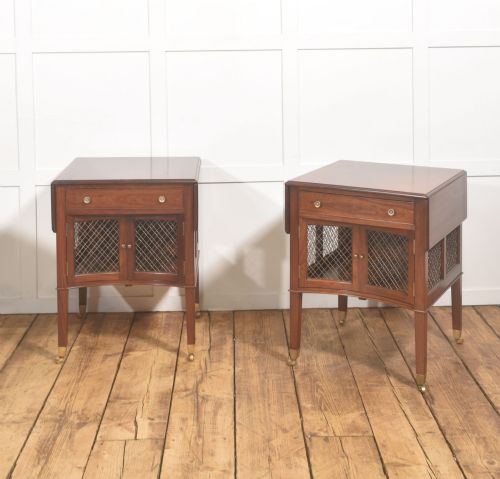
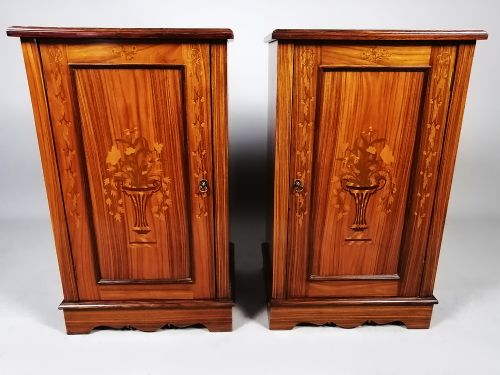
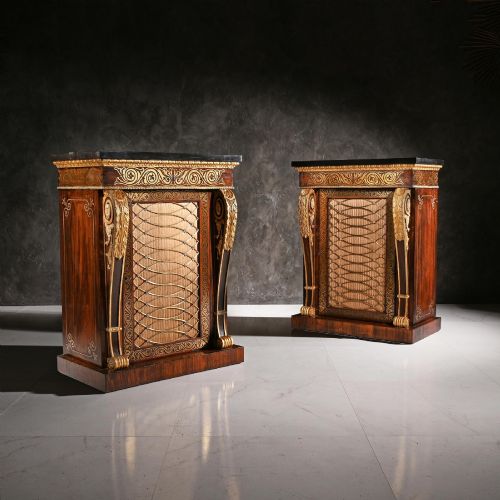
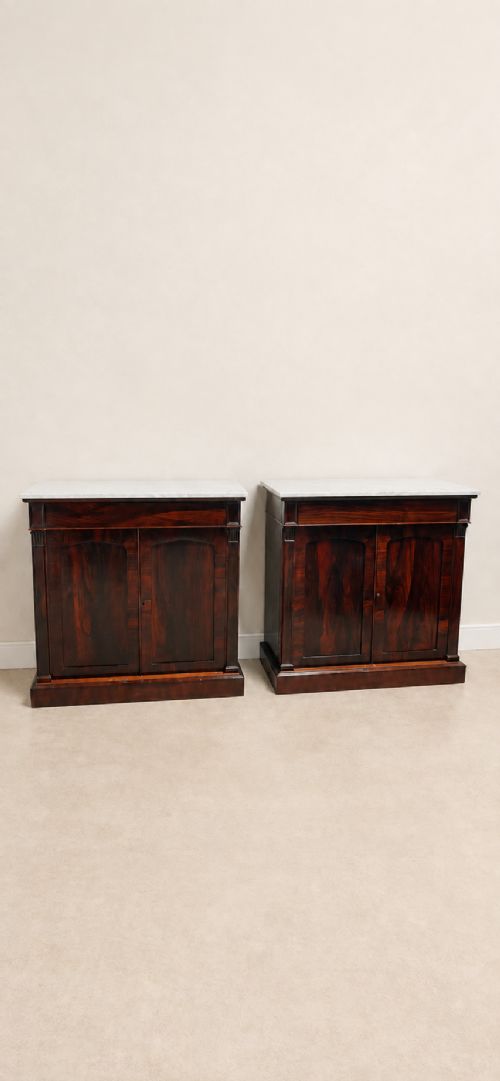




Pair Rosewood Cabinets
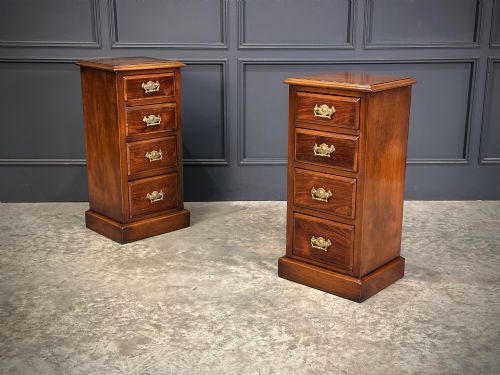
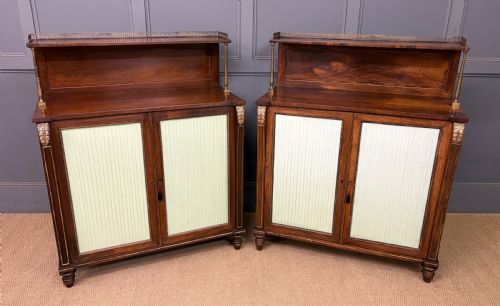
These pair rosewood cabinets bring balanced symmetry and rich dark grain to a room, ranging from compact bedside cupboards to grand Regency side pieces.
Pair Rosewood Cabinets
When you search for pair rosewood cabinets, you encounter matched sets designed to flank a bed, fireplace or mirror with symmetrical elegance. The selection ranges from compact bedside cupboards and lamp stands to taller side cabinets, bookcases and display pieces.
The pieces on this page emerge primarily from nineteenth-century workshops, spanning Regency, George IV and Victorian periods, alongside later Edwardian and Art Deco interpretations. Bedside cabinets and small side cupboards dominate the forms, reflecting how these twin items survived together in domestic spaces.
How they were made
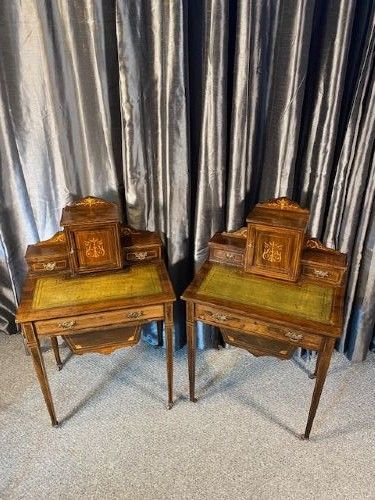
Cabinet makers utilised dense, richly grained rosewood timber, often laid as fine veneers over sturdy secondary woods to display dramatic natural figures. Workshops enhanced these dark surfaces with contrasting inlay of brass, satinwood and kingwood, creating crisp geometric lines or elaborate floral marquetry.
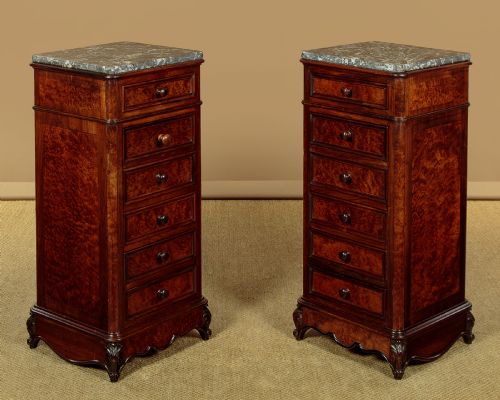
Structural elements frequently incorporated marble tops, glazed doors and bronze or brass handles, while French polish built a deep, lustrous finish across the timber. Specialised techniques such as curved bombe shaping and mother-of-pearl embellishment appeared in specific nineteenth and early twentieth-century commissions.
Pair Rosewood Cabinets Retail Price Guide 2026
Typical asking prices for pair rosewood cabinets among the pieces listed under this phrase on Sellingantiques today, from the lower quarter to the upper quarter. They describe what is for sale here now, not the wider market.
Several matched pairs survived centuries apart only to be reunited on showroom floors by vigilant dealers.
What varies in quality
The distinction between standard utility items and superior examples lies in the precision of the matching between the two halves and the depth of the timber grain. Finer workshops selected rosewood veneers with symmetrical grain patterns that mirrored each other across the pair.
Louis Constantin Le Gaigneur·Sigmund Jaray, Wien
The Pair Rosewood Cabinets Glossary
- Marquetry
- Decorative patterns formed by fitting together thin slices of wood veneer and other materials onto a structural surface. This technique allows intricate floral or geometric designs to adorn cabinet doors and tops.
- Pier cabinet
- A low or tall display piece specifically built to stand against the narrow section of wall between windows. These items often feature glass doors to showcase collected porcelain and decorative objects.
- Regency
- A British design style spanning the early nineteenth century characterised by classical restraint, symmetry and often neoclassical brass detailing. Cabinets from this period frequently draw inspiration from ancient Roman and Greek forms.
- Bombe
- A swelling, outward-curved contour on the front and sides of a piece of furniture. This curved form demands advanced woodworking skill to shape and veneer accurately.
Pair Rosewood Cabinets: Frequently Asked Questions
How do I care for rosewood?
Keep wooden cabinets away from direct sunlight and steady heat sources to prevent the rich timber from fading or drying out. Dust regularly with a soft dry cloth and avoid silicone-based polishes that build up over time.
Maintain a stable room humidity to protect delicate veneer work and intricate brass inlays from shifting. Occasional application of quality furniture wax helps nourish the polished surface.
Were these always made together?
Most entries represent true matched pairs built alongside each other in the workshop to ensure identical timber grain and proportions. Some offerings consist of matched pairs assembled later by dealers from pieces with identical dimensions and styles.
True pairs share construction methods, interior fittings and wear patterns that confirm their shared origin. Examining the secondary woods and hinge types helps verify whether the two items travelled together.
How do I date a cabinet?
Examine the construction joints, timber selection and hardware styles to determine the era of manufacture. Regency and George IV items display classical proportions and fine brass stringing, while Victorian pieces often feature heavier carved details.
Later Edwardian and Art Deco examples introduce lighter scaling or streamlined geometric forms. Secondary woods inside drawers and backboards also provide clear clues regarding the period.
Can I use these as bedside tables?
Many of these items functioned originally as bedside cupboards or pot cupboards, making them ideal proportions for modern bedrooms. Their enclosed storage keeps personal items neatly hidden while providing a stable surface for a lamp.
Measuring the height relative to your mattress ensures comfortable daily use. Open bookcases and small side tables also adapt well to bedroom placement depending on storage needs.