


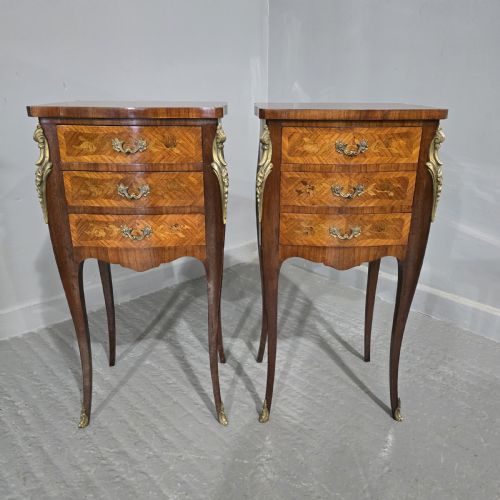


Pair Rococo Bedside Chests
Pair rococo bedside chests bring serpentine elegance and historic French revival charm to the bedroom.
Pair Rococo Bedside Chests
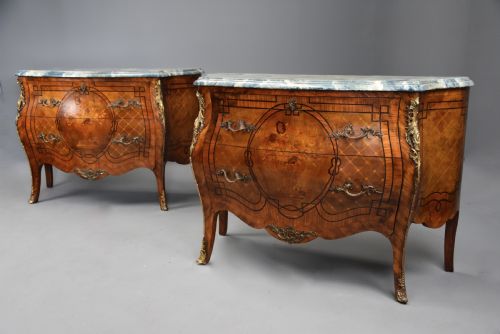
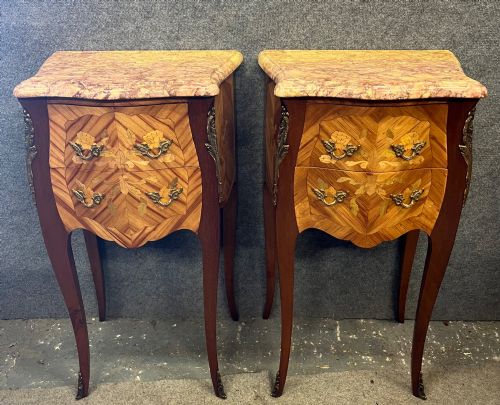
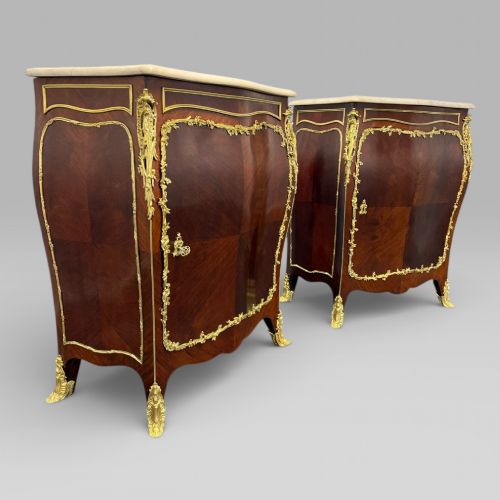
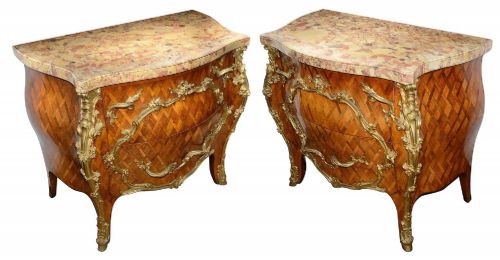
When searching for pair rococo bedside chests, buyers encounter decorative tables and small commodes shaped by revival movements across the nineteenth and early twentieth centuries. These pieces draw directly on eighteenth-century French design, taking the form of bombe cabinets, marble-topped bedside tables, and petite chests of drawers.
The versions most commonly met on this page date from the late nineteenth century through to the 1930s. Makers working in these decades produced matched pairs intended for symmetry beside a bed, utilising classic silhouettes influenced by Louis XV and Italian aesthetics.
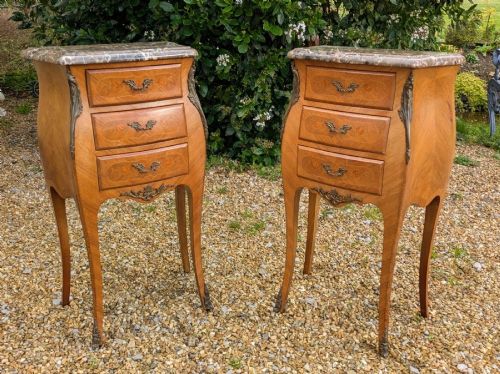
Object types span simple bedside cabinets to elaborate lamp tables and miniature commodes. They serve as functional storage surfaces while maintaining the curvaceous outlines and decorative flourishes characteristic of the rococo style.
How they were made
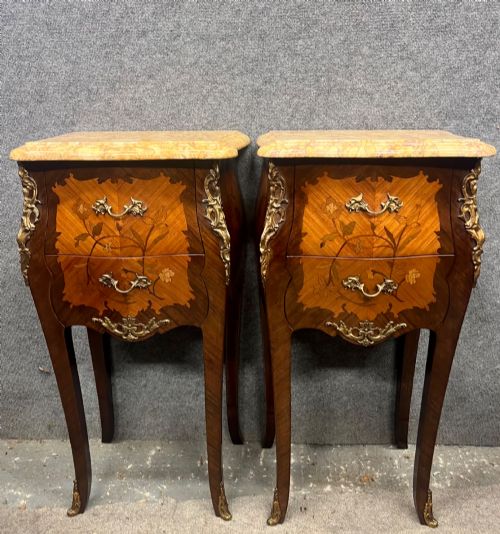
Cabinet makers constructed these pieces using dense timber carcases veneered in figured woods such as kingwood, walnut, and burr walnut. Marquetry inlay frequently decorates the surfaces, creating intricate floral or geometric patterns across the drawer fronts and tops.
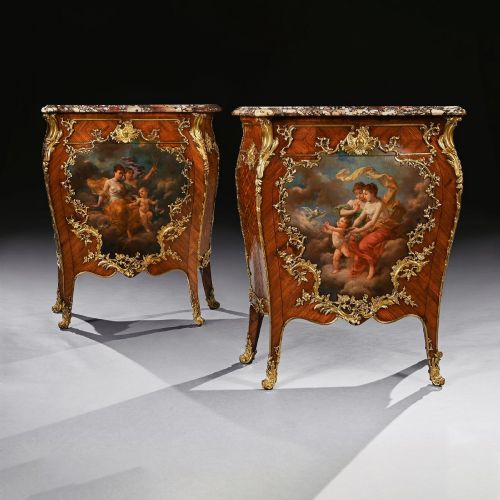
Many examples incorporate shaped marble tops, fitted closely to the serpentine contours of the wooden frame. Ormolu, brass, and gilt bronze mounts accent the corners, handles, and feet, highlighting the sweeping lines of the bombe or straight-sided bodies.
Some bedside chests double as lamp tables, ready to hold your evening reading light with eighteenth-century flair.
What varies in quality
The standard of timber selection and complexity of marquetry dictate the upper tiers of the range. Finer examples display carefully matched grain patterns and precise floral inlays that flow naturally across the opening drawers and sides.
Metalwork mounts also distinguish finer pieces from simpler workshop productions. High-quality items feature crisply chased gilt bronze or ormolu mounts that fit seamlessly against the timber, whereas lesser versions rely on simpler brass detailing.
E. Kahn
The Pair Rococo Bedside Chests Glossary
- Bombe
- A bulging, outward-curving chest or cabinet shape popular in eighteenth-century and revival furniture. This swollen contour requires skilled carpentry to veneer accurately.
- Marquetry
- The art of applying small pieces of veneer to a structure to form decorative patterns or pictures. Craftsmen use contrasting timbers to achieve tonal depth.
- Ormolu
- Gilt bronze ornamentation applied to the mounts and handles of fine furniture. The technique involves creating a mercury and gold amalgam on a bronze base.
- Vernis Martin
- A type of simulated Japanese lacquer developed in France during the eighteenth century. It employs multiple layers of resin varnish to achieve a translucent glossy finish.
- Commode
- A low chest of drawers, often standing on cabriole legs in rococo designs. The term originates from the French word for convenient.
Pair Rococo Bedside Chests: Frequently Asked Questions
Are these chests eighteenth century?
The majority of these chests date from revival periods in the nineteenth and early twentieth centuries, spanning from the 1870s to the 1930s. They interpret earlier eighteenth-century French designs rather than originating from that era.
Craftsmen during the later periods adopted historic styles, techniques, and forms to satisfy contemporary demand for ornate bedroom furniture.
How do I use them as bedside tables?
These chests function as practical bedside surfaces while providing enclosed storage within drawers or cabinets. Their height and proportions suit placement beside standard bed frames.
When styling them, ensure the surface accommodates lamps and everyday items without obscuring the decorative marquetry or marble tops.
What woods were used?
Cabinet makers utilised a variety of decorative timbers, most notably kingwood, walnut, and burr walnut. These woods were often applied as veneers over a secondary wood carcase.
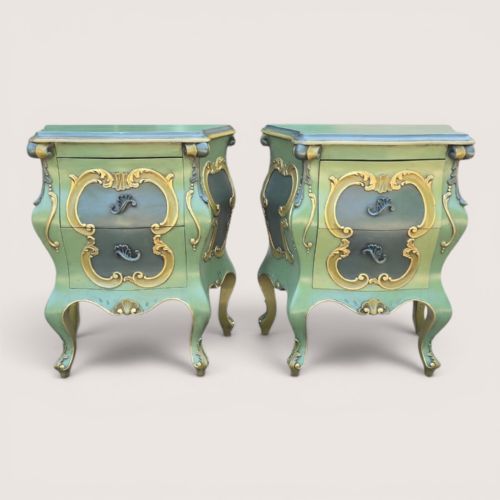
Inlaid marquetry patterns frequently combine multiple timber species to create contrast, while painted wood finishes appear on alternative decorative examples.