



Pair Porcelain Dog Statues
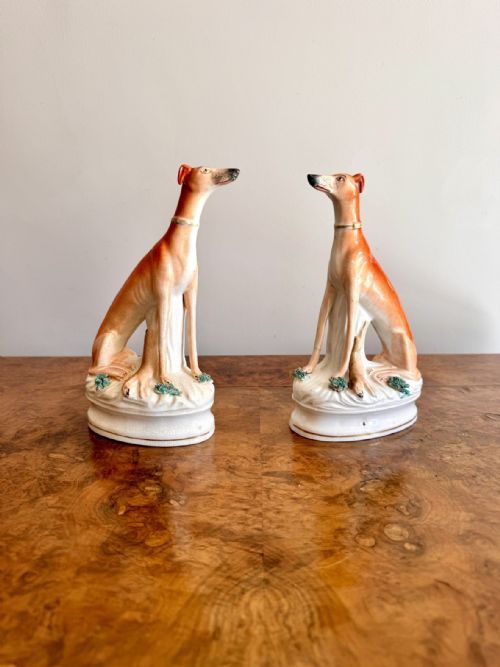
Pair porcelain dog statues bring decorative warmth to a room, offering the charm of Victorian Staffordshire greyhounds, spaniels, and Continental porcelain figures.
Pair Porcelain Dog Statues
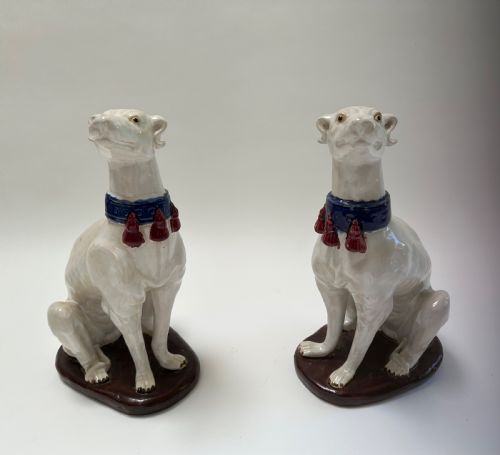
Pair porcelain dog statues encompass a range of decorative figures, desk accessories, and figurines shaped like popular canine breeds. Buyers searching for pair porcelain dog statues generally encounter Staffordshire spaniels, poodles with pups, greyhounds, and Chinese pottery Buddhist lions.
The objects span multiple periods, from eighteenth-century Meissen figure groups to nineteenth-century Victorian pieces and early twentieth-century Italian majolica. Continental miniatures and factory productions also appear alongside English traditional pottery forms.
Most examples function as decorative mantel ornaments or desk accessories, often modelled in matched pairs. The forms range from white and gilt glazed spaniels to hand-painted spaniels on blue cushions with encrusting.
Materials and construction
These pieces utilise ceramic, earthenware, tin-glazed earthenware, and porcelain as foundational materials. Manufacturers shape the clay into animal figures before applying glazes and enamel details.
Many nineteenth-century and Victorian examples incorporate gilt or gold leaf highlights upon white or coloured glazes. Hand-painted decoration and surface encrusting add texture and definition to the fur and cushions of the figures.
Pair Porcelain Dog Statues Retail Price Guide 2026
Typical asking prices for pair porcelain dog statues among the pieces listed under this phrase on Sellingantiques today, from the lower quarter to the upper quarter. They describe what is for sale here now, not the wider market.
Poodles arrive with sculpted fluffy coats and sometimes even tiny clay pups tucked faithfully beside them.
Assessing quality and craftsmanship
Quality in these figures rests on the precision of the modelling and the finesse of the hand-painted details. Finer pieces display crisp facial expressions, careful handling of the coat texture, and neatly applied gilt highlights.
The standard of the glaze and the complexity of the accompanying elements, such as cushions or encrusted details, distinguish superior examples. Early porcelain figure groups and factory-produced pieces often show greater sculptural refinement than standard decorative pottery.
Royal Capodimonte Factory·Beswick
The Pair Porcelain Dog Statues Glossary
- Staffordshire
- A term denoting pottery and ceramic figures produced in the Staffordshire region of England, famously including spaniels and greyhounds. These items were widely used as mantel ornaments in nineteenth-century homes.
- Majolica
- A type of tin-glazed earthenware decorated with opaque coloured glazes, seen in Italian Renaissance Revival pieces. The technique produces vibrant surface colours and a glossy finish.
- Encrusting
- A decorative ceramic technique where small applied clay elements, such as flowers or foliage, are added to the surface before firing. This creates a textured, three-dimensional effect often found on cushion bases.
Pair Porcelain Dog Statues: Frequently Asked Questions
What are Staffordshire dog statues?
Staffordshire dog statues are ceramic figures modelled as spaniels, poodles, and greyhounds, traditionally displayed on mantelpieces. They became popular household ornaments during the Victorian era.
Potters typically produced them in pairs to face inward toward each other on either side of a fireplace. Their appeal lies in their charming domestic subject matter and classic nineteenth-century aesthetic.
How do I date antique dog figures?
Dating these figures involves examining the ceramic material, glaze characteristics, and painting style. Eighteenth-century pieces often feature finer porcelain bodies, while Victorian examples rely on earthenware and heavy gilt highlights.
Mould styles and base details also provide clues to the manufacturing period. Pieces from the late nineteenth and early twentieth centuries frequently show influences from Revival styles or Continental factories.
Where should I place dog figurines?
These figurines suit traditional display locations such as mantelpieces, bookshelves, and side tables. Placing them as matched pairs enhances their original decorative arrangement.
Care should be taken to position them away from high-traffic edges where accidental knocks might occur. Their colourful glazes make them effective accents in both traditional and eclectic interiors.
Are all porcelain dog figures English?
While Staffordshire pottery is distinctly English, many dog figures originate from Continental workshops and factories. German manufacturers like Meissen and Italian makers produced notable porcelain and majolica animal groups.
These international pieces often differ in clay composition and glazing techniques from traditional English earthenware. Examining the finish and modeling style helps identify their geographic origin.