


Pair of Wingback Armchairs
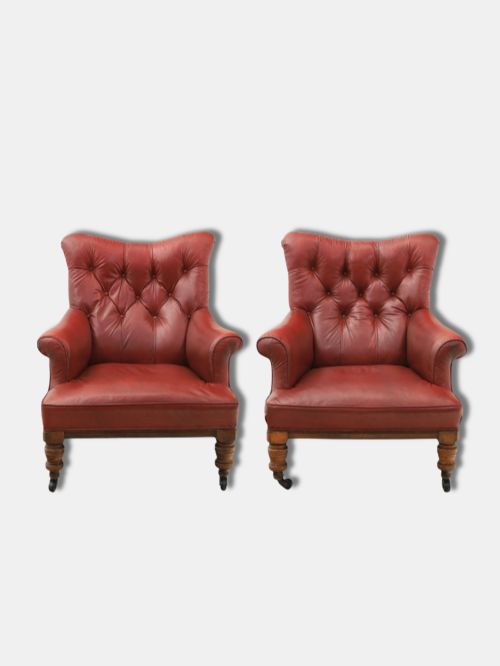
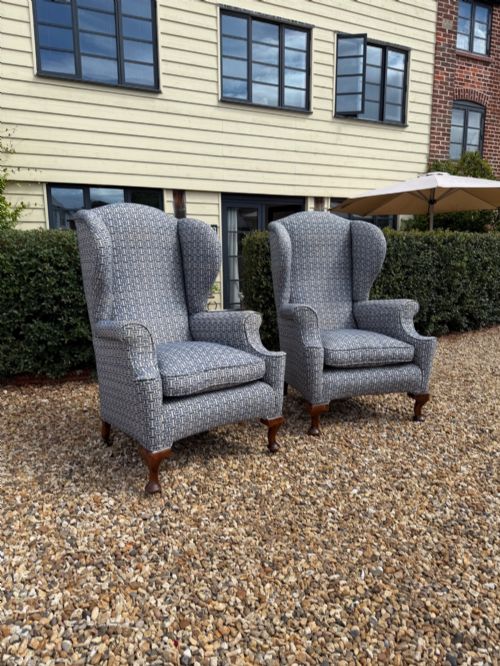
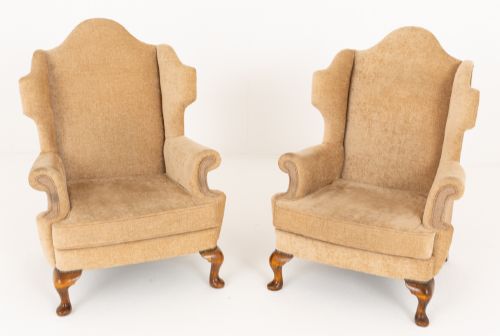
A pair of wingback armchairs anchors a room with high-backed upholstered presence, offering deep-seated fireside comfort found in matching sets.
Pair of Wingback Armchairs
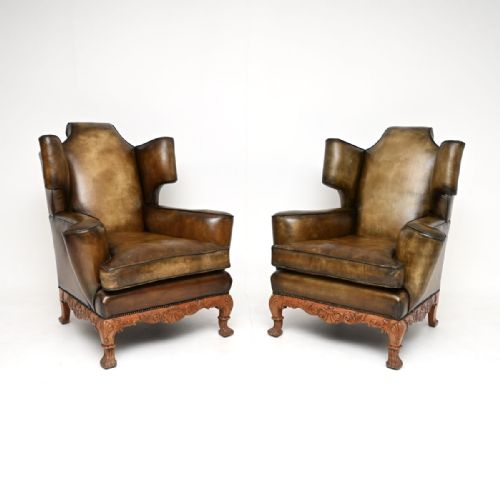
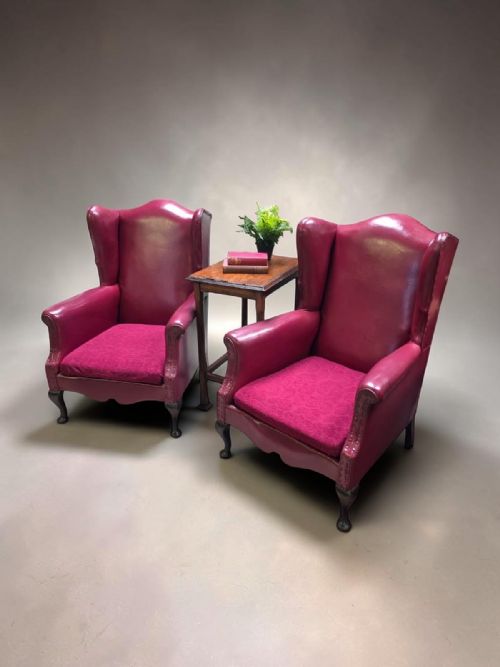
A pair of wingback armchairs brings matching seating forms into a domestic space, most frequently encountered in early twentieth century editions alongside Victorian and Edwardian examples. These seats combine tall backrests with characteristic side panels designed to shield occupants from draughts.
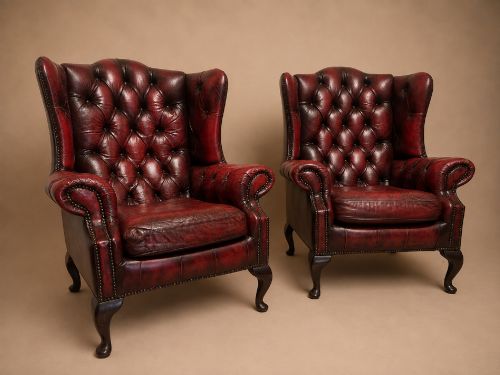
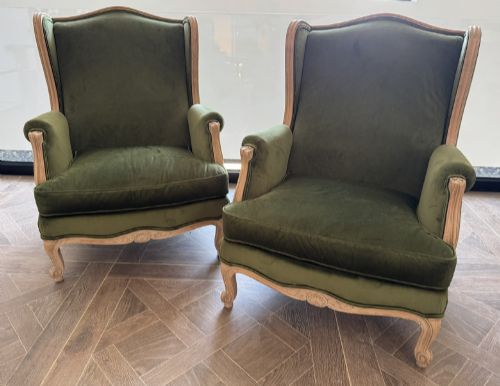
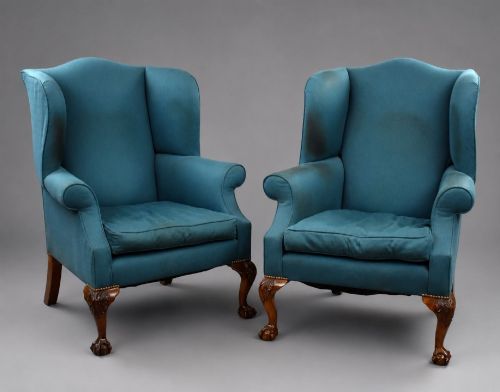
The selection ranges across distinct historical revivals, including Georgian style interpretations, Queen Anne Revival frameworks, and French models. Buyers encounter substantial library armchairs alongside deep Chesterfield variants upholstered in leather or rexine.
Makers utilised various timber frames, pairing walnut or mahogany structures with extensive padding. Survivors often display traditional styling cues such as claw and ball feet, carved lion motifs, or gilded wooden elements.
Quality variations
Quality rests in the sculptural integrity of the wooden frame and the depth of the carved detailing on legs and arms. Substantial proportions and well-executed stylistic revivals separate robust examples from simpler constructions.
The choice of covering material and the preservation of original leather or fabric dictate the character of each piece. Superior upholstery work retains firm padding and precise tack placement along the wings and arms.
Listings feature periods spanning from the 1890s through the 1930s, alongside general Victorian and Edwardian examples.
The Pair of Wingback Armchairs Glossary
- Wingback
- An upholstered armchair featuring projecting side panels attached to the backrest designed to trap heat and block draughts. These panels define the classic silhouette of fireside seating.
- Chesterfield
- A deep-buttoned upholstery style traditionally executed in leather with rolled arms matching the height of the back. This form appears frequently across nineteenth and twentieth century seating.
- Claw and ball
- A furniture foot carved to resemble an animal talon grasping a spherical ball. This detail terminates the legs of walnut and mahogany chairs from revival periods.
- Rexine
- A leathercloth material utilised as an alternative upholstery fabric during the early twentieth century. It provides a durable, wipeable surface mimicking genuine hide.
Pair of Wingback Armchairs: Frequently Asked Questions
How do I date an antique armchair?
Dating relies on identifying the underlying stylistic revival, timber species, and upholstery methods. Characteristics like carved lion motifs or specific foot shapes point toward particular decades.
Comparison with documented pieces from the Victorian, Edwardian, and early twentieth-century eras helps narrow down the manufacturing period.
Are leather wingbacks comfortable?
Most variants offer deep seating designed for relaxation, supported by robust internal springing and generous padding. The high backrests provide substantial head and neck support.
Leather surfaces adapt to room temperatures and soften further with regular use over decades.
What is a Chesterfield wing chair?
This hybrid form combines the enclosed wings of a fireside chair with the deep buttoning and rolled arms of a classic Chesterfield sofa. It represents a substantial seating option found in libraries and studies.
Upholstery is typically finished with individual brass tacks outlining the contours.
How do I care for antique leather?
Preservation involves applying appropriate leather balms to maintain flexibility and prevent the hide from drying out. Keeping seats away from direct heat sources protects the material.
Gentle dusting maintains the surface without disturbing the vintage patina accumulated over generations.