

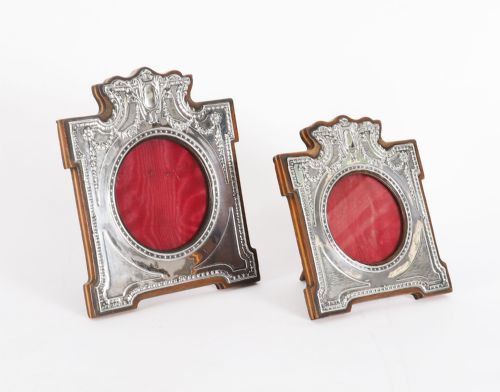


Pair of Oval Pictures
A pair of oval pictures brings symmetry and soft curves to a wall, offering matched portraits, embroidery, or prints in frames designed specifically for their shape.
Pair of Oval Pictures
A search for a pair of oval pictures leads you to matched sets of wall art spanning the eighteenth, nineteenth, and early twentieth centuries. These pieces range from delicate silk embroideries and needleworks to portrait miniatures, oil paintings, and framed prints.
You are most likely to encounter nineteenth-century framed prints, twentieth-century photo frames in silver or brass, and eighteenth-century textile works. The framing itself forms a major part of the category, with giltwood, carved wood, and brass housings playing an equal role to the imagery inside.
The origin of these pairs stretches across English, French, and Italian workshops, reflecting classical Georgian taste through to Art Nouveau styling. Whether housing hand-painted oils or black glass prints, they provide a balanced decorative scheme intended for symmetry in room design.
Materials and construction methods
Frames are constructed from wood, giltwood, brass, and sterling silver, often water-gilded or cast into ornate decorative profiles. Silk embroideries and needleworks utilise fine threads on textile grounds, frequently protected behind curved dome-fronted glass.
Paintings and prints are executed on paper, board, or enamel plaques, matched to custom-curved mounts. Wood and giltwood frames rely on traditional carving and joinery techniques to maintain structural integrity around the curved perimeters.
Pair of Oval Pictures Retail Price Guide 2026
Typical asking prices for pair of oval pictures among the pieces listed under this phrase on Sellingantiques today, from the lower quarter to the upper quarter. They describe what is for sale here now, not the wider market.
Dome-fronted glass creates a miniature greenhouse effect over nineteenth-century ladies, keeping them forever behind convex spectacles.
Distinctions in quality
Quality rests in the crispness of the frame carving, the preservation of the original gilding, and the hand of the maker. Finer pairs show superior detail in hand-carved giltwood or precision metal casting, alongside original glass and backing materials.
In textile and painted works, the fineness of the needlework stitches or brushwork elevates the piece. Matching symmetry across the pair and the survival of original components rather than later replacements dictate the standing of the items.
Mappin Bros·George Hargreaves·Del Buono
The Pair of Oval Pictures Glossary
- Giltwood
- Wood carved and coated with a thin layer of gold leaf or gesso and gold paint. It provides a bright, reflective surface typical of decorative framing.
- Portrait miniature
- A small, highly detailed painting, usually executed on ivory, vellum, or card. These intimate works were popular for depicting family members.
- Water gilding
- A traditional technique applying gold leaf over a wet clay base called gesso. This allows the gold to be burnished to a high shine.
- Mezzotint
- A printmaking process where the copper plate is roughened to achieve tones and shades. It produces rich, velvety dark areas.
- Enamel plaque
- A smooth surface created by fusing powdered glass to a metal base at high temperatures. It serves as a durable support for painted scenes.
Pair of Oval Pictures: Frequently Asked Questions
How should I hang a pair of oval pictures?
Hang them at eye level with adequate spacing between the frames to let their curved profiles define the wall space. Align the vertical centres so the symmetry of the pair remains balanced.
Ensure the wall fixings match the weight of the frames, especially heavier giltwood or cast metal examples, using secure hooks rather than simple picture pins.
Are these frames usually original to the pictures?
Many examples survive with their original giltwood, brass, or silver frames because oval formats required custom housing. Makers built the frames specifically to fit the curved perimeters of the artwork.
Inspecting the backboards, fixings, and fit will help confirm whether the frame and the art have remained together since their creation.
How do I care for silk embroidery pictures?
Keep textile pictures away from direct sunlight to prevent the silk threads and backing fabrics from fading. Ultraviolet light damages historic organic materials permanently.
Maintain a stable room humidity to protect both the delicate threads and the wooden frames from warping or developing mould.
What periods are most common for these pairs?
The nineteenth century provides a large share of the available pieces, including Victorian prints, Edwardian silver frames, and Regency silk works. Eighteenth-century needleworks and enamel plaques also appear.
Stylistic shifts from Georgian restraint to ornate Baroque revivals and Art Nouveau curves mark the different eras of production.