


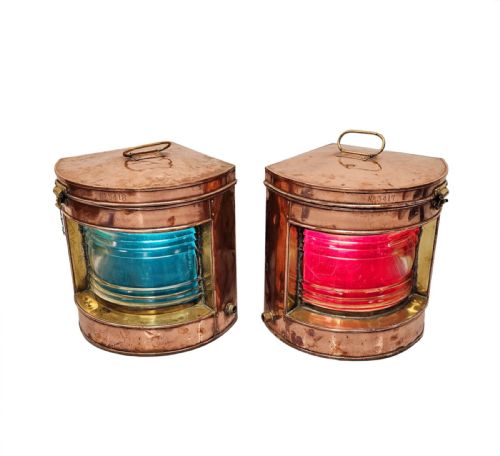


Pair of Lantern Lamps
These pair of lantern lamps bring architectural presence and functional illumination to hallways, porches, and walls.
Pair of Lantern Lamps
A pair of lantern lamps unites symmetrical lighting with historical utility, drawing from forms originally designed for carriages, streets, ships, and grand halls. These matches offer an immediate sense of balance when mounted flanking an entrance, a fireplace, or a long corridor.
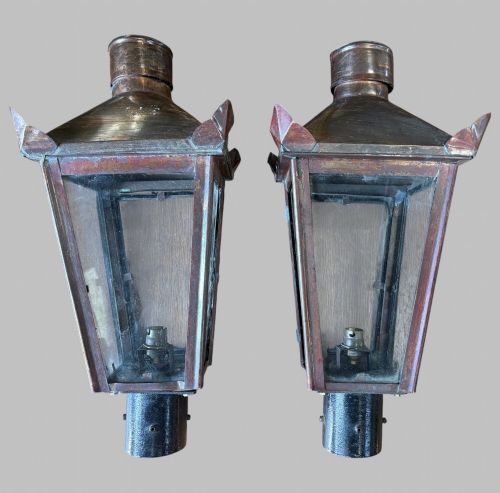
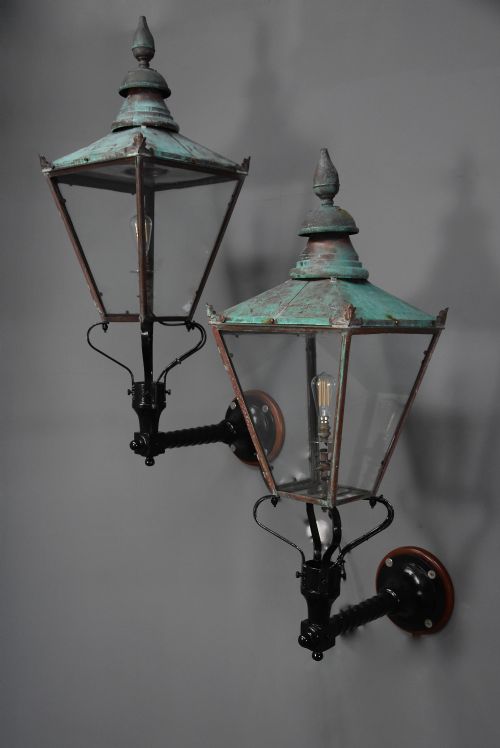
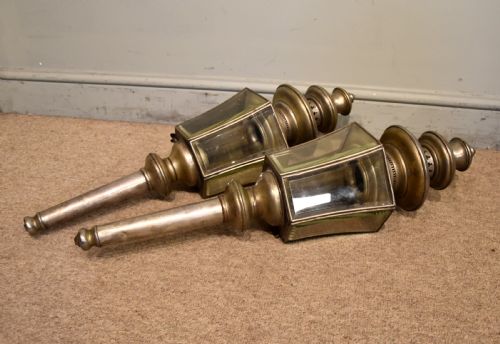
The selections span from the Victorian and Edwardian eras into the early twentieth century, taking the shape of carriage lights, coaching lamps, wall lanterns, and pendant fixtures. Materials range widely across these periods, showing brass, copper, iron, and glass construction.
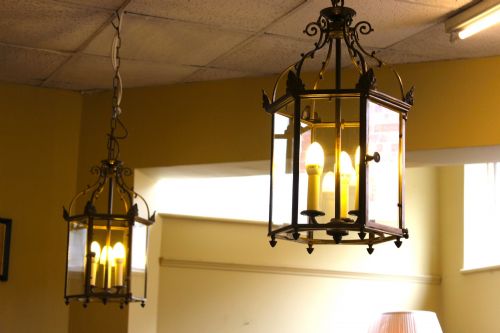
Origin styles stretch from British domestic designs to French Empire, French Chateau, and Chinese Export interpretations. Buyers meet everything from hexagonal brass hall lights to heavy outdoor copper post lanterns and wrought iron wall fixtures.
Materials and construction
Metalworking techniques dictate the structure of these pieces, utilising folded, soldered, and riveted sheet copper or brass alongside cast iron and wrought iron elements. Blacksmith-made items show heavy hand-forged scrollwork and joins, while finer hall lights incorporate turned brass components and delicate framing.
Glazing relies on bevelled, curved, or flat glass panes secured within metal frames by glazing bars, clips, or traditional leads. Many examples integrate functional ventilation caps, mounting brackets, and hinged doors designed to shelter internal oil burners or early electrical fittings.
The selection includes wall lights, carriage lamps, pendant lights, and post lanterns.
Assessing quality and character
Quality rests in the weight of the metal gauge, the crispness of casting or hand-hammering, and the integrity of the original glazing. Heavier copper and brass resist denting and hold structural rigidity over decades of exterior or interior exposure.
Subtleties like integral spiral twist brackets, maker stamps, bevelled glass panes, and untouched patination elevate standard utility pieces into exceptional decorative works. The harmony between the matched pair dictates visual impact once installed on the wall.
F and C Osler·Daris
The Pair of Lantern Lamps Glossary
- Carriage lamp
- A specialised lighting fixture originally mounted to the sides of horse-drawn vehicles to illuminate the road ahead. These retain distinctive bracket mounts and heat-dispersing chimneys.
- Coach lamp
- An alternative term for a carriage lamp, often featuring black-painted metal bodies with polished brass or copper trims. They are built robustly to withstand weather and vibration.
- Hexagonal lantern
- A lighting fixture featuring a six-sided glazed geometric body that disperses light evenly across an entryway or hall. This shape appears frequently in early twentieth-century brass and copper wall lights.
- Toleware
- Painted or lacquered sheet metal utilised in decorative items and lighting components. It provides rich dark surfaces that contrast against polished brass fittings.
- Half lantern
- A flat-backed lighting fixture designed to mount flush against a wall surface. This form projects outward while occupying minimal depth in narrow hallways or porches.
Pair of Lantern Lamps: Frequently Asked Questions
Where should I hang these?
These lamps suit exterior entrances, flanking a main door on sturdy brackets, or interior hallways where symmetrical placement creates strong focal points. They also work well along garden walls or framing a large architectural mirror.
Ensure the mounting surface supports the weight of the metal and glass construction, particularly with heavier copper or cast iron examples.
Can I wire them for electricity?
Most antique lanterns adapt readily to modern electrical wiring by running cable through original bracket arms or ventilation chimneys. Professional electricians can install internal lamp holders safely while retaining the exterior historical appearance.
Original oil or gas burners can be preserved or removed depending on whether the buyer intends functional illumination or purely decorative display.
How do I date these pieces?
Dating relies on material combinations, manufacturing techniques like hand-riveting versus machine stamping, and stylistic cues from Victorian, Edwardian, or later twentieth-century design. Fixtures often carry period characteristics such as cast brass mounts or specific types of bevelled glass.
Comparing the construction methods of the frame and door latches helps narrow down the decade of production.
Are original glass panes common?
Many surviving lanterns retain their original hand-blown or early rolled glass panes, which show subtle surface ripples and bubbles. Replacements do occur due to the fragile nature of glass exposed to weather or transit over the decades.
Inspect the glass for thickness and consistency across both pieces to determine if the glazing is uniform and period-appropriate.