
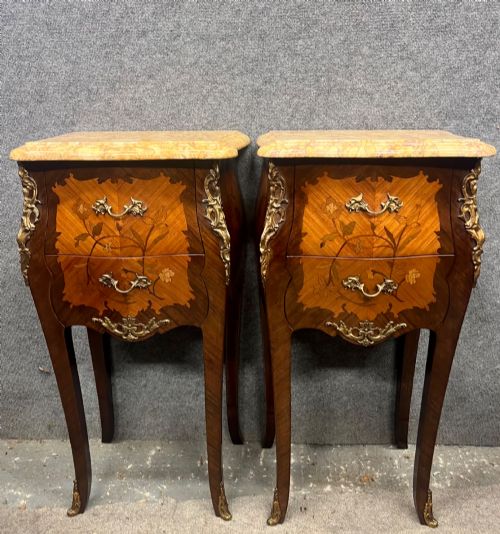
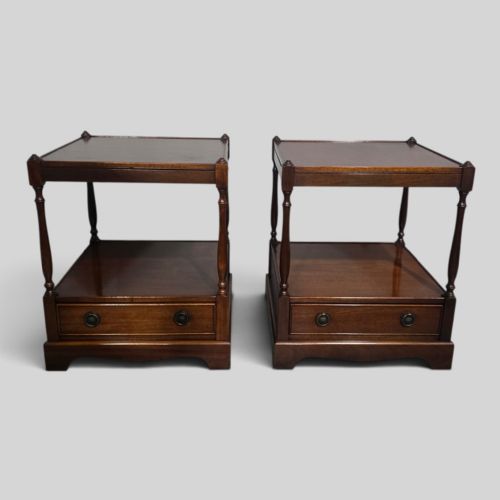
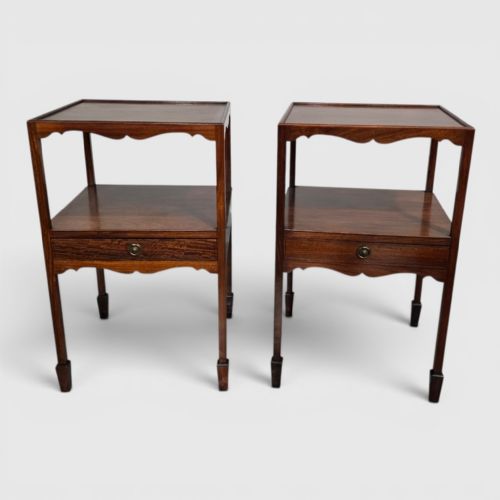
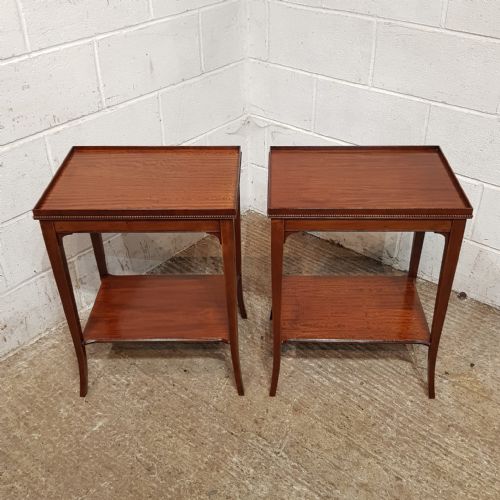

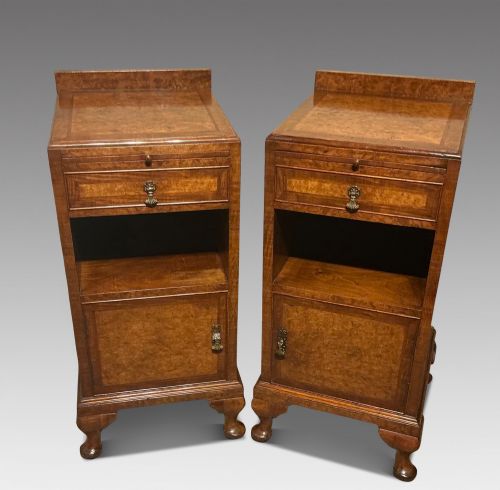


Pair of Lamp Cabinets
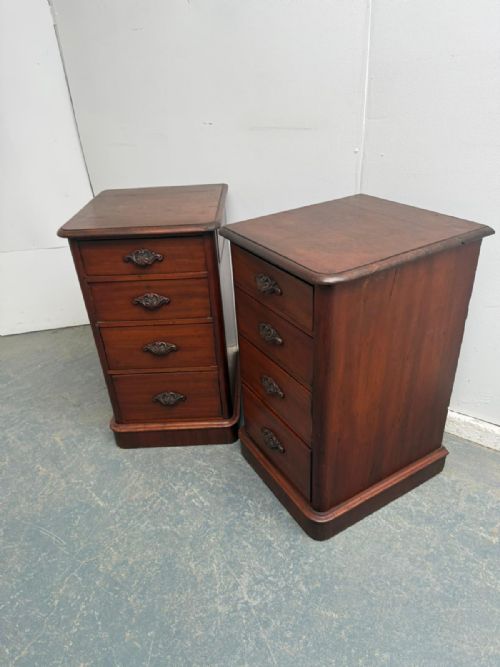
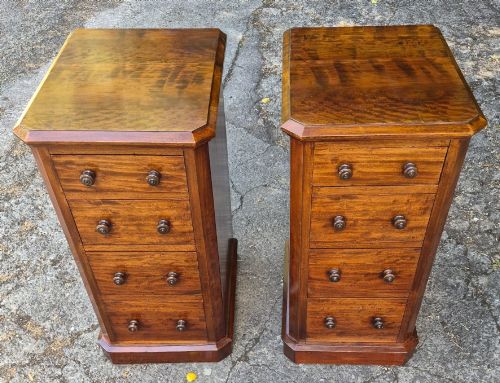
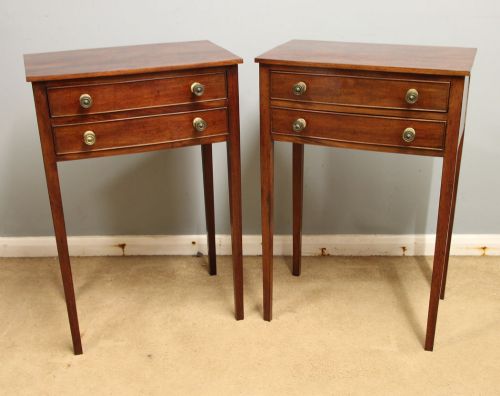
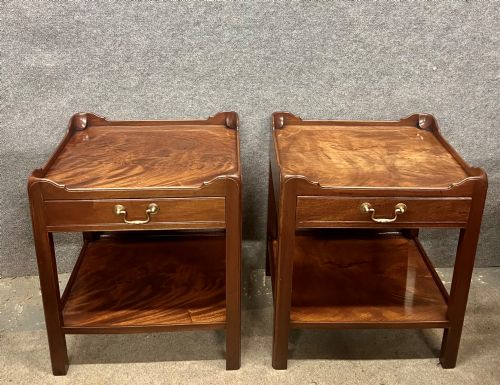
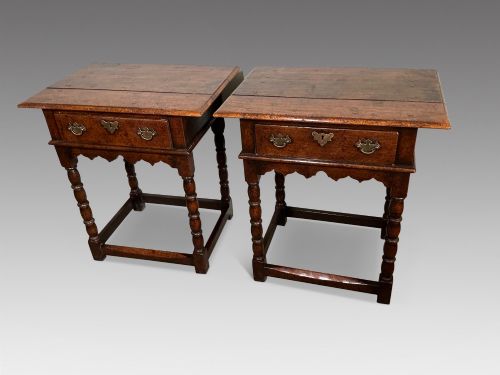
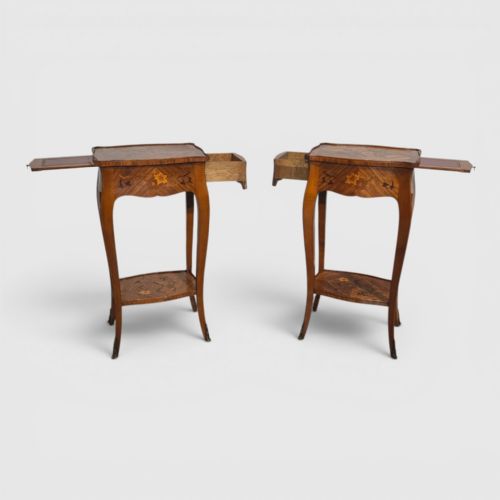
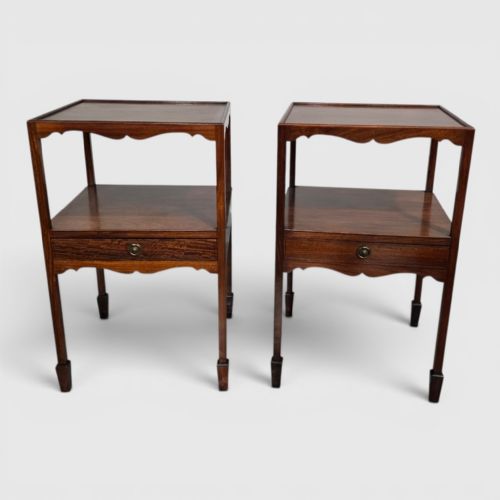
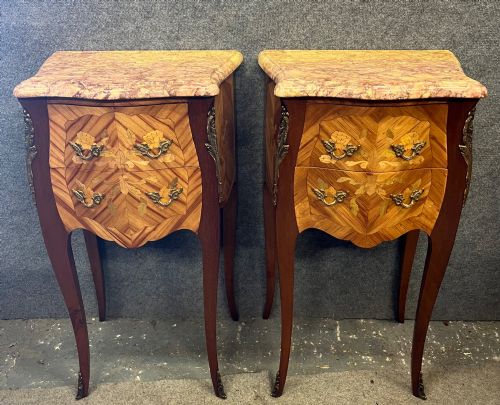
These pairs of lamp cabinets provide a matched dual presence beside seating or beds, combining compact proportion with practical surface space.
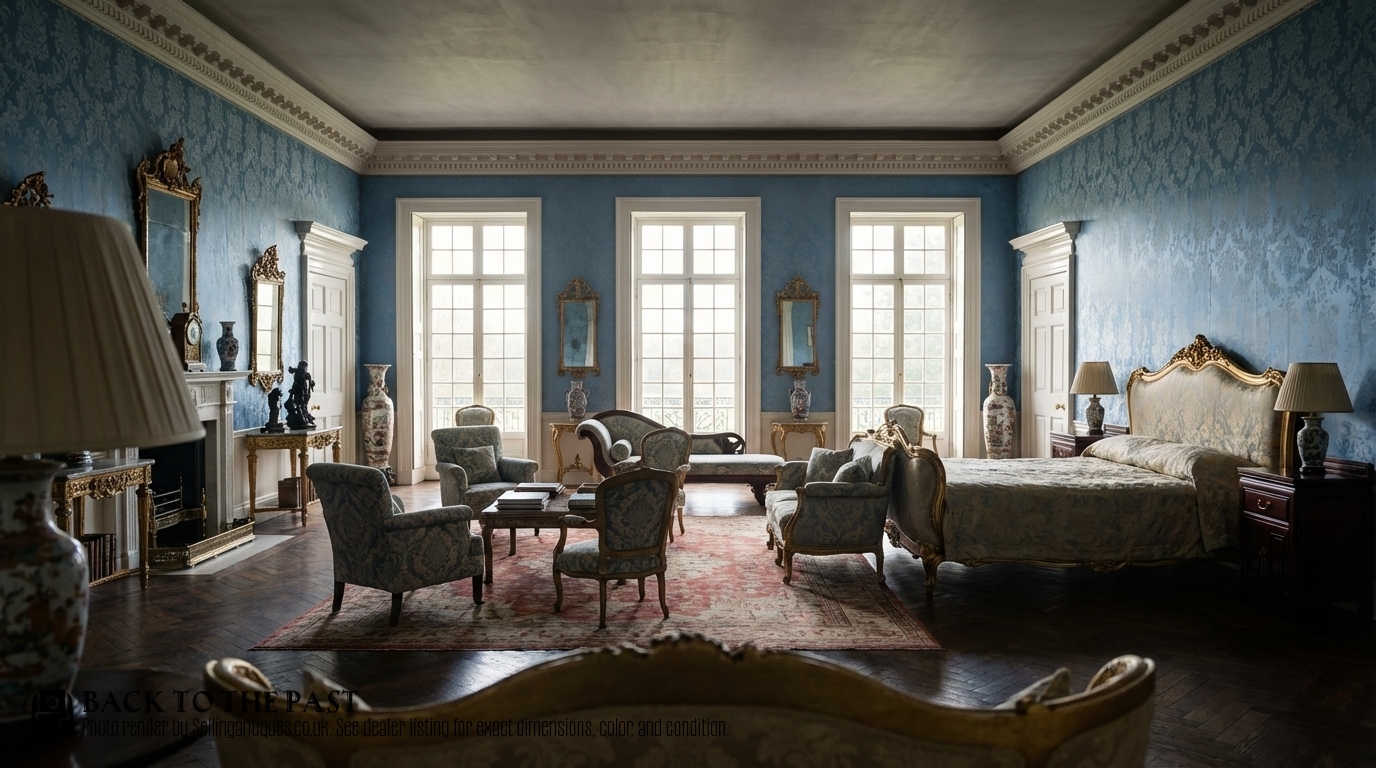
Pair of Lamp Cabinets
A pair of lamp cabinets unites matched small-scale furniture designed to support lighting and hold bedside or parlour items. Buyers seeking pair of lamp cabinets encounter forms ranging from Victorian pot cupboards to Art Deco walnut bedside chests and French revival lamp tables.
Mahogany and walnut predominate across pieces spanning the Georgian era through to the 1930s. The selection relies heavily on early twentieth-century interpretations alongside genuine nineteenth-century examples and interwar French styles.
Materials and Construction
Cabinet makers utilised dense hardwoods including mahogany, walnut, and rosewood, often applying marquetry or burr walnut veneers to visible surfaces. Brass fittings and marble tops appear frequently on French and Victorian iterations.
Joinery techniques focus on stability in compact dimensions, supporting drawer boxes and enclosed cupboards designed for daily domestic use.
Mahogany and walnut form the primary timbers across the nineteenth and twentieth-century selections.
Quality and Execution
Distinction across the range lies in timber selection, such as figured walnut or matched mahogany grain, and the precision of inlay work. Finer examples display harmonious grain alignment between both pieces in the pair and crisp carving or marquetry.
Structural integrity of the joints and the preservation of original hardware separate standard utilitarian output from superior cabinet work.
Hille
The Pair of Lamp Cabinets Glossary
- Marquetry
- The art of applying pieces of veneer to a structure to form decorative patterns. It frequently defines the tops and drawer fronts of French style lamp tables.
- Pot cupboard
- A small bedside cabinet originally designed to house a chamber pot. These form a large proportion of the compact lamp cabinets found today.
- Serpentine
- A furniture front curved in a gentle wave shape, convex at the centre and concave at the sides. This contour adds considerable refinement to bedside chests.
- Burr walnut
- Timber taken from a tree growth featuring intricate, swirling grain patterns. It provides a highly decorative surface on twentieth-century cabinets.
Pair of Lamp Cabinets: Frequently Asked Questions
What is the difference between a lamp cabinet and a bedside table?
Lamp cabinets and bedside tables share similar dimensions, but lamp cabinets often incorporate enclosed cupboards or specific surfaces designed for lighting.
Historically, many pieces functioned as both nightstands and parlour lamp stands depending on the room they occupied.
How do I match these cabinets with existing furniture?
Matching relies on timber species such as mahogany or walnut and the prevailing style, whether Georgian, Victorian, or Art Deco.
Similar wood tones and period details help integrate a matched pair into a cohesive interior scheme.
Were these cabinets originally made as pairs?
Many period cabinets were constructed together in matching pairs for symmetrical placement beside a bed or sofa.
Makers ensured uniform dimensions and grain characteristics across both pieces during initial production.
How do I identify Art Deco pieces?
Art Deco pieces display geometric lines, streamlined forms, and distinctive veneers like birds eye maple or burr walnut.
These twentieth-century items often favour minimalist hardware and unadorned surfaces over traditional period carving.