
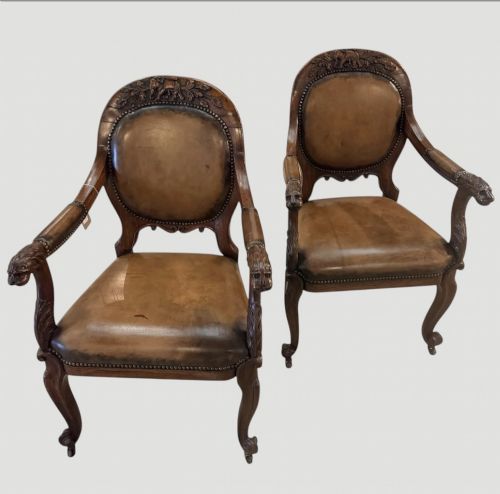


Pair of Indian Chairs
A pair of indian chairs brings a rich colonial history into a room through dense carving and dark timbers.
Pair of Indian Chairs
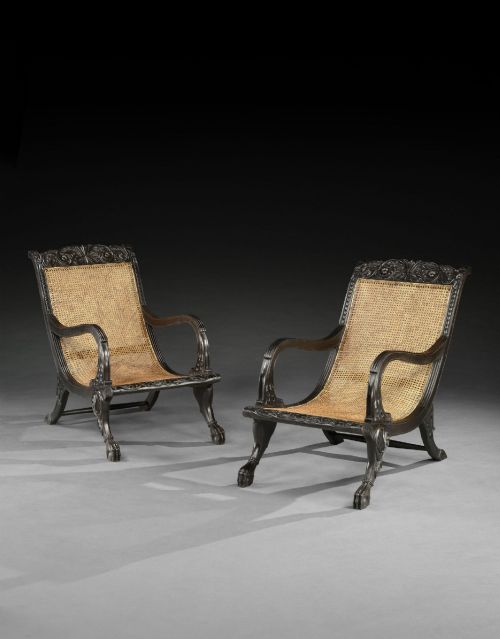
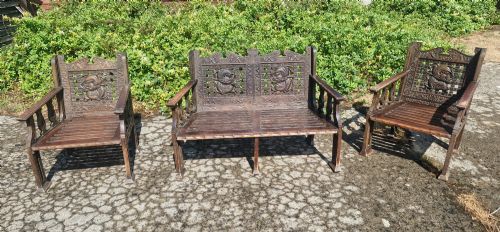
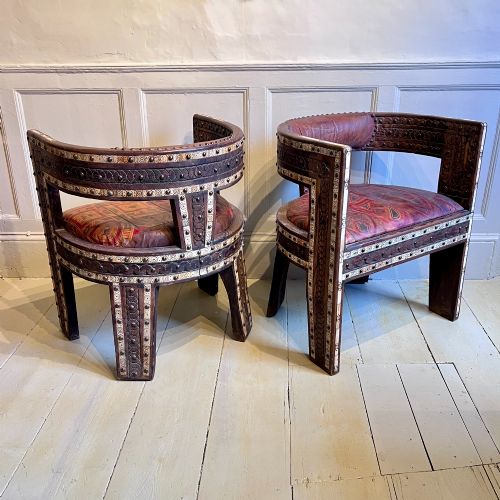
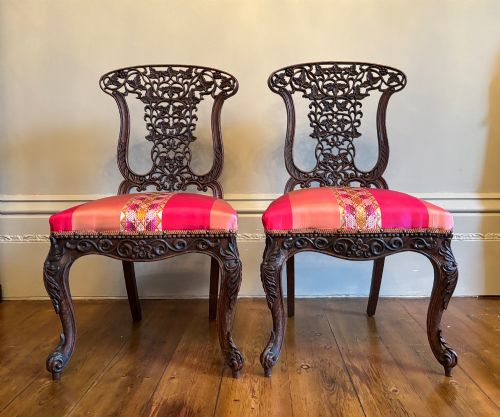
When searching for a pair of indian chairs, buyers encounter heavily carved seating originating from the nineteenth century onwards. The selections span styles such as Anglo-Indian, Moorish, and Burmese, encompassing armchairs, side chairs, and low chairs.
The most common examples on this page are nineteenth century Anglo-Indian armchairs and side chairs fashioned from dense hardwoods. These seating options often display intricate floral or figural carvings reflecting regional craftsmanship.
How they were made
Constructed primarily from sturdy timbers like teak, rosewood, padauk, and ebony, these chairs rely on heavy hardwoods capable of supporting deep hand-carving. Artisans utilised traditional joinery alongside applied elements such as bone inlay and brass fittings.
Seating surfaces frequently incorporate woven cane or panels of leather and silk. Folding mechanisms appear on specific campaign and plantation forms designed for portability.
Materials recorded across the inventory include teak, rosewood, ebony, brass, cane, and bone inlay.
What varies in quality
The depth and crispness of the hand-carved detail dictate the calibre of the piece. Superior examples exhibit high definition in foliage and figures without softness in the edges.
The choice of primary timber influences desirability, with dense dense ebonies and well-figured rosewoods sitting alongside standard teak. Original woven cane work and surviving structural integrity further separate standard chairs from exceptional ones.
The Pair of Indian Chairs Glossary
- Anglo-Indian
- Furniture made in India during the British colonial period, combining European forms with local decorative carving traditions. These pieces often utilise indigenous tropical hardwoods.
- Bergere
- An upholstered enclosed armchair with wooden framing, frequently incorporating cane panels on the back and sides. This form appears across various colonial seating styles.
- Cane
- Material woven from the outer portion of rattan palms, utilised for seat and back panels to provide flexible support in warmer climates. It requires careful maintenance to prevent drying.
- Plantation Chair
- A seating form featuring extended arms designed for resting legs, created for colonial residences. These chairs often incorporate folding frames for transport.
- Padauk
- A heavy tropical hardwood valued for its reddish hue and durability, frequently employed in nineteenth-century cabinetmaking. It accepts intricate carving without splintering.
Pair of Indian Chairs: Frequently Asked Questions
How do I care for cane seats?
Woven cane benefits from occasional wiping with a damp sponge to maintain moisture and prevent snapping. Avoid placing these chairs near direct heat sources that dry out natural fibres.
Weight distribution matters greatly with vintage cane. Using fitted squab cushions spreads pressure evenly across the woven surface during daily use.
Where do these chairs originate?
Most pieces stem from nineteenth-century workshops operating across the Indian subcontinent under British rule. Local artisans blended European furniture templates with native carving motifs.
Regional variations emerge in the timber selection and decorative style. Workshops in specific presidencies favoured distinct woods such as teak, rosewood, or ebony.
Are folding campaign chairs sturdy?
Folding plantation and campaign chairs utilise hinged wooden frames designed for easy packing by travellers. Their structural stability relies on proper alignment of the pivot joints.
While functional for seating, these folding variants require gentle handling when opening or closing. Regular checks of the brass pins and hinges ensure safe daily use.
How do I identify nineteenth-century pieces?
Nineteenth-century examples display deep, hand-chiselled carving rather than machine routing. Examining the underside reveals traditional joinery marks and patinated hardwood surfaces.
Timber weight provides another indicator of age, as mature tropical hardwoods are notably dense. Hardware components like brass screws or pins also correspond to nineteenth-century manufacturing methods.