



Pair of Framed Floral Oils
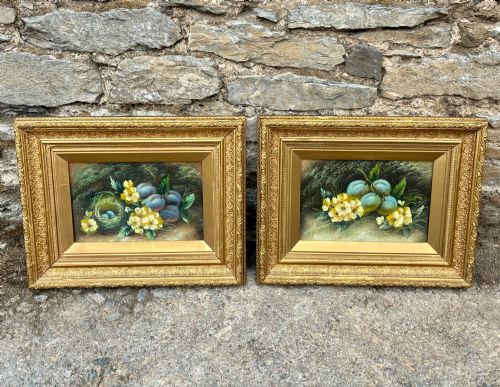
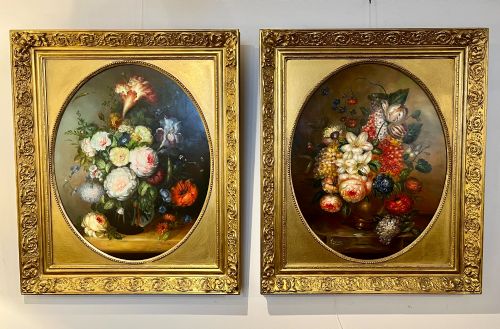
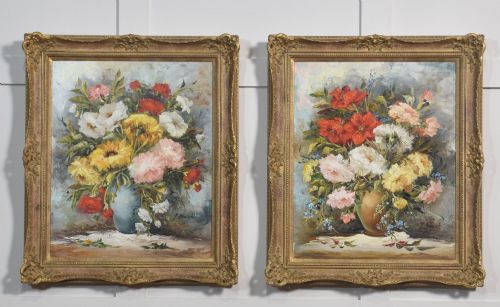
A pair of framed floral oils brings the rich textures of traditional botanical painting directly onto the wall.
Pair of Framed Floral Oils
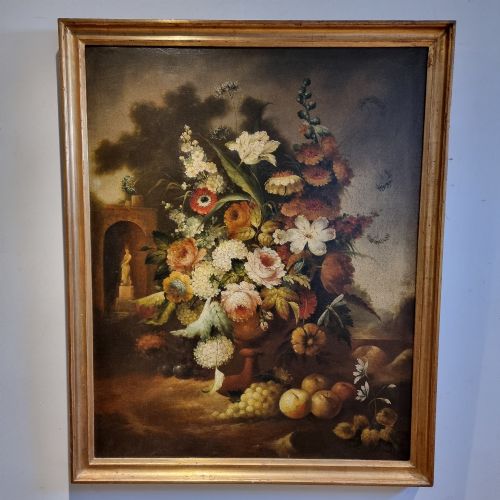
A pair of framed floral oils comprises matching or complementary canvas or board works depicting flowers and fruit. These works appear in Dutch Golden Age style, 18th century revival, and Victorian interpretations.
The selections available range from large 18th century style compositions to miniature still life paintings and hand painted fruit pictures. They originate from periods spanning the 18th century through to the 1930s.
Buyers encounter oil paintings on canvas as well as oil on board, housed in wooden, gilded, or gesso frames. These pieces offer balanced wall art for decorative interiors.
How they were made
Artists painted these works using oil paint applied to stretched canvas or rigid boards. The medium allowed for layered depth, subtle colour blending, and realistic rendering of petals and foliage.
Makers housed the paintings in wooden frames finished with gilding or gesso decoration. These frames provided structural support and visual enhancement suited to the artistic style of the period.
Pair of Framed Floral Oils Retail Price Guide 2026
Typical asking prices for pair of framed floral oils among the pieces listed under this phrase on Sellingantiques today, from the lower quarter to the upper quarter. They describe what is for sale here now, not the wider market.
The listings feature oil paint on canvas and board, contained within gilded wood and gesso frames across multiple historical periods.
What varies in quality
The handling of light, shadow, and botanical detail distinguishes finer compositions from standard decorative works. Skilled brushwork captures the natural translucency of petals and the varied textures of fruit.
The craftsmanship of the accompanying frame contributes significantly to the overall integrity of the piece. Hand applied gesso and quality gilding reflect the standards of the original workshop.
Manuela Bonati·Henry Schouten·Edgar Bundy·Oliver Clare
The Pair of Framed Floral Oils Glossary
- Oil paint
- A slow drying paint made by mixing pigments with a drying oil such as linseed. This medium permits rich colour saturation and delicate blending.
- Gesso
- A plaster mixture used as a base for moulding or gilding on wooden frames. It provides a smooth surface for decorative relief work.
- Canvas
- Heavy woven fabric stretched across a wooden frame to serve as a painting surface. It remains a primary support for historical oil works.
- Board
- A rigid flat panel utilised as a painting support instead of fabric canvas. Artists often employed board for smaller scale works.
- Gilt
- A thin layer of gold leaf or gold paint applied to wood or gesso surfaces. This finish adds reflective brilliance to the frame.
Pair of Framed Floral Oils: Frequently Asked Questions
What periods do these paintings date from?
The listings include works created across multiple eras, ranging from authentic Victorian and 19th century pieces to later 20th century interpretations in earlier styles.
Each period brings distinct stylistic choices regarding composition, colour palettes, and framing techniques.
How should I hang a matching pair?
Matching pairs look best displayed at eye level with consistent spacing between them to maintain visual balance on the wall.
Consider placing them in reception rooms or hallways where their shared subject matter creates a cohesive focal point.
What is the difference between canvas and board?
Canvas consists of woven fabric stretched over a wooden stretcher frame, offering slight give under the brush. Board provides a completely rigid flat surface, frequently used for smaller or miniature works.
Both materials support traditional oil paint applications equally well.
Are these works signed by the artist?
Certain pieces feature artist signatures or attributions recorded in the title or visible on the painted surface. Other decorative works remain unsigned while representing specific historical stylistic traditions.
Documentation varies depending on the specific maker and the period of creation.