


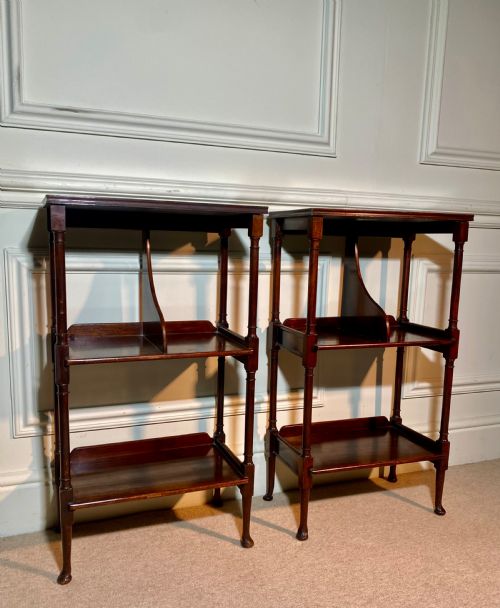


Pair of Etagere Tables
These pair of etagere tables bring tiered display space and polished timber surfaces to any room, offering both practical utility and decorative presence.
Pair of Etagere Tables
When you search for a pair of etagere tables, you encounter open tiered furniture designed for display and convenience. These multi-shelf pieces function as side tables, lamp tables, bedside stands, and compact console tables across domestic spaces.
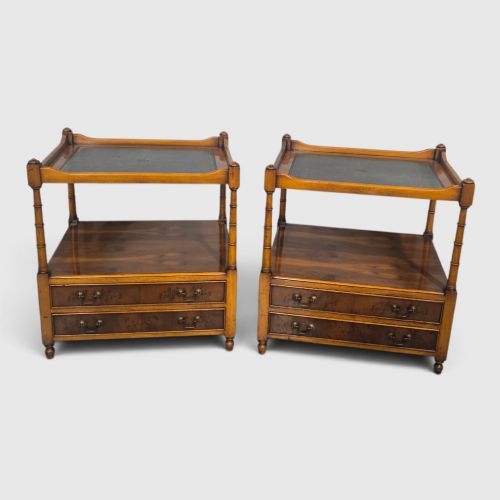
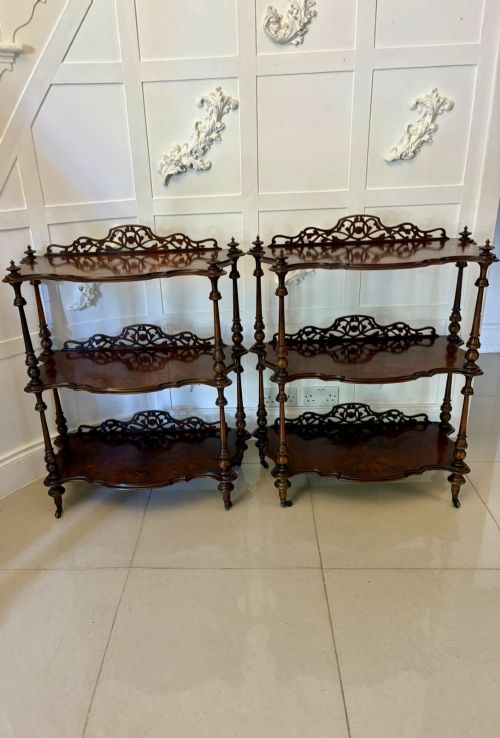
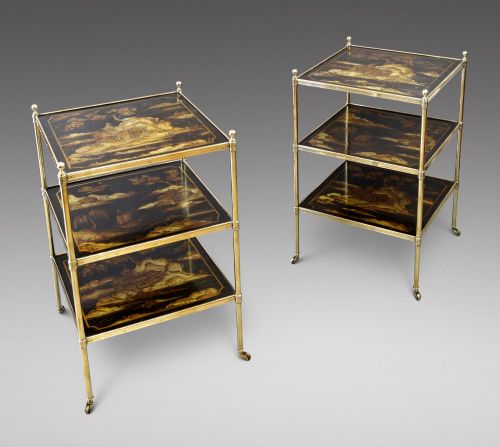
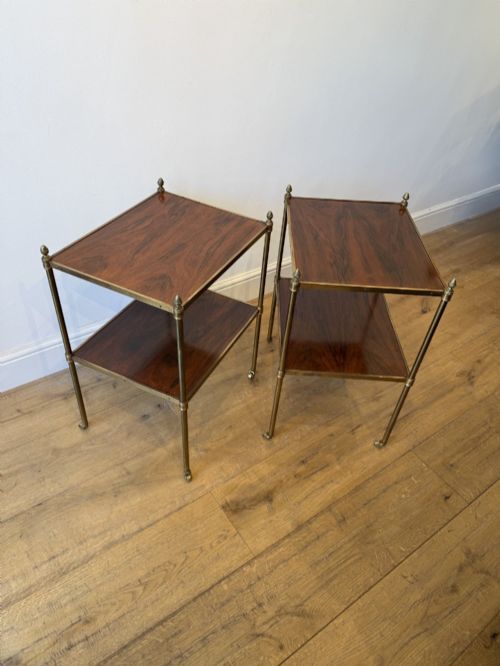
The selections span distinct historical eras, including the Regency period, Victorian epoch, and Edwardian years, alongside items from the 1930s and 1920s. Forms range from traditional three-tier what-nots to two-tier lamp tables and marquetry-inlaid designs.
Makers and workshops across Britain and France produced these tiered tables to meet the Victorian and Edwardian demand for versatile occasional furniture. They appear in matched configurations, offering symmetrical placement options for a room's interior layout.
What varies in quality
Distinction in these tables rests on the selection of timber veneers, the precision of marquetry inlay, and the integration of metal mounts or brass gallery details. Finer examples display balanced proportions across multiple tiers and careful attention to edge banding and surface finish.
The integrity of the structural joints and the crispness of carved or turned supports separate standard production from superior workshop output. Pieces attributed to notable makers or specific design traditions carry greater weight in construction and decorative detail.
Listings feature etageres spanning from Regency and Victorian periods to Edwardian and 1930s examples, constructed in mahogany, walnut, rosewood, and yew.
Mallett·Donald Ross·Whytock & Reid
The Pair of Etagere Tables Glossary
- Etagere
- A piece of furniture consisting of a set of open shelves for displaying small objects or ornaments. It provides vertical surface area while maintaining an open visual profile.
- Whatnot
- A nineteenth-century multi-shelved piece of furniture used for storage or display. It shares similarities with the etagere and serves comparable functional roles in the home.
- Marquetry
- Decorative veneer work formed by small pieces of wood, shell, or metal fitted together to create pictorial or geometric patterns on a surface. It appears frequently on tabletops and shelf surfaces.
- Regency
- A British design period spanning the early nineteenth century, characterised by classical restraint, architectural lines, and occasional neoclassical revival motifs. Pieces from this era often utilise mahogany or rosewood.
- Satinwood
- A durable timber known for its yellowish colour and lustrous sheen, often utilised for decorative banding or inlay work on nineteenth-century furniture.
Pair of Etagere Tables: Frequently Asked Questions
What is an etagere table used for?
These tables provide tiered surfaces for lamps, books, and decorative objects in living rooms, bedrooms, and hallways. Their open shelving design allows items to be displayed accessibly.
They function equally well as bedside stands, lamp tables, or side consoles depending on their height and tier configuration.
How do I date a pair of etagere tables?
Dating relies on identifying the prevailing timber choices, construction techniques, and stylistic markers associated with periods like the Regency, Victorian, or Edwardian eras. Mahogany and rosewood are common in early nineteenth-century pieces, while satinwood and lighter marquetry often point towards later decades.
Cabinetmaking methods and edge joinery provide additional clues regarding whether a piece originates from the Regency period, the nineteenth century, or the 1930s.
Are these tables sturdy enough for daily use?
Multi-tier etageres are built with vertical supports and secured shelves designed to bear the weight of lamps, books, and ornaments. Their stability depends on sound timber joinery and solid framing across the tiers.
Regular placement on level flooring ensures that multi-tier side tables and lamp tables remain secure during everyday domestic use.
What is the difference between an etagere and a whatnot?
Both terms describe multi-shelved furniture designed for display, though their historical usage can overlap in nineteenth-century cataloguing. Etageres frequently lean towards French decorative traditions involving marquetry and gilt metal, while what-nots often reference British tiered stands.
On the market, both forms offer similar open shelving utility across side tables and bedside stands.