

Pair of Dog Figurines
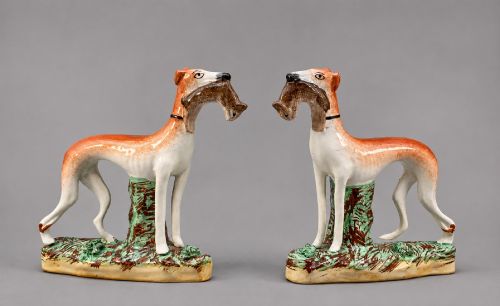
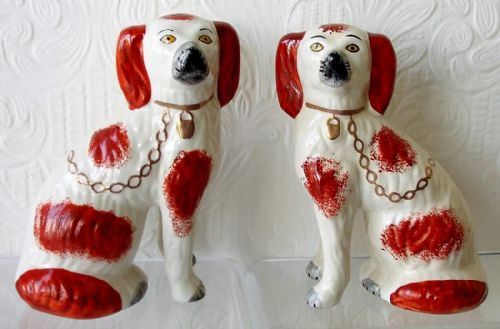
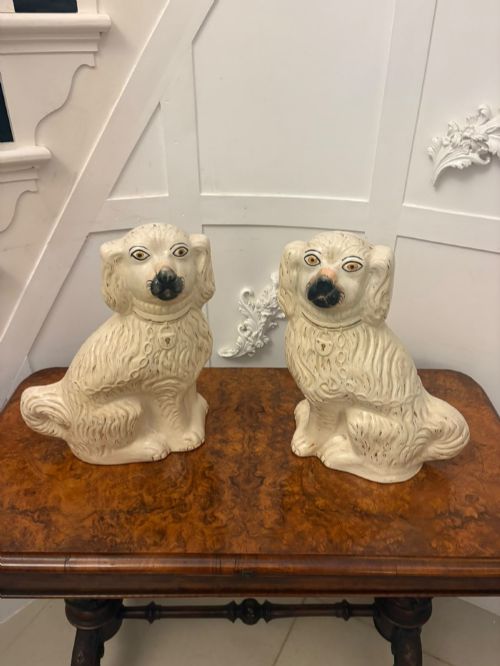
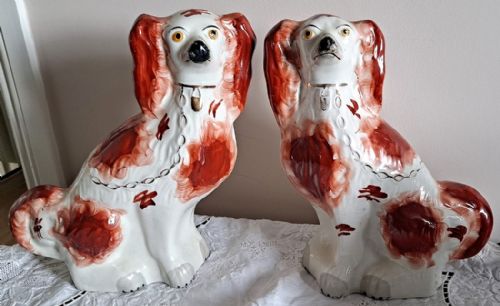
A pair of dog figurines brings ceramic and bronze canine companions into a room, most often found in Victorian Staffordshire earthenware.
Pair of Dog Figurines
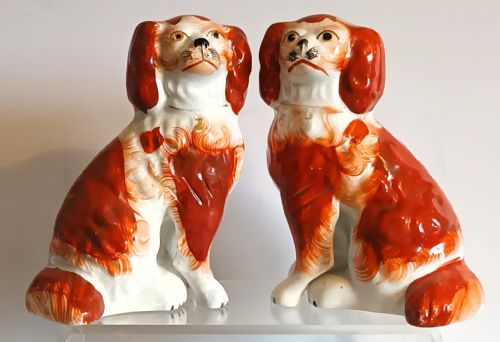
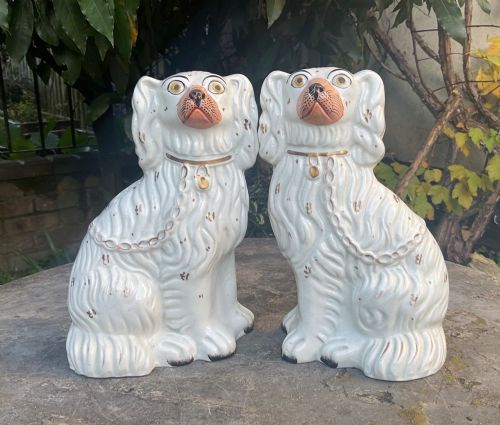
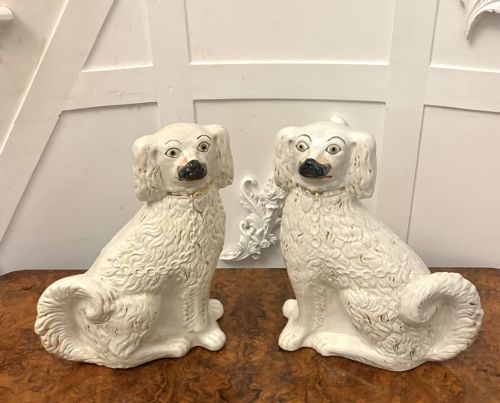
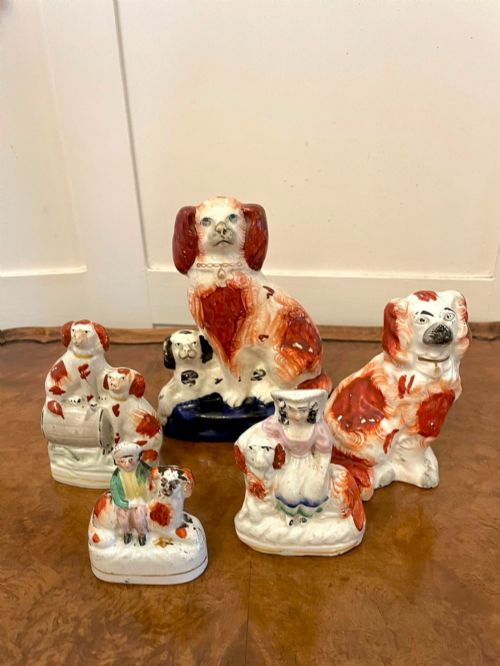
When you search for a pair of dog figurines, you meet sculptural pairs designed to sit symmetrically upon mantelpieces or side tables. The selection here leans heavily towards nineteenth-century English pottery rather than continental porcelain or cast metal.
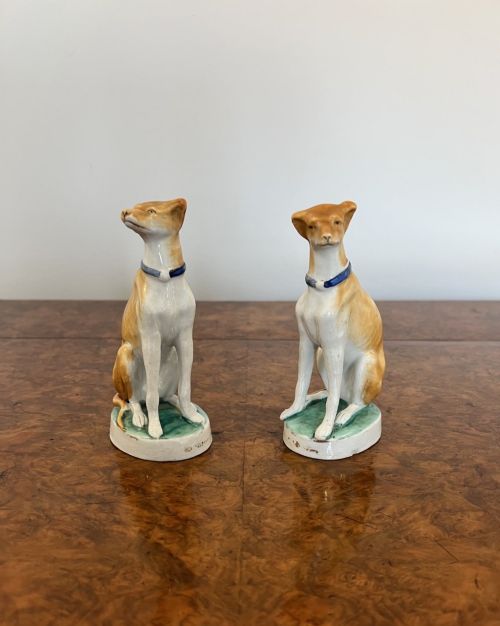
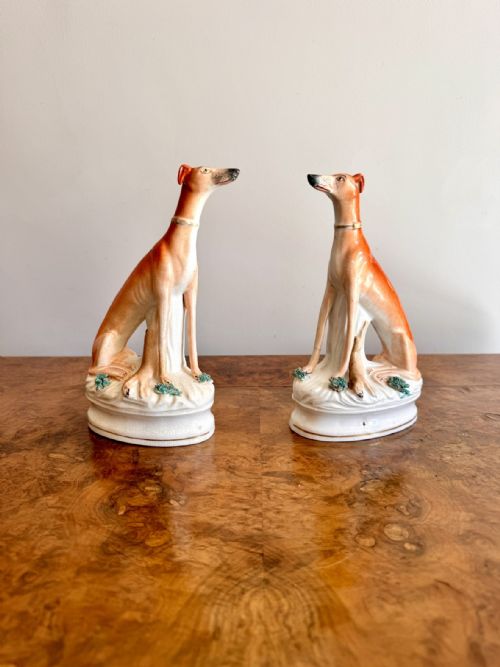
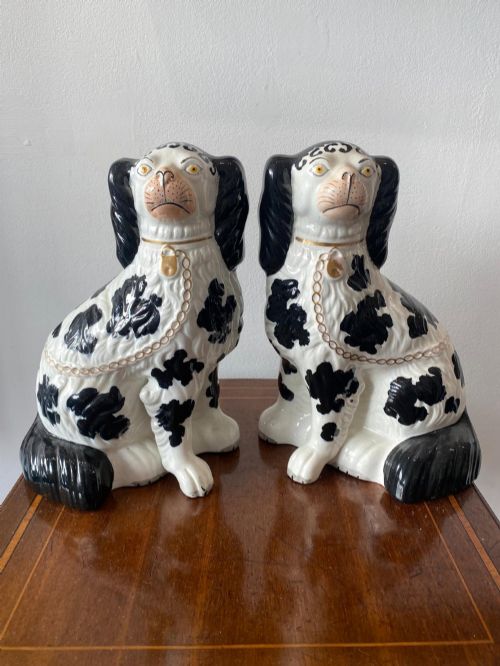
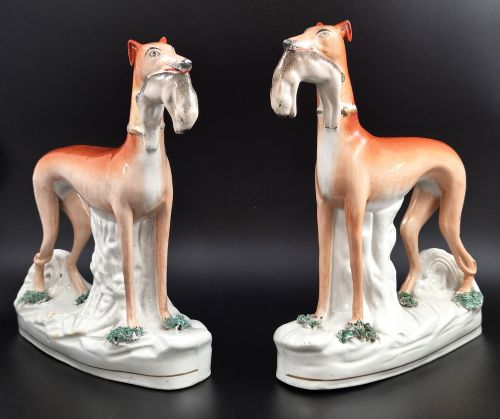
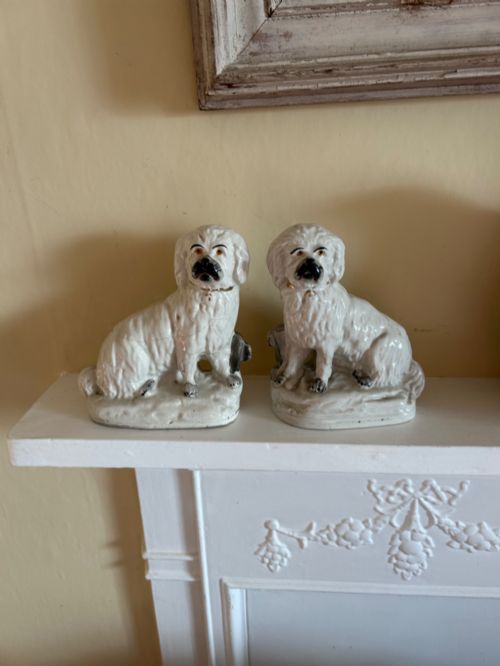
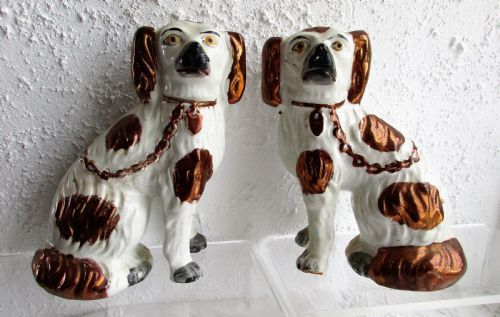
Staffordshire pottery dominates the output, taking the form of spaniels, greyhounds, poodles, and pugs. Makers shaped these domestic animals to face one another, creating a balanced display that proved popular in Victorian parlours.
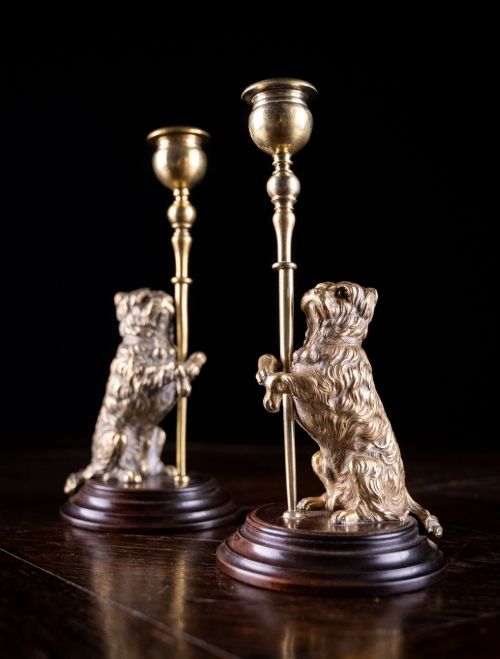
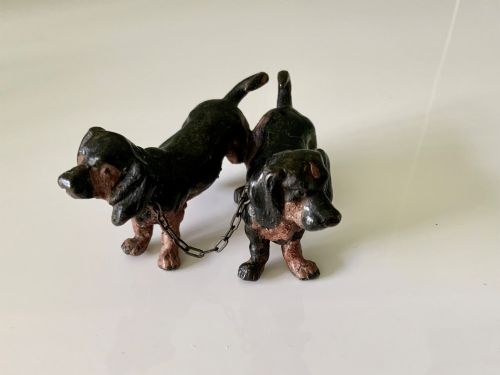
Beyond earthenware, the category embraces bronze, spelter, and carved alabaster figures. These metal and stone versions tend to depict sporting hounds, dachshunds, or hunting dogs rather than hearthside pets.
How they were made
Bronze and spelter sculptures utilise traditional metal casting techniques, sometimes finished with cold painted surfaces. Alabaster figures rely on hand carving to define the musculature and coats of the animals.
Pair of Dog Figurines Retail Price Guide 2026
Typical asking prices for pair of dog figurines among the pieces listed under this phrase on Sellingantiques today, from the lower quarter to the upper quarter. They describe what is for sale here now, not the wider market.
Poodles made in these pairs often wear coats formed from applied clay curls resembling piped icing.
What varies in quality
Painting makes the greatest difference between an ordinary pair and a fine one. Crisp brushwork on the eyes, muzzle, and spots separates carefully finished pieces from hurried factory production.
Mould clarity also dictates worth. Sharp definition in the fur, paws, and facial expression shows the maker used a fresh mould before the clay details softened through repeated use.
Thomas Parr·Bright And Sons·Louis Riche
The Pair of Dog Figurines Glossary
- Staffordshire
- Pottery manufactured in the potteries district of Staffordshire, England, known for earthenware figures of animals and people. This region produced the vast majority of nineteenth-century hearth dogs.
- Earthenware
- Porous ceramic fired at a lower temperature than porcelain and finished with an opaque or transparent glaze. It serves as the primary body for Victorian figural pottery.
- Cold painted
- Metal sculpture painted with non-heat-setting paints after casting. This method allows for subtle shading on bronze and spelter animals.
- Animalier
- Nineteenth-century sculptural style focused on realistic depictions of animals in naturalistic poses. Artists working in this manner studied anatomy closely.
- Spelter
- Zinc alloy cast into decorative figures and patinated to resemble bronze. It provides a lighter and less expensive alternative to true bronze.
Pair of Dog Figurines: Frequently Asked Questions
How do I date Staffordshire dogs?
Dating relies on examining the glaze, weight, and painting style of the earthenware body. Earlier pieces from the mid-nineteenth century often display finer modelling and restrained colour.
Later Victorian examples tend to have heavier bodies and brighter enamel paint. Crazing in the glaze also offers clues to the age of the ceramic.
Where did these figures sit?
Victorian homeowners placed these companion figures on mantelpieces, chests of drawers, and side tables. They were usually arranged facing each other in matching pairs.
This symmetrical placement suited the formal interior decoration of nineteenth-century parlours. Some variations served practical roles as inkwells or quill holders on a desk.
What breeds are represented?
Spaniels, greyhounds, poodles, pugs, and Maltese terriers appear frequently in ceramic form. Greyhounds often double as quill holders or stand beside hares.
Bronze and metal sculptures tend to show sporting breeds such as whippets, dachshunds, and German shepherds. These metal pieces reflect outdoor pursuits rather than fireside pets.