





Pair of Cherub Wall Sconces
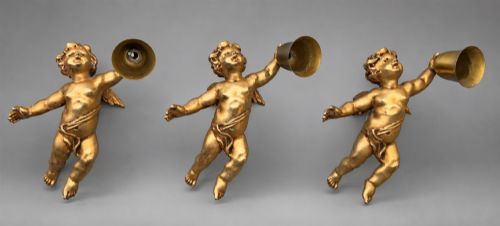
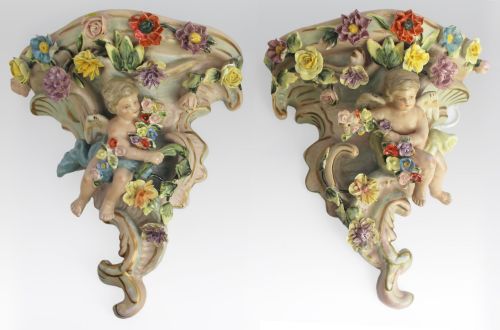
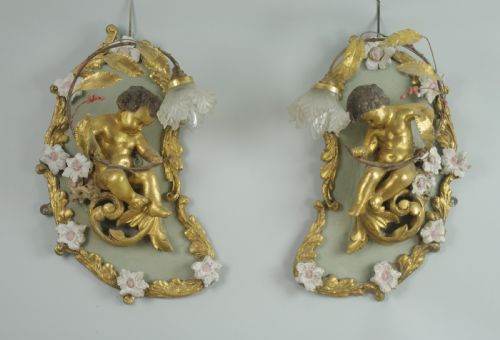
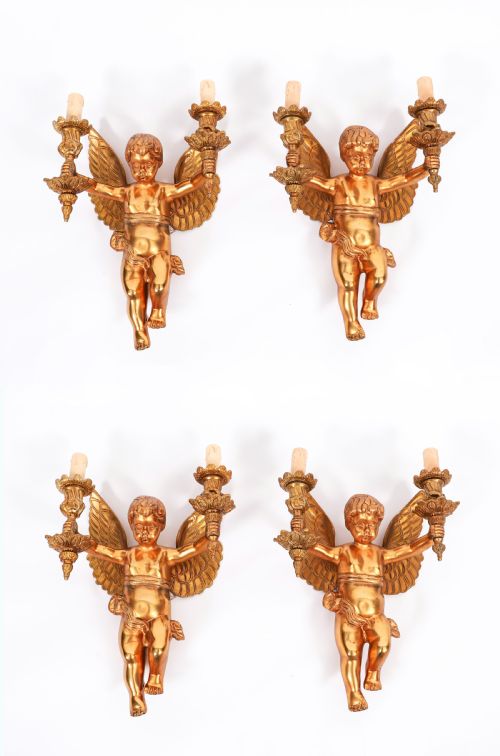
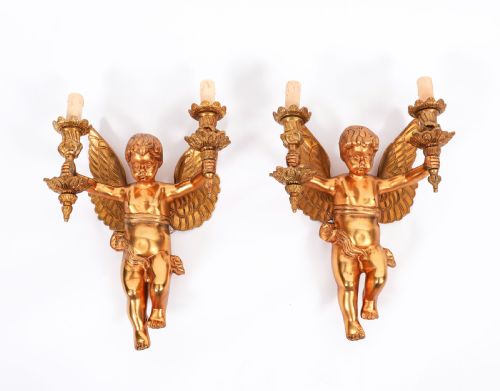
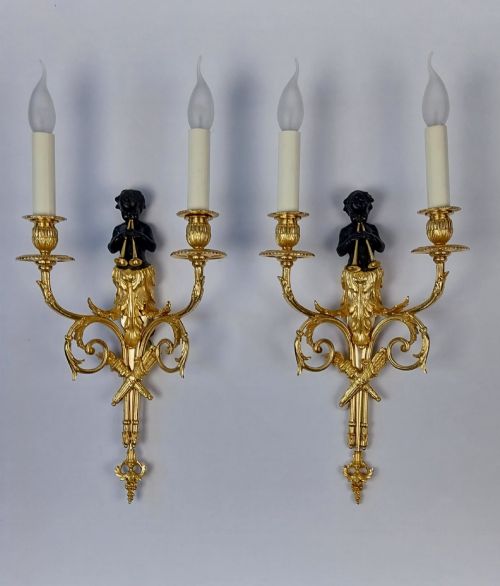
A pair of cherub wall sconces brings sculpted figures and ambient illumination to a room, cast in gilt bronze or carved from warm timber.
Pair of Cherub Wall Sconces
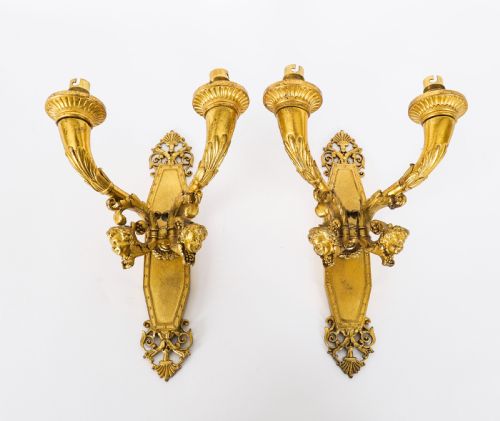
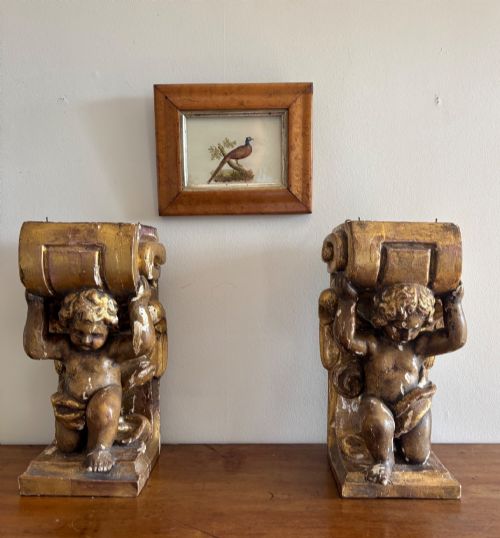
The most common versions encountered here are French and Italian designs executed in gilt bronze, ormolu, carved wood and brass. Makers drew upon Rococo Revival, Baroque Revival and Louis XIV styles to create these ornate lighting brackets.
How they were made
Metal examples were typically cast in bronze or brass before receiving a surface layer of mercury gilt or ormolu, lending a rich golden lustre to the sculpted putti. Wood versions relied on skilled carving in timbers such as limewood or pine, often enhanced with gesso and gold leaf to achieve a comparable opulent finish.
Branch configurations varied from single candle holders to twin branch armatures designed to hold multiple tapers or early electric fittings. The structural mounting plates and arms were secured with threaded bolts or pins hidden behind the figures and foliate scrolls.
Some cherubs sport delicate feathered wings, while others manage to hold heavy branch arms with remarkably chubby stone-carved arms.
What varies in quality
The crispness of the chasing on metal castings or the depth of hand-carving in wood dictates the sculptural fidelity of the cherubs' faces and wings. Superior examples retain their original fire gilding or gold leaf, showing subtle tonal variations rather than flat, modern metallic paints.
The structural integrity of the arms and backplates determines whether the sconce can safely bear the weight of branches and candles without sagging. Heavier bronze and ormolu pairs demonstrate more robust casting and secure junction points than lighter brass alternatives.
The Pair of Cherub Wall Sconces Glossary
- Ormolu
- Gilded bronze, where finely ground gold is amalgamated with mercury and applied to a bronze base through heat. This technique creates a durable, luminous golden finish seen on many French wall lights.
- Putto
- A plump, often winged male child figure frequently depicted in Renaissance and Revival art. In these sconces, putti act as the central structural support for the lighting branches.
- Gesso
- A plaster-like mixture applied to wood surfaces as a preparation for gilding. It allows craftsmen to model crisp decorative details before applying gold leaf.
- Appliqué
- A French term used to describe a wall-mounted light fixture or sconce. It frequently appears in descriptions of continental lighting from the seventeenth and eighteenth-century revival periods.
- Corbel
- A structural bracket projecting from a wall to support a weight. In lighting design, these often take ornamental figural forms.
Pair of Cherub Wall Sconces: Frequently Asked Questions
How do I clean these metal sconces?
Dust gently with a soft, dry brush to prevent accumulation in the recesses of the cast cherubs and foliate scrolls. Avoid abrasive polishes that can strip away the historic gilt bronze or ormolu surface.
Keep moisture away from the metal and any older electrical wiring to preserve the patina. A microfiber cloth is usually sufficient for routine maintenance.
How do I distinguish French from Italian pieces?
French pieces often display the refined chasing and precise casting typical of nineteenth-century Parisian ateliers working in the Louis XIV or Rococo Revival manner. Italian examples frequently utilise carved giltwood or Murano glass elements alongside more exuberant Baroque styling.
Regional differences also appear in the choice of wood substrates and the composition of the gesso underneath the gilding. Examining the backplate fixings can provide additional clues regarding origin.
What is the difference between brass and ormolu?
Ormolu consists of cast bronze treated with a gold and mercury amalgam, resulting in a deep, warm golden finish with exceptional light-reflecting qualities. Brass is a copper and zinc alloy that tends to have a brighter, yellower metallic tone and is generally associated with later or less costly production.
Weight and surface texture help differentiate the two materials upon closer inspection. Ormolu exhibits the finer detail characteristic of chased bronze work.