

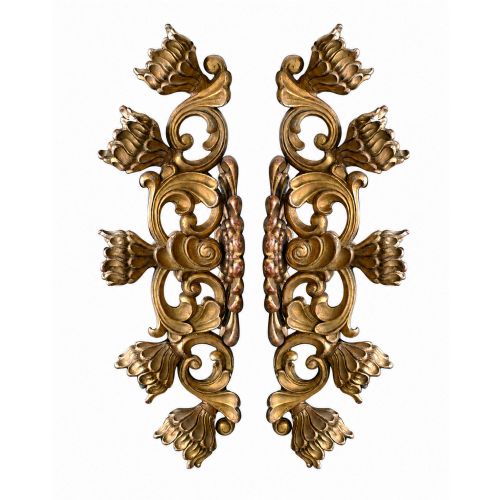
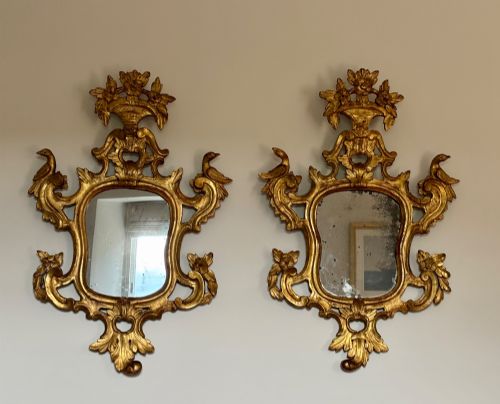
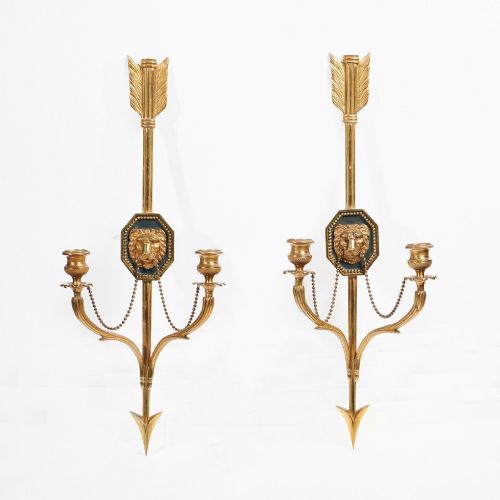
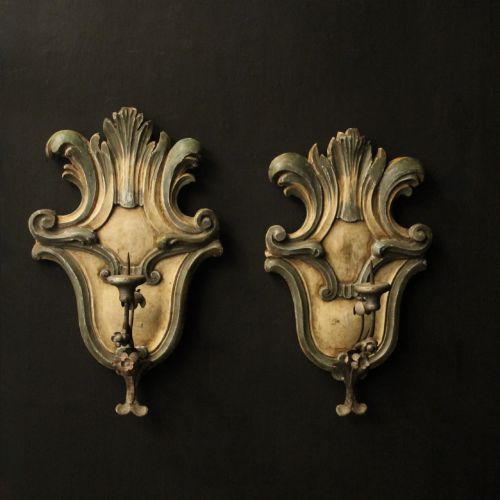
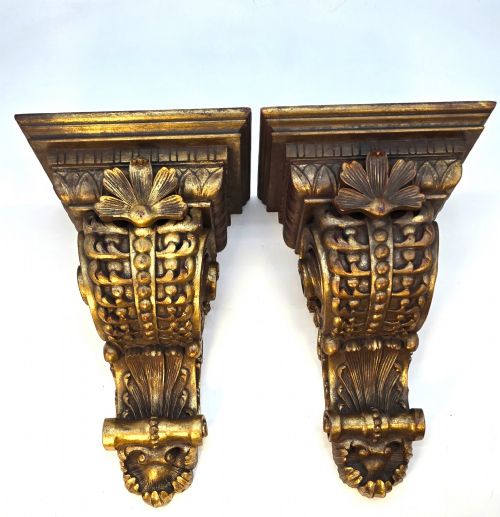
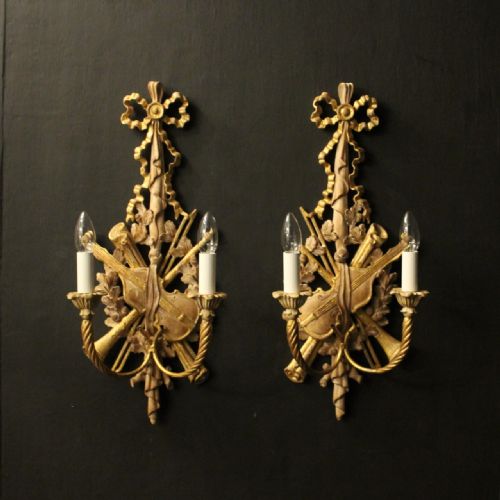
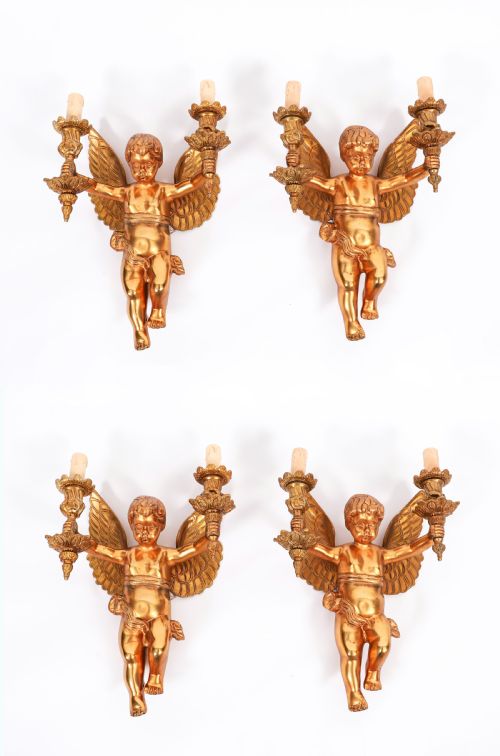
Pair Italian Wall Sconces
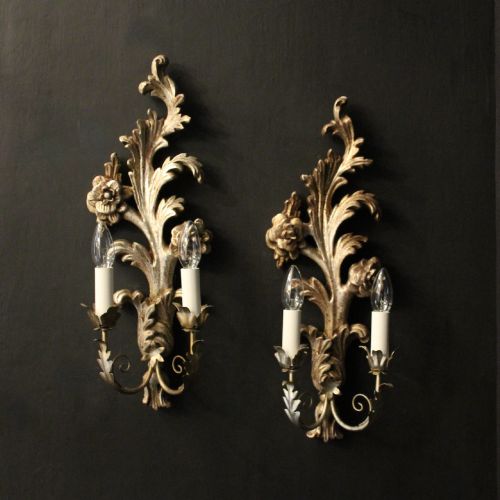
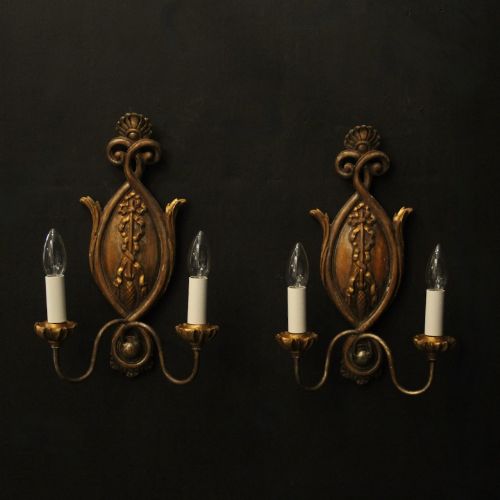
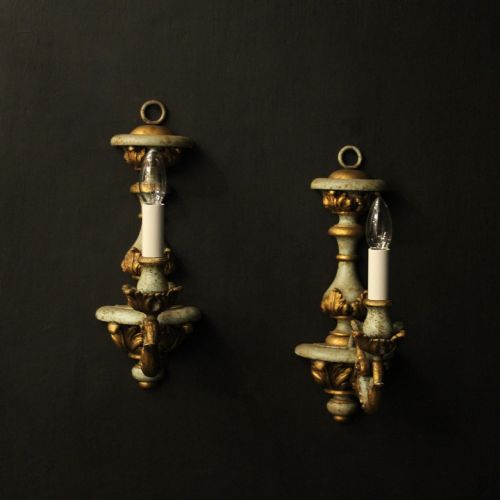
These pair italian wall sconces bring centuries of carved timber, gilt leaf and candle-lit brilliance straight to a room.
Pair Italian Wall Sconces
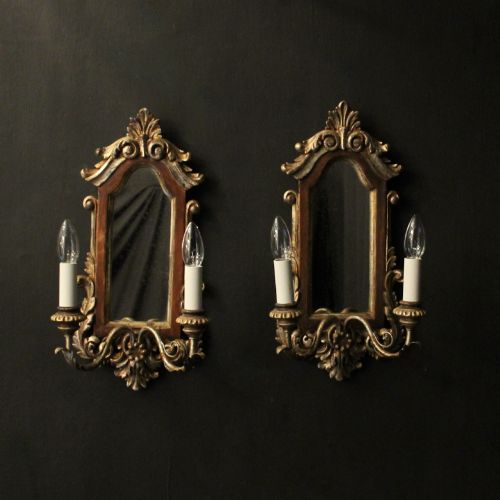
When you search for pair italian wall sconces, you encounter decorative lighting fixtures designed to mount directly onto vertical surfaces, spanning centuries of craftsmanship. The selection encompasses candle-holders, electric adaptations, girandoles with integrated mirrors, and carved wall brackets.
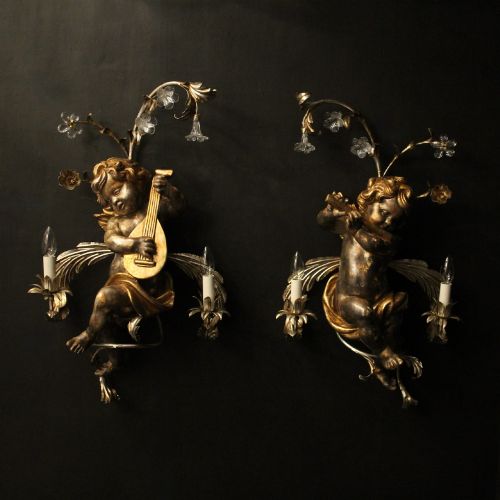
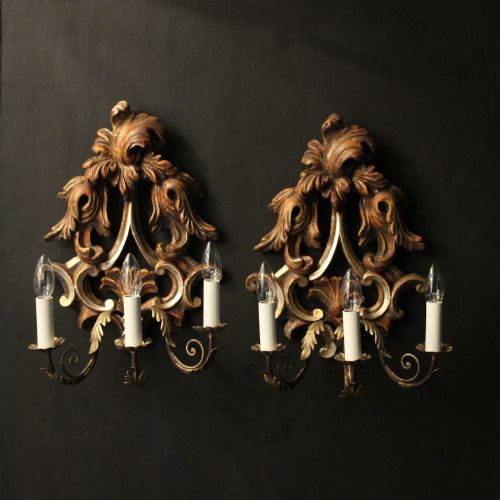
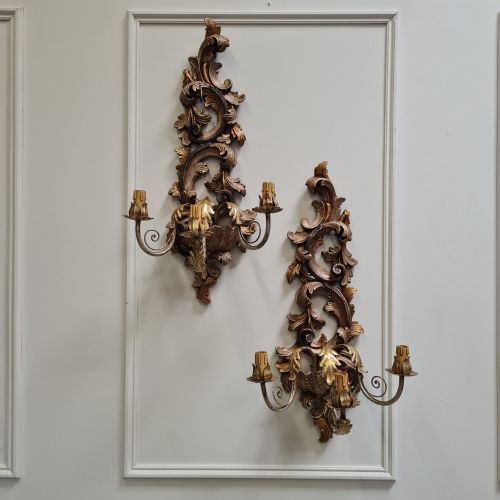
The most common examples you meet on this page originate from the early twentieth century, particularly the nineteen-twenties and nineteen-thirties, often styled in the Florentine taste. These frequently feature twin or triple arms branching from carved wooden bases covered in gold leaf or silver leaf.
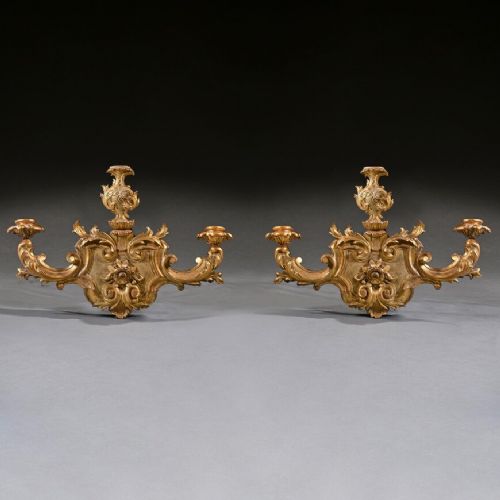
Older pieces stretch back through the nineteenth century into the eighteenth and seventeenth centuries, showing bolder Baroque curves or restrained Neoclassical lines. Venetian mirrors and Lombardy region lights occasionally appear, adding regional distinction to the basic wall sconce format.
How they were made
Makers shaped these fixtures primarily from wood, applying gesso as a smooth foundation before layering on gold leaf, silver leaf, or polychrome paint. Carved wood and giltwood dominate the construction, though metal elements such as ormolu, brass, and toleware appear across various pieces.
The decorative vocabulary relies heavily on traditional techniques like hand-carving and gilding, with craftsmen sculpting cherubs, leafy scrolls, and architectural brackets. Glass components, including Murano elements and mirrored panels on girandoles, integrate with the timber frames to reflect candlelight.
Listings span periods from the seventeenth century through to the nineteen-thirties, using giltwood, carved wood, ormolu, and glass.
What varies in quality
The depth and crispness of the hand-carving define the upper tier of these fixtures, separating spirited sculptural work from mechanical or soft detailing. Sculpted cherubs and intricate leaf-work show varying degrees of artistic confidence in the underlying timber.
The application and preservation of the gilt leaf or polychrome surface dictate visual presence. Original gilding that has aged with a rich, undisturbed patina carries more character than unsympathetic later re-gilding.
The Pair Italian Wall Sconces Glossary
- Giltwood
- Wood that has been coated with a thin layer of gold leaf. This finish defines the majority of Florentine wall lights.
- Girandole
- A branched wall light that incorporates a mirror. The glass plate reflects the candlelight to increase illumination.
- Ormolu
- Gilded bronze or metal ornamentation mounted onto furniture or lighting. It appears frequently on nineteenth-century pieces.
- Polychrome
- Painted in several colours. This treatment adorns wood surfaces on specific regional Italian sconces.
- Toleware
- Enamelled or lacquered sheet metal. It combines with giltwood on certain early twentieth-century examples.
Pair Italian Wall Sconces: Frequently Asked Questions
How do I wire old wall sconces?
Most antique wall lights arrive adapted for modern electrical wiring by professional restorers. You should consult a qualified electrician to mount and connect them safely to your household circuit.
Older fixtures originally held candles or primitive oil burners before receiving electrical conversions in subsequent decades.
How do I date giltwood sconces?
Dating relies on the underlying carving style, the preparation layers beneath the gold leaf, and the ageing of the wood. Baroque and Rococo forms indicate earlier eighteenth-century origins, while simpler leaf-carved twins often point to the nineteen-twenties.
Examining the backboards and fixing points provides additional clues regarding the period of manufacture.
Where should I hang wall sconces?
These fixtures suit placement flanking a fireplace, above a sideboard, or either side of a large wall mirror. Height placement depends on ceiling proportions and eye level, typically slightly above head height.
Ensure the wall structure can support the weight of carved timber and metal arms.