
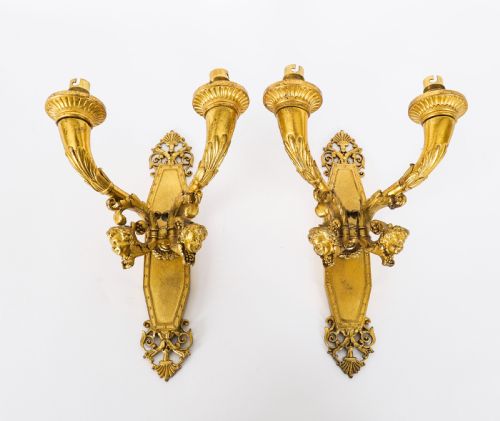
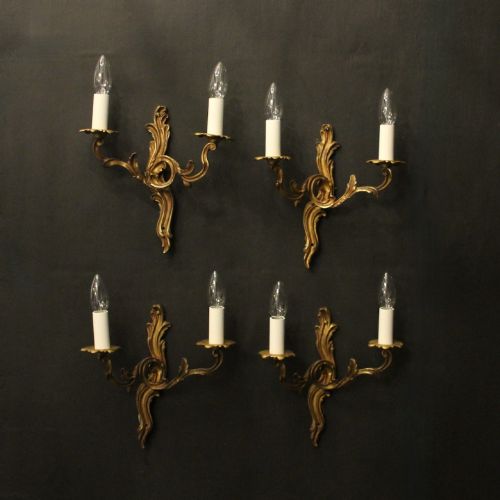
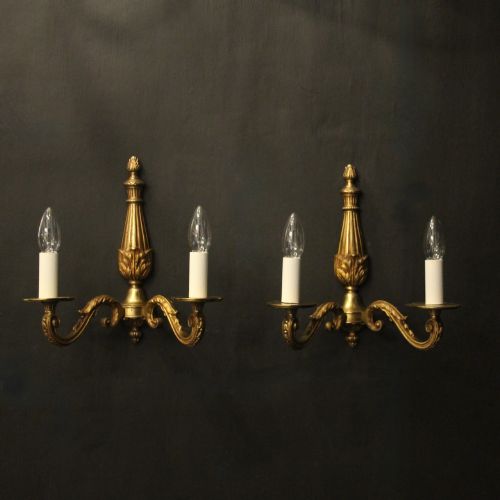
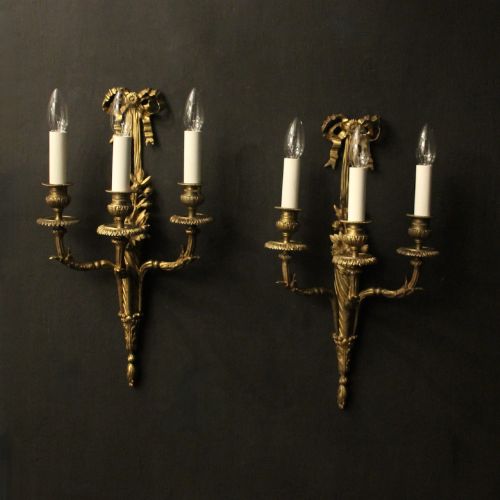
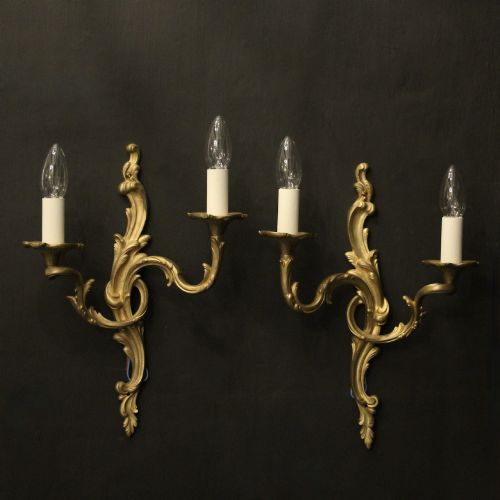
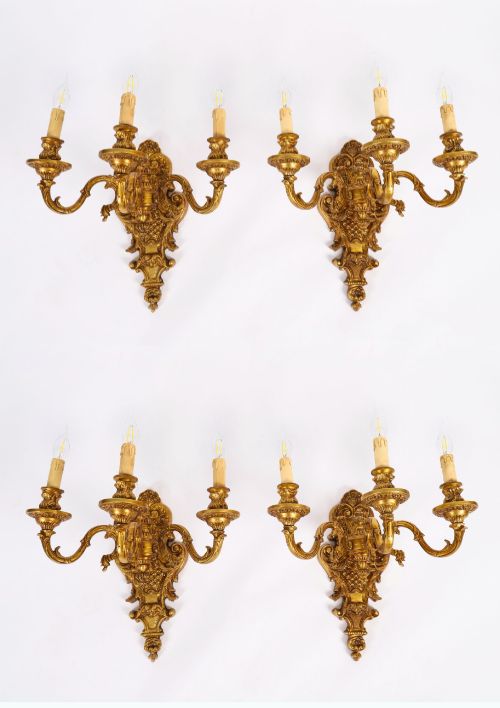
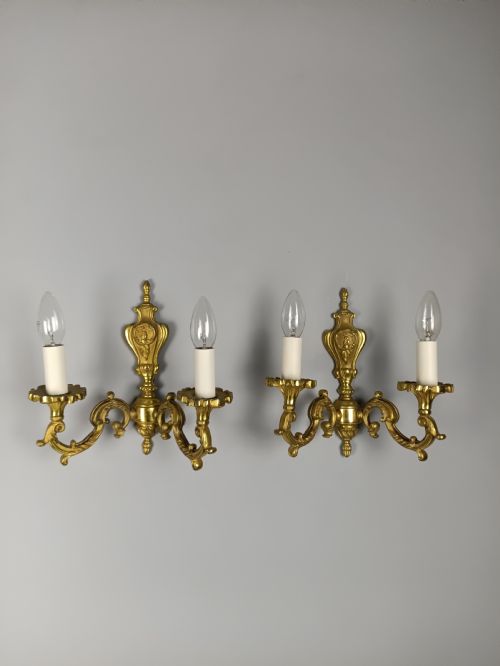
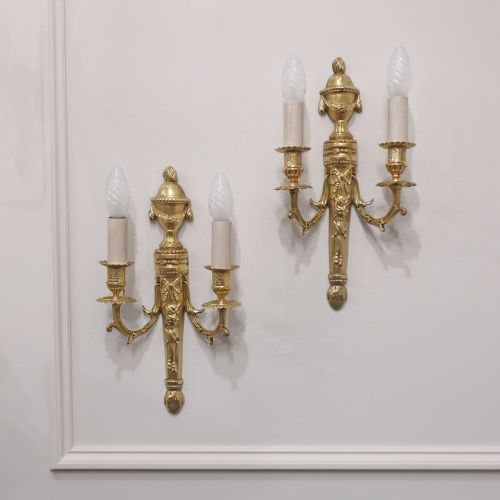
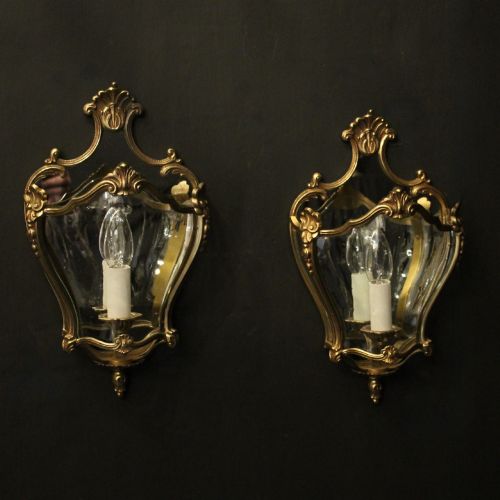
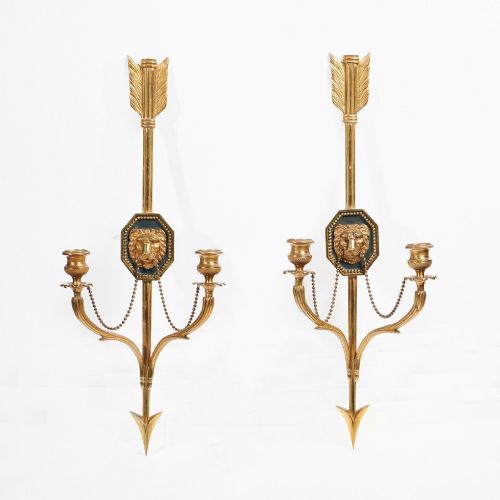
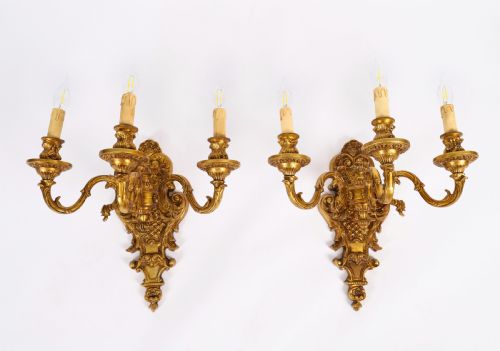
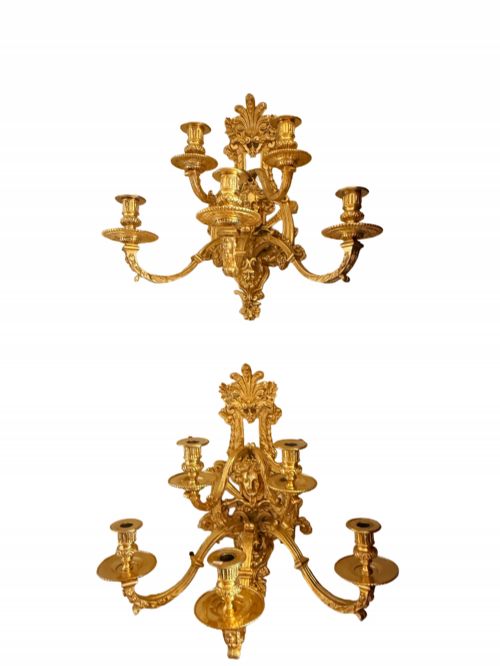
Pair French Ormolu Sconces
Pair french ormolu sconces provide glowing illumination and decorative brilliance, casting historical elegance across a room through gilded metal craftsmanship.
Pair French Ormolu Sconces
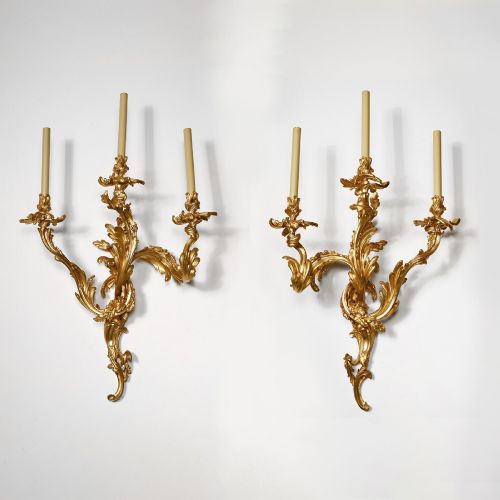
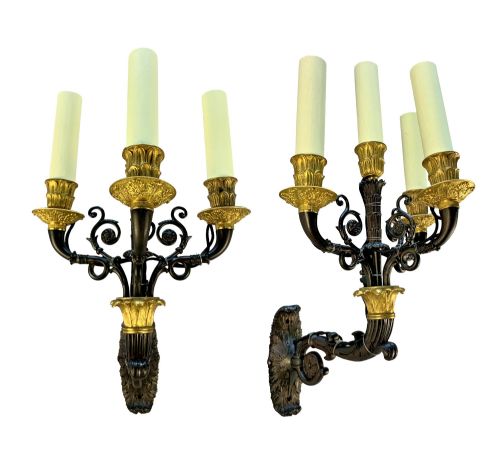
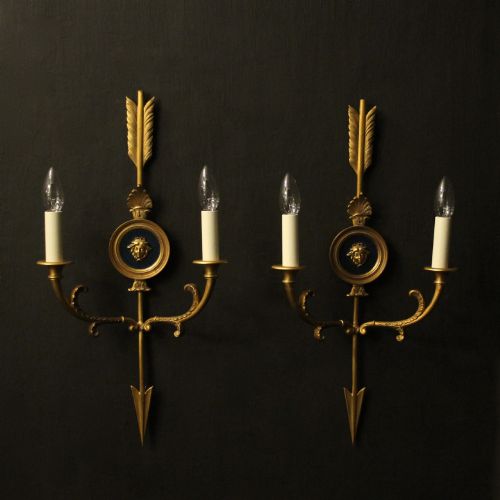
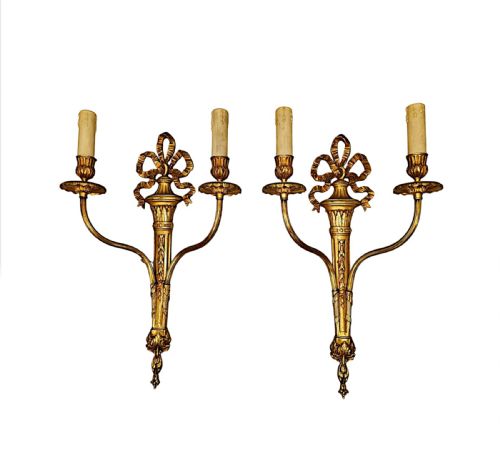
Pair french ormolu sconces are wall-mounted light fittings designed to hold candles or electric bulbs, taking forms such as twin-arm and triple-arm fixtures. When you search for pair french ormolu sconces, you encounter lighting designed to project warmth and architectural interest directly onto interior walls.
The pieces appearing in this category span multiple periods from the nineteenth century into the early twentieth century, showing revivalist influences. You meet wall lights and appliques shaped in French Rococo and Neoclassical styles, frequently utilising cast metal components.
Makers such as Casier and Henri Vian produced notable examples, while many other workshop pieces survive anonymously. The inventory includes variants with porcelain flowers, onyx, and white marble, alongside half lanterns and candelabras.
How They Were Made
Foundry workers shaped these fixtures using bronze, brass, and metal, applying mercury gilding or fire-gilding techniques to produce the characteristic ormolu finish. This process involved coating base metals with a gold and mercury amalgam before heating, which bonded a rich golden layer to the surface.
Casting methods allowed workshops to achieve deep relief work, intricate scrolling foliage, and figural details like cherubs. Artisans combined these gilded elements with contrasting materials such as patinated bronze, champleve enamel, glass, and porcelain.
Several wall fixtures incorporate porcelain flowers alongside cast bronze foliage, bringing delicate ceramic petals into permanent bloom beside gilded arms.
What Varies In Quality
Proportion and structural weight also dictate grade, with superior fixtures demonstrating balanced arms, substantial gauge metal, and harmonious integration of secondary materials like marble or onyx. The longevity of the mercury gilding or gold wash further separates workshop output, as heavier applications retain a warm lustre across centuries.
Casier·Henri Vian
The Pair French Ormolu Sconces Glossary
- Ormolu
- A method of applying finely ground high-carat gold to a bronze object using a mercury amalgam. The technique creates a deep, warm metallic finish that resists tarnishing.
- Applique
- A wall-mounted light fixture designed to hold candles or lamps, synonymous with a wall sconce. These decorative brackets project illumination forward into a space.
- Champleve
- An enamelling technique where troughs or cells are sunk into the surface of a metal object and filled with vitreous enamel powder before firing. This adds colourful decorative patterns to the metal body.
- Candelabra
- A branched candlestick or multi-light holder designed to accommodate several candles simultaneously. Larger examples often feature three to five arms radiating from a central stem.
- Rococo
- An artistic style characterised by asymmetry, curves, scrollwork, and naturalistic motifs such as shells and acanthus leaves. It dominated French decorative arts during the eighteenth century and saw widespread revival in the nineteenth century.
Pair French Ormolu Sconces: Frequently Asked Questions
How were pair french ormolu sconces originally lit?
These fixtures were designed to hold wax or tallow candles, positioning them against walls to amplify illumination through reflected light. Many surviving examples have since been adapted for electricity to suit modern homes.
Wiring is typically routed through the original arms and backplates during restoration, allowing historic metalwork to function safely with contemporary electrical standards.
How do you distinguish 19th-century ormolu from later reproductions?
Nineteenth-century pieces typically exhibit heavier cast bronze bases with hand-chased detailing that sharpens the contours of foliage and ornament. The gilding process on older items often shows a softer, deeper matte and burnished contrast characteristic of period mercury techniques.
Later copies frequently display lighter metals, uniform machine finishing, and brighter modern electroplating rather than the rich warmth of historic fire-gilded surfaces.
What is the difference between Rococo and Neoclassical styles?
Rococo designs embrace asymmetry, sweeping C-scrolls, floral garlands, and naturalistic asymmetry derived from shell and leaf forms. These pieces feel ornate, fluid, and exuberant in their physical silhouette.
Neoclassical pieces draw upon ancient Greek and Roman architecture, favouring symmetry, straight lines, urns, flaming torches, and formal geometric proportions. This aesthetic provides a more restrained, architectural appearance on the wall.