


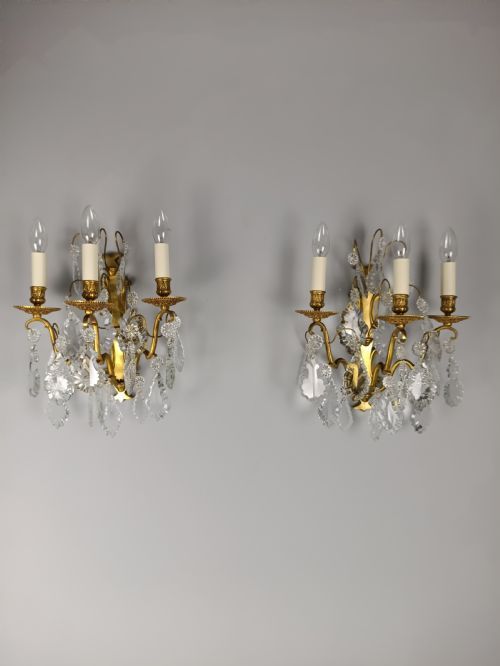


Pair Crystal Wall Sconces
Pair crystal wall sconces bring brilliant illumination and classical elegance to a room, catching the light through cut drops and polished metal.
Pair Crystal Wall Sconces
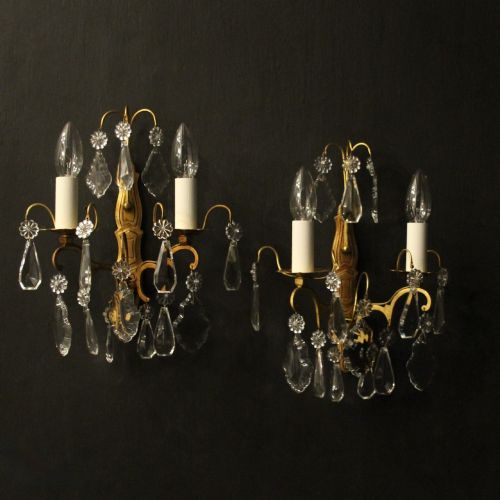
These fixtures are mounted directly to vertical surfaces to provide targeted illumination and decorative presence in a room. When searching for pair crystal wall sconces, buyers encounter lighting formed of metal frames dressed with glass or crystal drops.
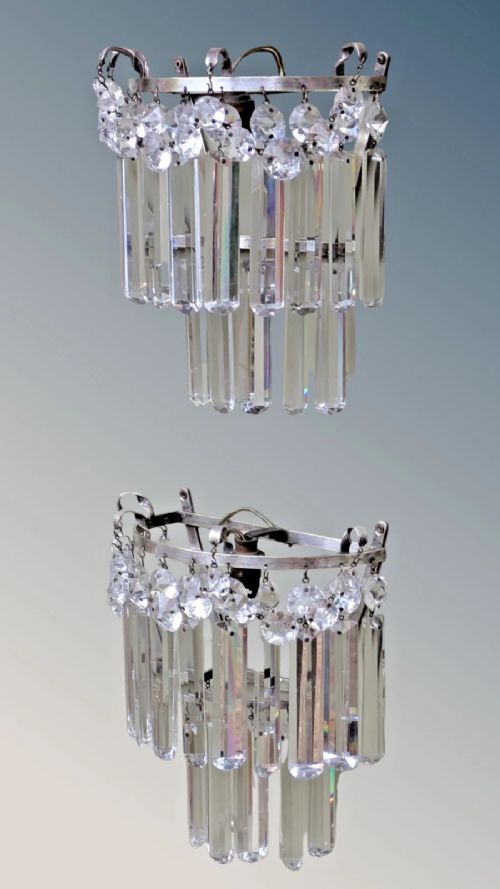
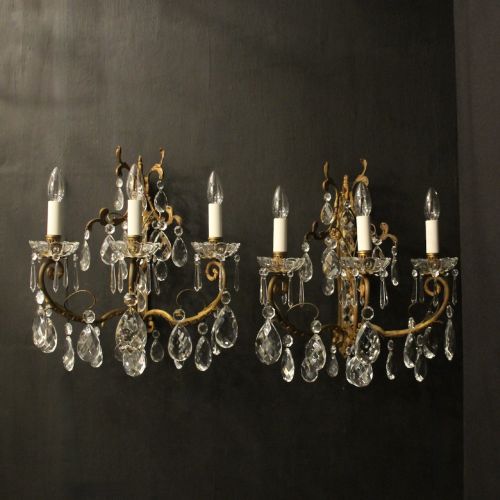
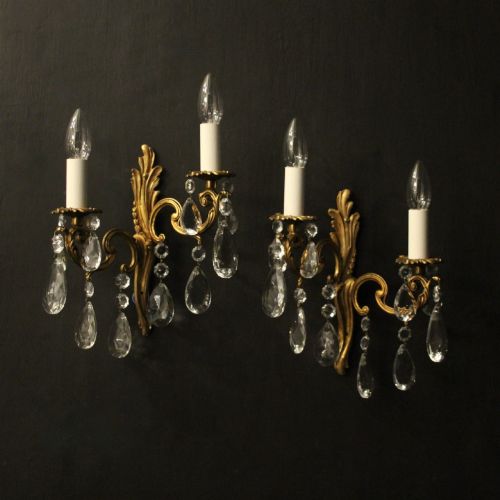
The selections span periods from the nineteenth century through the early decades of the twentieth century, with many examples originating from French workshops. Common forms include twin and triple arm designs, bag lights, and girandoles.
Stylistic influences range from French Rococo and Neoclassical to Regency and Florentine. These pieces function both as functional light sources and as ornamental wall furniture.
How they were made
The structural framework of these pieces relies primarily on brass, gilt bronze, or ormolu, shaped into arms, backplates, and decorative mounts. Metal casting and gilt finishing provide the durable structure required to support heavy glass components.
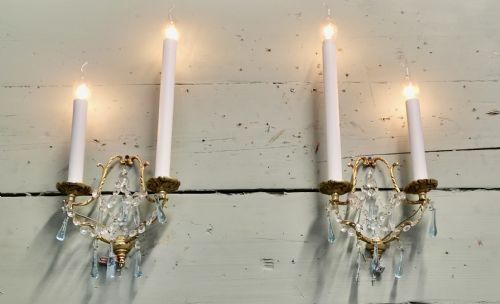
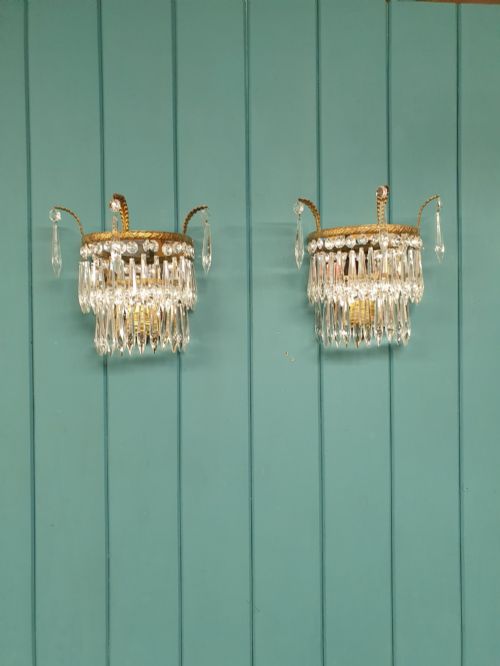
The glass elements consist of cut crystal, moulded glass drops, and lustres suspended from the metal armature to refract light. Workers assembled these components by hand, wiring frames or securing crystal drops with small metal pins.
Listings feature brass, gilt bronze, and toleware materials supporting crystal and glass elements across Edwardian and early twentieth century periods.
What varies in quality
Quality diverges in the precision of the metal casting and the depth of the gilding on the brass or bronze frames. Finer examples display crisp detail in chased mounts, whereas simpler versions rely on plain stamped or moulded brass.
The clarity and cut of the crystal components also distinguish different grades of pieces. High quality hanging drops feature sharp facets that catch the light effectively, paired with substantial metal armatures that maintain structural rigidity.
Maison Baguès·F. & C. Osler·Baccarat
The Pair Crystal Wall Sconces Glossary
- Girandole
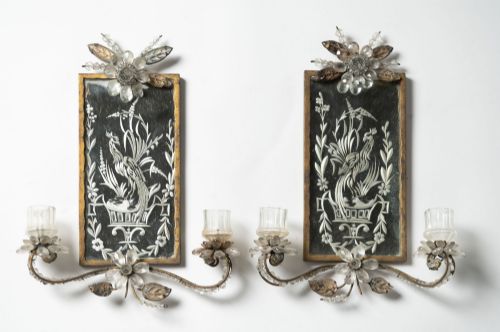
- An ornamental branched wall light or candelabrum, frequently incorporating a mirror backplate to multiply the reflected light. These fixtures often feature twin or triple arms.
- Lustre
- A glass pendant or drop suspended from a lighting fixture to refract and enhance illumination. These elements come in various geometric cuts.
- Ormolu
- Gilded bronze used extensively in decorative hardware and lighting mounts during the eighteenth and nineteenth centuries. The technique involves applying a gold amalgam to a bronze base.
- Bag light
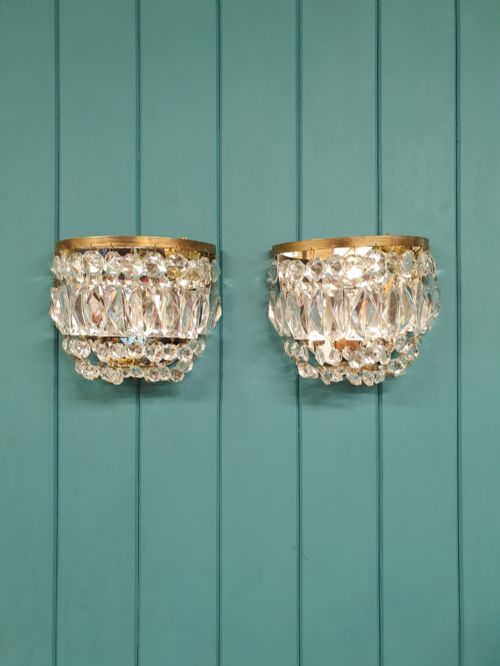
- A wall fixture featuring a cascading mass of crystal drops gathered in a bag or tent shape below the frame. This form concentrates glass elements into a dense cluster.
- Toleware
- Painted sheet metal objects, often utilised for decorative backplates and floral motifs on period lighting. The painted surfaces introduce colour and soft contrast to the metal and glass.
Pair Crystal Wall Sconces: Frequently Asked Questions
How were pair crystal wall sconces originally used?
These fixtures were mounted beside mirrors, paintings, or fireplaces to supplement natural daylight and candle illumination in formal rooms. The reflective surfaces helped amplify the modest light available from candles before the arrival of electricity.
Over time, many of these period fixtures underwent professional rewiring to accommodate modern electrical fittings while retaining their original aesthetic character.
How do I clean and maintain crystal wall lights?
Routine maintenance involves removing dust from the metal frames and glass drops using a soft, dry cloth. For a deeper clean, delicate glass elements can be washed individually in warm soapy water and dried thoroughly before reattachment.
Avoid using harsh chemical cleaners on gilt or ormolu surfaces to preserve the original metal finish.
How can I tell Edwardian sconces from earlier pieces?
Edwardian fixtures often display lighter proportions and design revivals typical of the early twentieth century, incorporating refined brass castings and cut glass elements. Earlier nineteenth century examples tend to feature heavier bronze frames, richer ormolu finishes, and denser arrangements of hand cut crystal.
Examining the construction methods of the metal pins and the composition of the glass helps confirm the period of manufacture.