
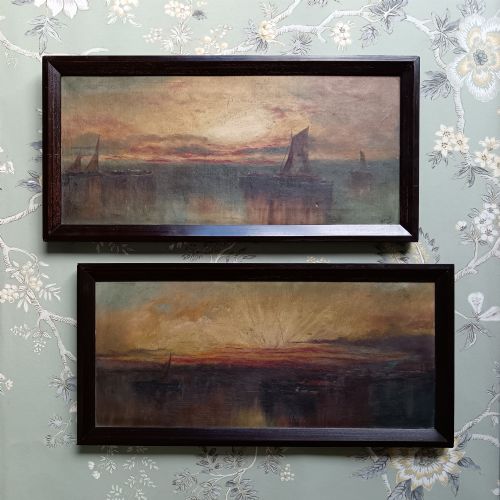
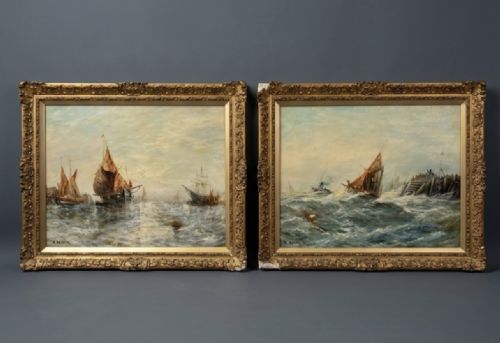
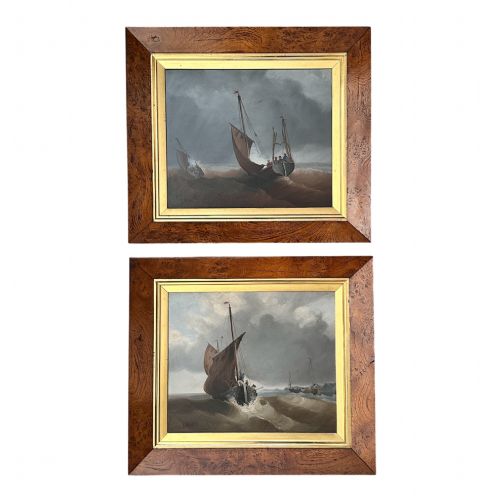
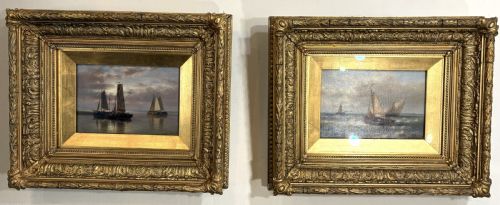


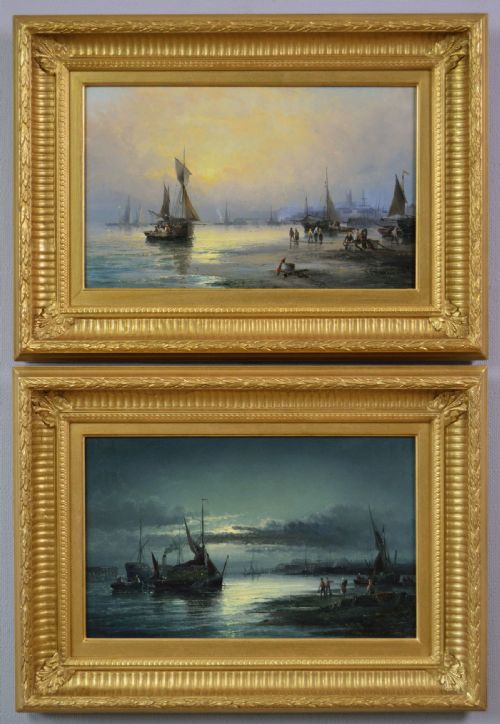


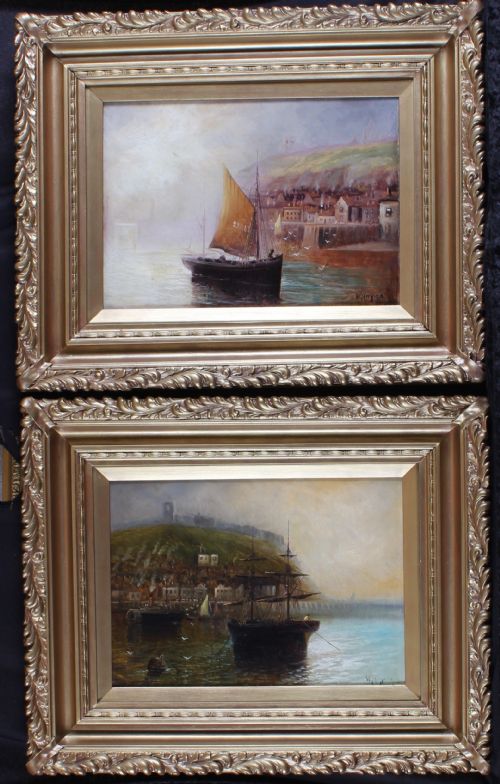
Pair Coastal Oil Paintings
Pair coastal oil paintings deliver balanced maritime views, bringing balanced nineteenth-century seascapes and shipping scenes into any room.
Pair Coastal Oil Paintings
Pair coastal oil paintings present two matched maritime or seascape views created together to hang side by side. These artworks capture coastal scenes, fishing boats, and shipping harbours from the nineteenth century and the Edwardian period.
The compositions frequently depict sunrise and sunset, or complementary ports such as Scarborough and Portsmouth. Works by identified nineteenth-century painters sit alongside unsigned Victorian panels.
Domestic display relies on matching frames and balanced canvas sizes. The subjects range from Dutch shores to the Isle of Wight and the Medway at Rochester.
How they were made
Artists painted these scenes using oil paint spread across stretched canvas or wooden boards. Pigments built up texture to depict rolling waves, sails, and shifting coastal skies.
Frames utilised wood finished with gesso and gilt to create ornate decorative borders. Gilding added reflective warmth around each maritime view.
Listings feature oil paint applied to canvas and board, housed in giltwood and gesso frames from the Victorian and Edwardian periods.
What varies in quality
Brushwork precision separates accomplished marine artists from competent studio hands. Superior canvases reveal detailed rigging, atmospheric light, and convincing water movement rather than repetitive brushstrokes.
Frame preservation contributes significantly to the integrity of a set. Original giltwood and gesso surrounds that retain their crisp moulding elevate the matching pair.
B. Nash·John Moore of Ipswich·Abraham Hulk I·Gustave De Bréanski·Pieter Cornelis Dommersen·Adrian Van Porten·George Dodgson Callow·Hubert Thornley·John James Wilson·John W Morris·Walter Meegan·Thomas Rose Miles·John Mc Ghie·Walter Williams
The Pair Coastal Oil Paintings Glossary
- Canvas
- A heavy woven fabric stretched across a wooden frame to serve as a painting surface. It provides the primary support for nineteenth-century oil applications.
- Giltwood
- Wood carved and coated with gold leaf or metallic gilt finish. It forms the decorative framing typical of Victorian art.
- Gesso
- A plaster mixture applied to wooden frames as a base for gilding. It allows intricate moulded relief details along the frame edges.
- Seascape
- A work of art depicting the sea, coastal shores, and maritime shipping. These subjects dominate nineteenth-century marine painting.
Pair Coastal Oil Paintings: Frequently Asked Questions
How should pair coastal oil paintings be hung?
Hang the two canvases at eye level with consistent spacing between them to maintain the visual balance intended by the maker.
Keep them away from direct sunlight and damp environments to protect the oil paint and gilt frames.
What periods do these paintings represent?
The selections date primarily from the nineteenth century, including Victorian and Edwardian eras.
Specific dates range from the 1860s through to the early 1900s.
What materials make up the frames?
Frames are constructed from wood finished with gesso and gilt layers.
This combination provides decorative borders that complement maritime artwork.
Are these paintings signed by artists?
Several works feature signatures from recorded nineteenth-century painters, while others remain unsigned.
Attributions rely on recorded styles and subject matter.