




Painted Wood Lamp Base
These painted wood lamp base selections bring hand-finished character and decorative colour to a room.
Painted Wood Lamp Base
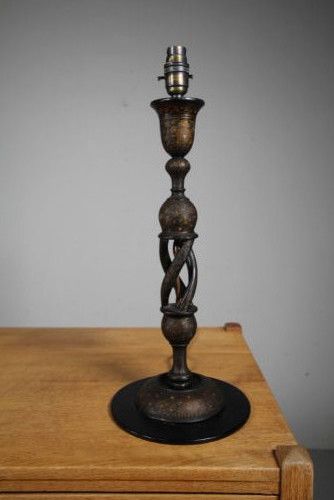
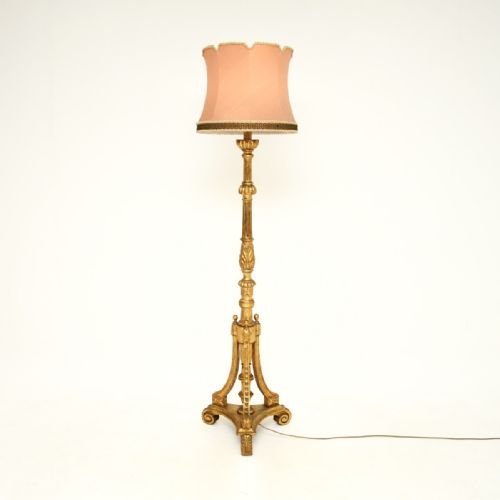
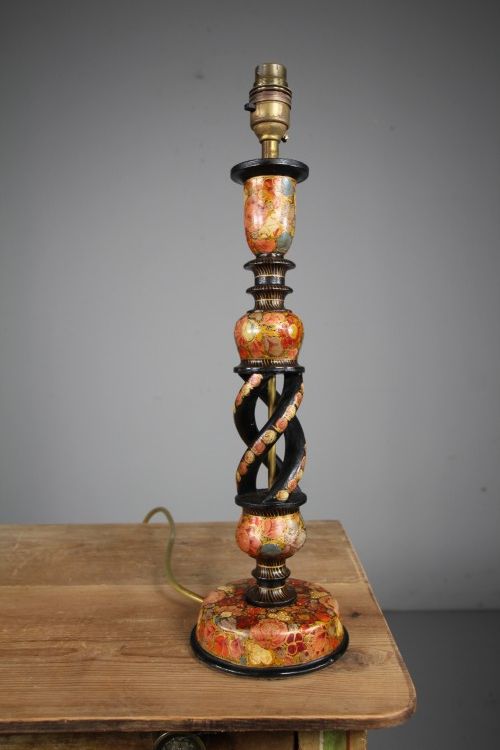
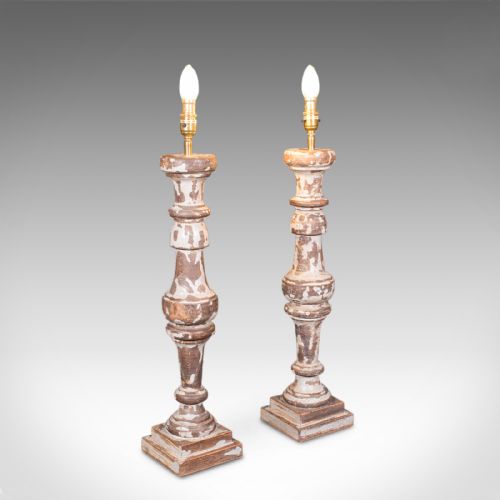
A painted wood lamp base provides an upright support for lighting, taking the form of table lamps, standard lamps, and lamp tables across this selection. Pieces range from nineteenth-century English painted pine and Victorian gilt wood to early twentieth-century Kashmiri twist designs.
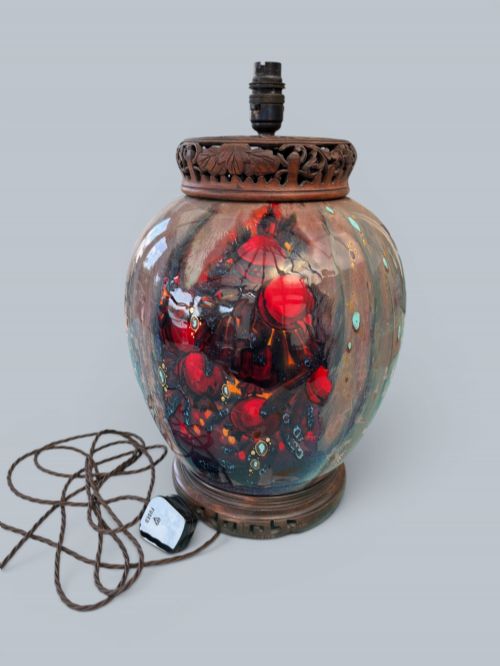
Buyers encounter diverse regional traditions and decorative schemes, including Chinoiserie standard lamps, Anglo-Indian lacquer work, and French country styles. The forms vary from baluster profiles to tall floor-standing columns and compact bedside proportions.
Origins stretch across the eighteenth, nineteenth, and early twentieth centuries, with distinct eras represented such as the Arts and Crafts movement, Late Victorian period, and Georgian country tradition. Many examples retain their original hand-applied pigments alongside later rewiring.
How they were made
Wood serves as the primary substrate, utilising carved pine, turned timber, and papier-mâché foundations shaped into standard lamps and table bases. Artisans applied layers of paint, gilt, and lacquer over these wooden structures to achieve decorative finishes.
Surface ornament relies on hand-painted motifs, marbling techniques, and detailed Chinoiserie or Kashmiri patterns executed directly onto the wood or lacquer. Brass components and marble elements occasionally integrate into the bases for added stability and structural contrast.
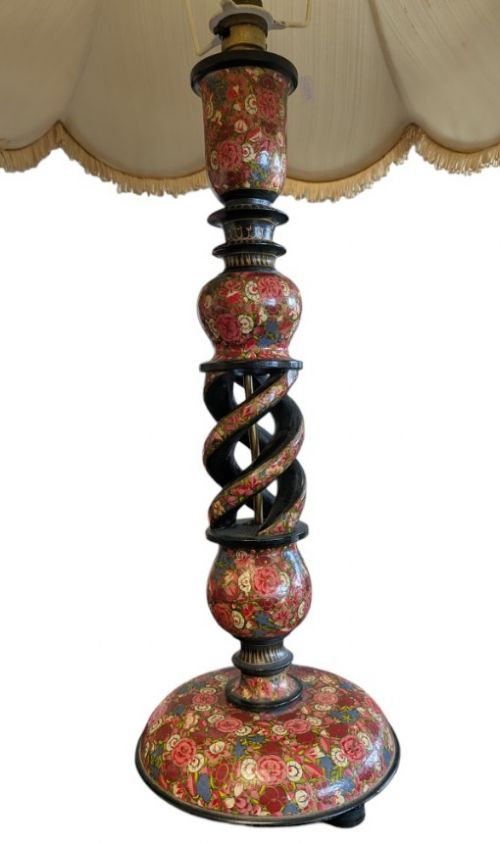
Several Kashmiri lamps from the 1920s feature intricate twist columns that appear to spiral upward like cheerful painted barley sugar.
What varies in quality
The sophistication of the hand-painted surface and the precision of the underlying wood carving distinguish finer examples from simpler work. Intricate Kashmiri lacquer or detailed Chinoiserie motifs demonstrate greater artisan skill than plain monochrome painted finishes.
Structural integrity depends on the original timber selection and how well the turned or carved joints survive. The preservation of original surface pigment, whether gilt wood, cream lacquer, or polychrome decoration, dictates the visual impact of the piece.
The Painted Wood Lamp Base Glossary
- Chinoiserie
- European decorative style reflecting Chinese artistic influences, frequently seen in painted lacquer finishes on furniture and lamp bases.
- Standard lamp
- A tall floor-standing lighting support designed to stand directly on the floor rather than on a piece of furniture.
- Baluster
- An architectural form shaped like a swollen pillar, often utilised for the central shaft of wooden table and standard lamps.
- Gilt wood
- Timber treated with gold leaf or gold paint to create a reflective, metallic surface finish across the carved object.
- Kashmiri
- Pertaining to decorative lacquerware and painted wood traditions originating from Kashmir, typically featuring dense floral or pictorial patterns.
Painted Wood Lamp Base: Frequently Asked Questions
How do I choose the right height for a room?
Table lamps function well on side tables and sideboards, providing lower-level accent illumination.
Standard lamps stand independently on the floor, making them suitable for positioning beside armchairs or in dark corners.
Are these lamps wired for modern use?
Many older pieces undergo rewiring to meet contemporary electrical standards while retaining their original aesthetic character.
Buyers should inspect the specific listing details to confirm the current wiring status before purchase.
How do I clean a painted wooden base?
Dust the surface regularly with a soft, dry cloth to prevent the accumulation of dirt on the painted or lacquered finish.
Avoid using harsh chemical cleaning agents or excess moisture, which can damage delicate historic pigments.
How can I tell the period of a lamp base?
Examine the turning style, the type of wood underneath, and the characteristics of the paint application for period indicators.
Victorian and earlier pieces often display hand-turned construction and aged patina that distinguish them from twentieth-century reproductions.