


Painted Timber Shelves
These painted timber shelves and related storage pieces offer practical utility alongside characterful aged surfaces that suit traditional interiors.
Painted Timber Shelves
When you search for painted timber shelves, you encounter an assortment of functional storage items ranging from wall brackets to large dressers, bookcases, and cupboards. The selection includes domestic furniture from various European and international origins, demonstrating domestic storage needs across past centuries.
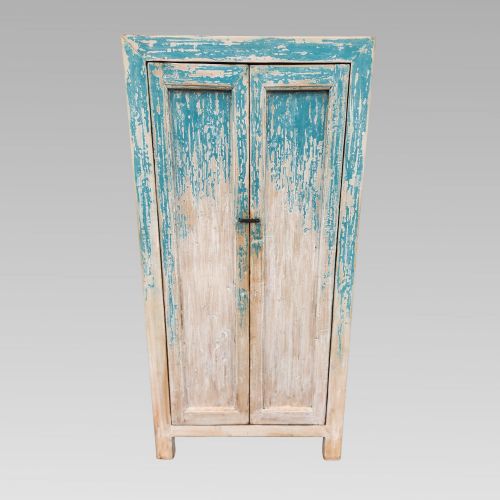
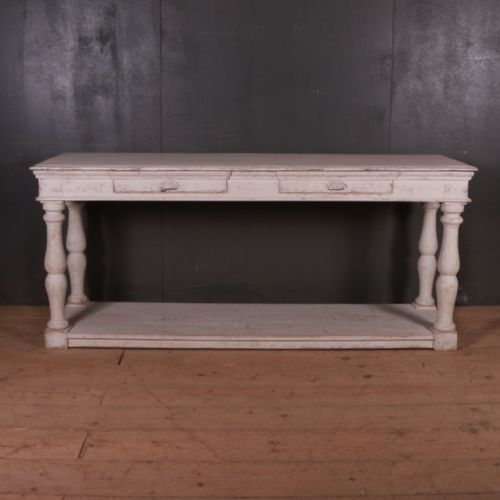
You are most likely to meet nineteenth-century English and French country pieces on this page, often featuring painted finishes applied over pine, oak, or reclaimed cedar. These practical items include open bookcases, pot-shelf serving tables, and dresser bases designed for daily household use.
The assortment also encompasses specialised forms such as architectural wall brackets and drapers tables, demonstrating how timber furniture served diverse commercial and domestic functions. Each piece combines structural woodwork with decorative paint layers accumulated over decades of service.
How they were made
Makers constructed these items primarily using solid woods like pine, oak, and reclaimed cedar, employing traditional joinery such as mortise and tenon frames to ensure durability. Iron and brass fixings appear as structural supports and hardware.
Surfaces received successive layers of paint, often applied over timber to protect the wood and provide a decorative finish suited to country houses and provincial interiors.
Some pot-shelf serving tables still bear the faint, comforting ghost marks of heavy earthenware vessels resting upon them for a century.
What varies in quality
Quality in these painted timber items rests upon the integrity of the original construction and the character of the surface patination. Pieces retaining their early or original paint layers demonstrate greater historical authenticity than those stripped or repeatedly recoated.
The balance of proportions and the subtlety of regional joinery distinguish finer workshop output from more utilitarian rural production. Heavier architectural elements and refined mouldings indicate higher ambition in the original design.
The Painted Timber Shelves Glossary
- Dresser base
- A low sideboard or cabinet featuring surface top space and lower storage, commonly used in country kitchens.
- Pot-shelf
- A lower open shelf built into a table or serving unit specifically designed to hold heavy kitchen pots and pans.
- Breakfront
- A large cabinet or bookcase where the central section projects forward from the flanking wings.
- Vaisselier
- A traditional French storage unit combining open upper shelving for display with enclosed lower cupboards.
Painted Timber Shelves: Frequently Asked Questions
What rooms suit painted timber shelves?
These versatile pieces work well in kitchens, living rooms, and hallways where practical storage meets traditional decorative display. Their painted surfaces integrate easily into varied interior schemes.
Larger bookcases and dressers require adequate wall space, whilst smaller wall brackets and side units fit comfortably into tighter domestic areas.
How do I care for painted timber furniture?
Maintain painted surfaces by dusting regularly with a soft, dry cloth and avoiding harsh chemical cleaning products that might damage old finishes. Keep timber away from direct heat sources to prevent wood movement.
Natural beeswax can be applied sparingly to unpainted wooden sections to nourish the grain without altering the patina.
How can I tell the age of these pieces?
Age is determined by examining construction methods, tool marks, timber shrinkage, and the composition of the paint layers. Hand-cut joints and native wood species point toward earlier manufacturing dates.
Wear patterns around handles and edges often reflect decades of physical interaction and domestic use.
Were these shelves always painted?
Many utility pieces received paint applications originally to protect cheaper woods like pine or to update furniture to match changing interior fashions. Some surfaces accumulated multiple coats over successive generations.
Not all timber furniture was painted from manufacture, as many pieces started as polished oak or pine before receiving decorative paint later.