







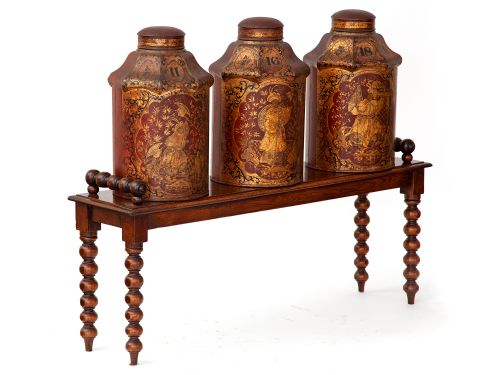

Painted Tea Canister
A painted tea canister brings centuries of colour and hand-applied detail straight from the merchant's shelf into the modern room.
Painted Tea Canister
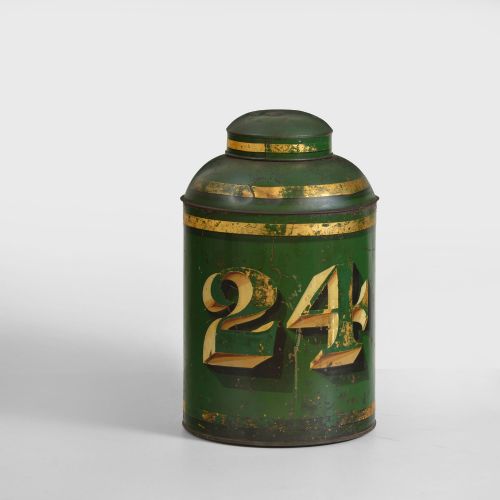
A painted tea canister is a domestic storage vessel designed to keep dry leaf tea fresh, emerging in various forms across the eighteenth and nineteenth centuries. These pieces encompass Georgian mahogany boxes, Regency wood caddies, Victorian toleware tins, and Chinese export porcelain jars.
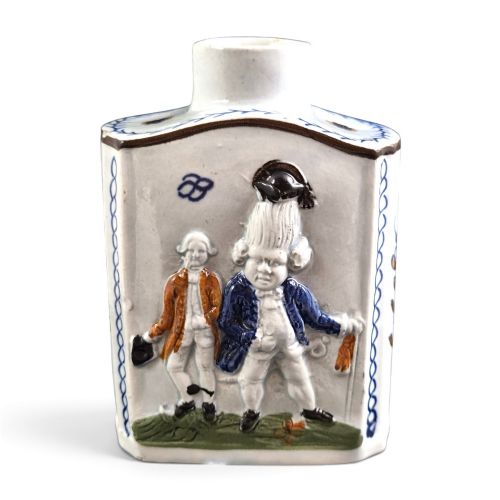
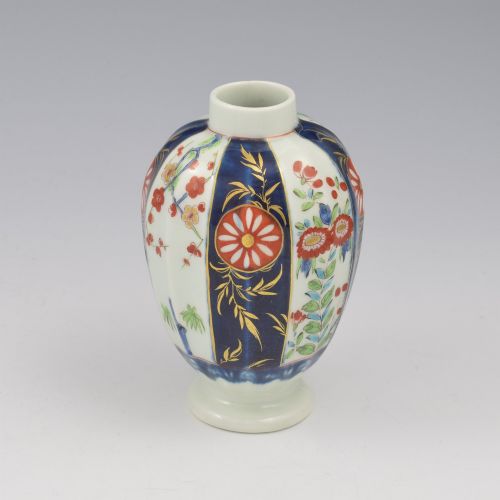
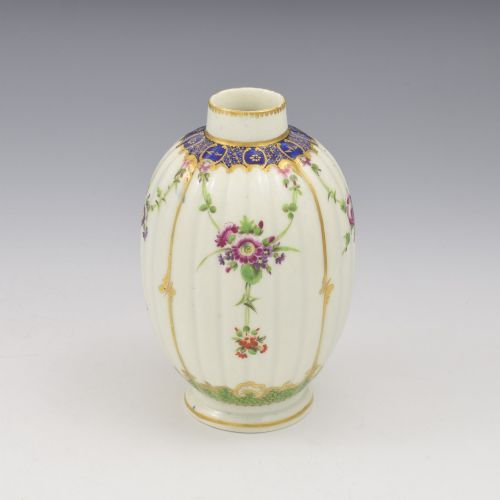
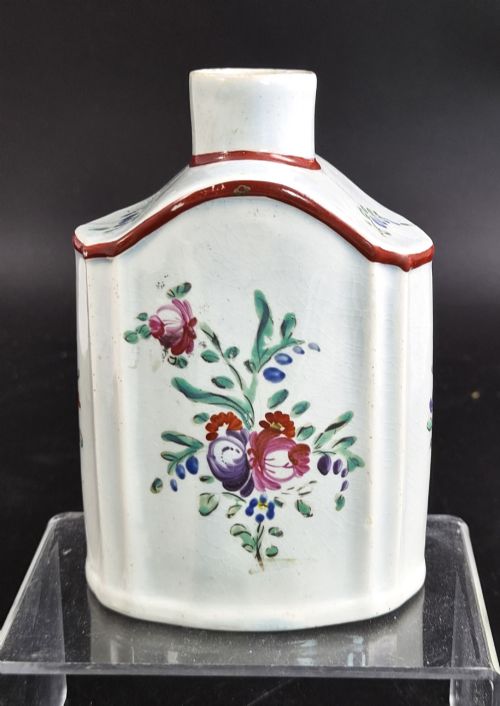
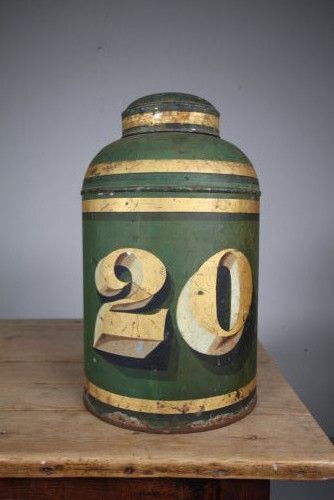
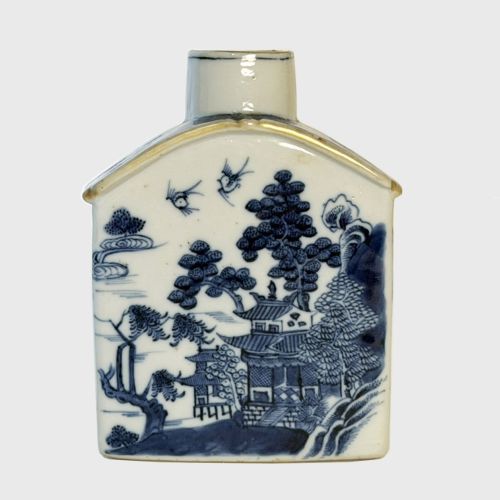
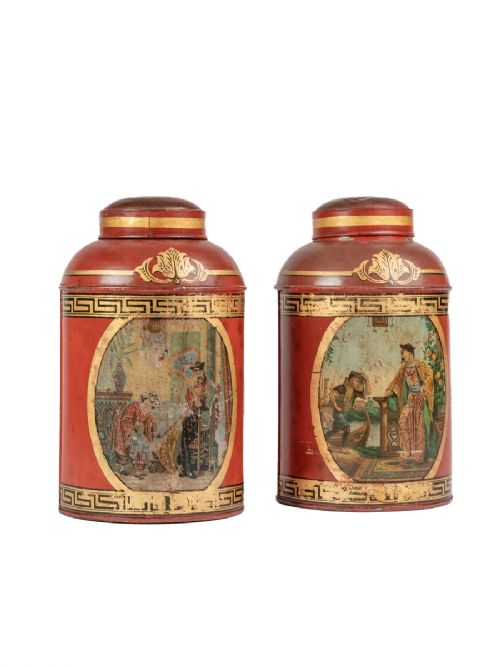
The versions most commonly found here include nineteenth-century tin shop canisters, Georgian ceramic vessels, and painted wood storage boxes. Makers decorated these surfaces with floral enamels, pagoda scenes, and gilt motifs intended to catch the eye in a parlour or shop.
Buyers often encounter these objects listed under titles like tea caddy, storage box, or converted table lamp. Each form reflects the changing ways households stored dry goods while display became a domestic priority.
How they were made
Makers constructed these vessels from earthenware, porcelain, tinplate, and hardwoods such as mahogany. Ceramic examples received underglaze or enamel painting by hand, while metal and wood pieces relied on toleware paintwork and gold leaf application.
Surface decoration frequently involved layers of coloured paint and lacquer applied over prepared grounds. Artisans used fine brushes to render botanical sprays, oriental landscapes, and shop lettering before sealing the finish.
Painted Tea Canister Retail Price Guide 2026
Typical asking prices for painted tea canister among the pieces listed under this phrase on Sellingantiques today, from the lower quarter to the upper quarter. They describe what is for sale here now, not the wider market.
Listings span the eighteenth, nineteenth, and early twentieth centuries, featuring materials from earthenware and porcelain to tin, brass, and mahogany.
What varies in quality
Quality rests upon the precision of the hand-painted detail and the integrity of the underlying material. Fine ceramic bodies and crisp brushwork on porcelain or tin separate standard utility items from superior examples.
The survival of original surface decoration dictates the standing of a piece. Skilled execution in the gilding and enamel work indicates a workshop operating at a higher standard.
Leeds Pottery·George Gordon Morison·Asprey and Co·Kizan
The Painted Tea Canister Glossary
- Toleware
- Painted or enamelled metalware, usually tinplate, developed in Europe to imitate oriental lacquer. It frequently appears in deep japanned finishes with hand-painted floral decoration.
- Chinoiserie
- European artistic style reflecting Chinese motifs and garden scenes. Artisans applied these whimsical landscapes to porcelain, furniture, and tea canisters.
- Tea caddy
- Small vessel or box designed for storing loose tea leaves. The term evolved from cattee, a weight measurement used in the tea trade.
- Export porcelain
- Ceramics manufactured in China specifically for Western markets. These pieces combined traditional Asian forms with European armorial or floral commissions.
Painted Tea Canister: Frequently Asked Questions
What is a painted tea canister?
A painted tea canister is a decorative storage container made to preserve dry tea leaves in homes and grocer shops. They were produced in porcelain, earthenware, tin, and wood.
Craftsmen decorated the outer surfaces with hand-painted motifs, floral enamels, and gilt details. Over time, many found new life as display items or table lamps.
How were they used historically?
Tea was an expensive commodity in the eighteenth and nineteenth centuries, requiring secure storage to protect it from moisture and loss of flavour. Canisters often featured tight-fitting lids or multiple internal compartments.
Wealthy households kept them locked in tea chests in the parlour, while grocers used larger tins to display goods on shop counters.
How do I date a tea canister?
Dating relies on material characteristics, pottery marks, and painting styles. Georgian and Regency pieces show refined mahogany woodwork or early porcelain bodies.
Nineteenth-century examples often utilise tinplate construction or distinct shop lettering. Maker marks and ceramic bodies provide the clearest chronological clues.
Can I use them for modern storage?
These vessels suit dry storage or decorative display rather than holding loose foodstuffs directly. Historic finishes and metal linings require gentle handling.
Many collectors place them on open shelving or side tables to showcase the hand-painted surfaces. Some nineteenth-century examples have been adapted as table lamps.