
Painted Pine Tallboy
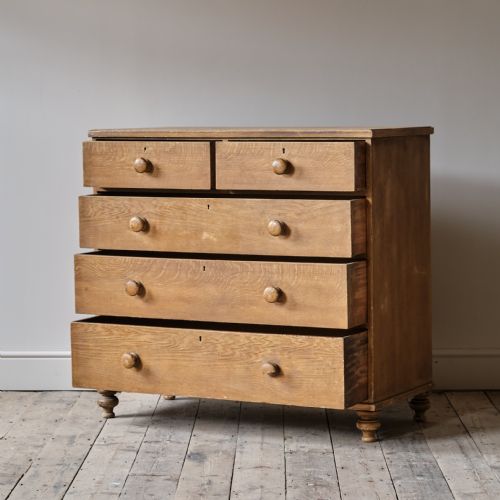
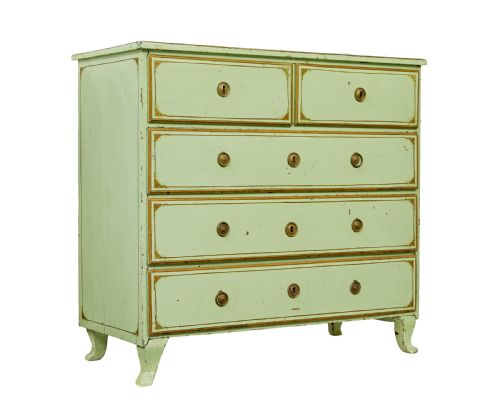
A painted pine tallboy brings upright storage and colour into a room, combining the domestic utility of softwood with decorative surface finishes.
Painted Pine Tallboy
When you search for a painted pine tallboy, you meet tall upright storage units, chests of drawers, and cupboards constructed from softwood and finished with decorative painted surfaces. The selection draws primarily on nineteenth-century examples, alongside pieces from the Georgian, Regency, and early twentieth-century periods.
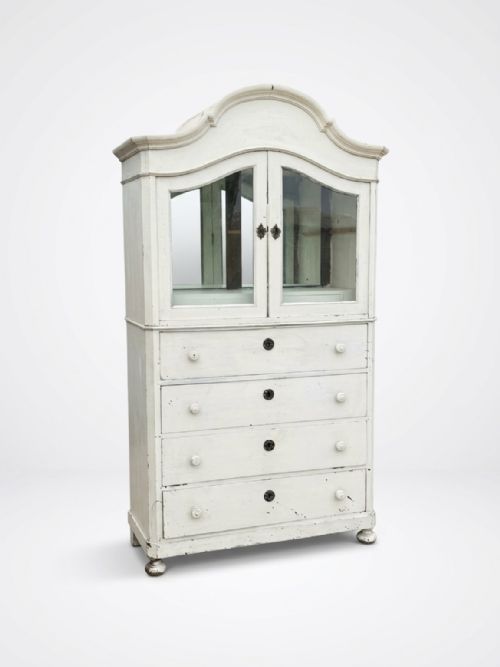
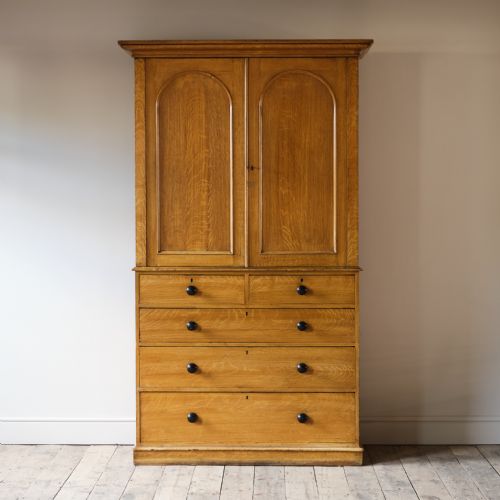
The regional origins vary widely across these listings, spanning English country workshops, Scottish makers, and continental European traditions including Swedish and Hungarian pieces. Forms range from simple multi-drawer chests and linen presses to specialised items like bonnet top cabinets and office chests.
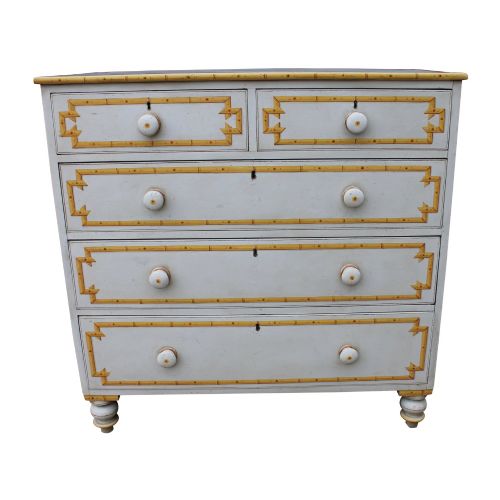
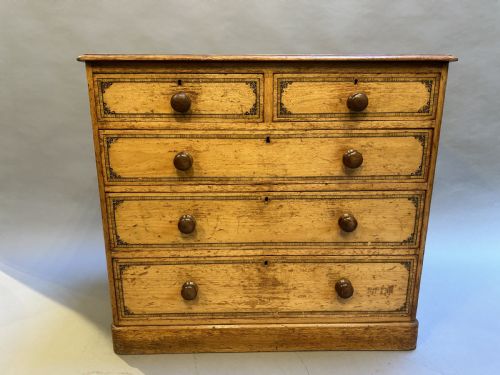
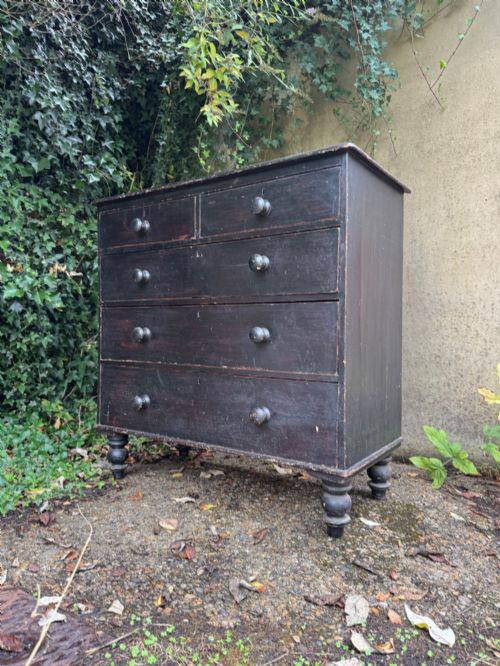
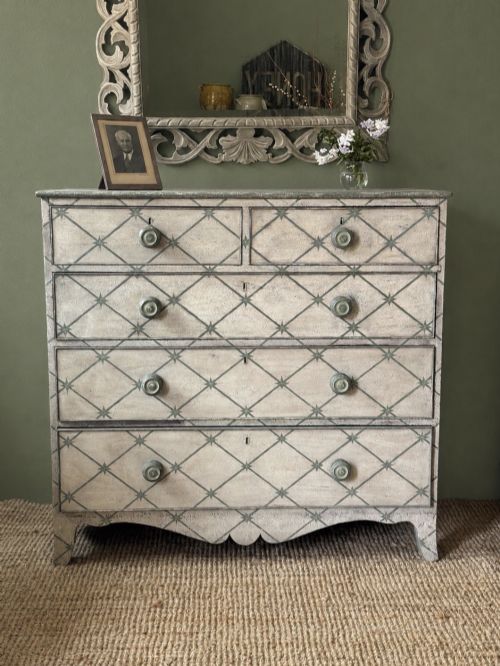
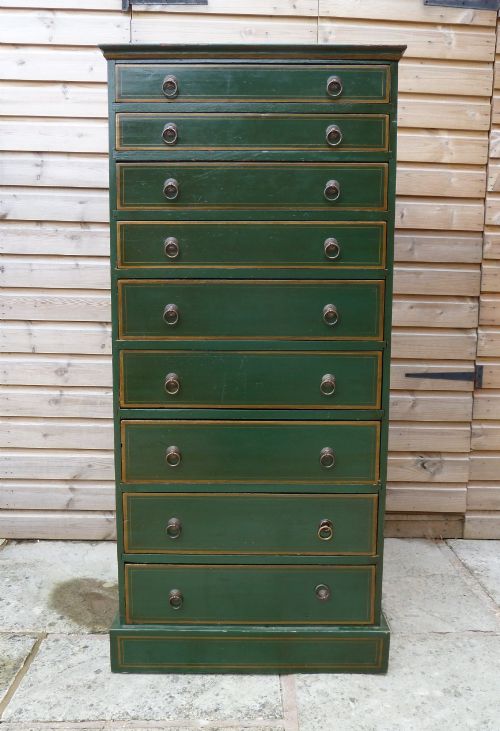
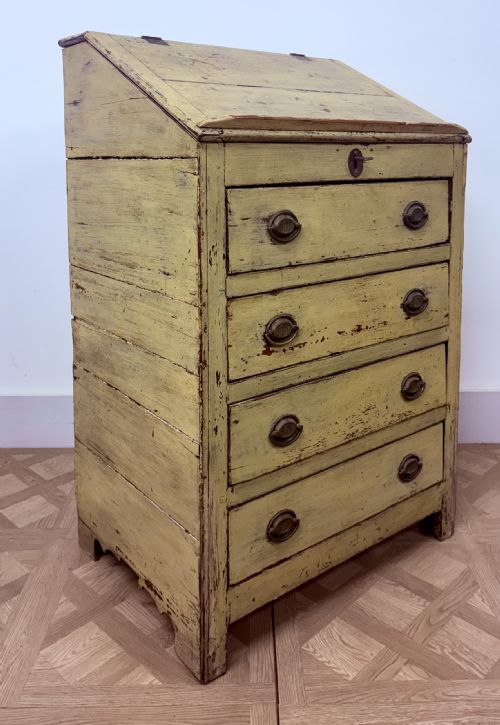
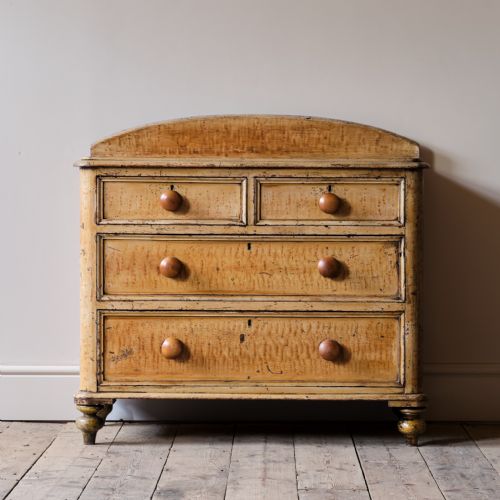
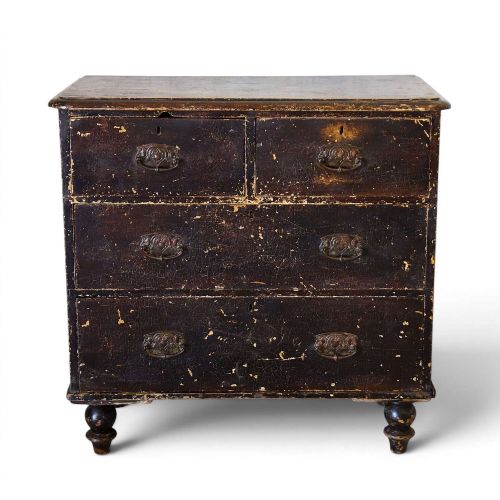
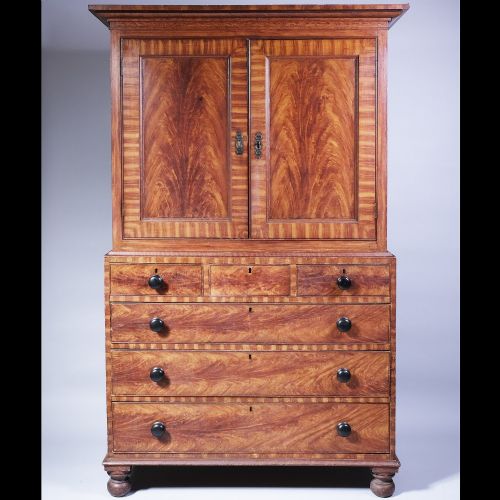
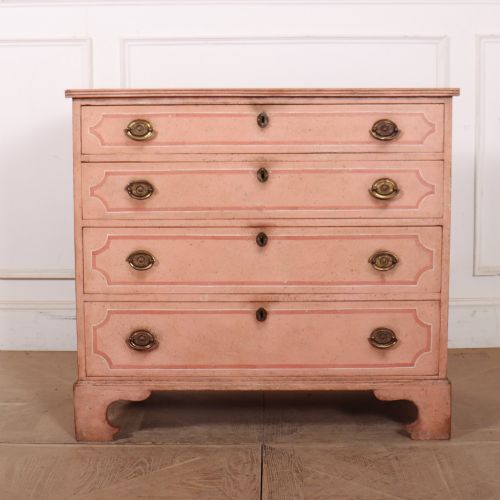
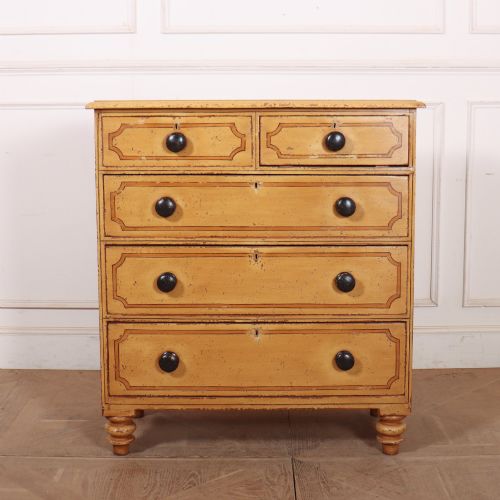
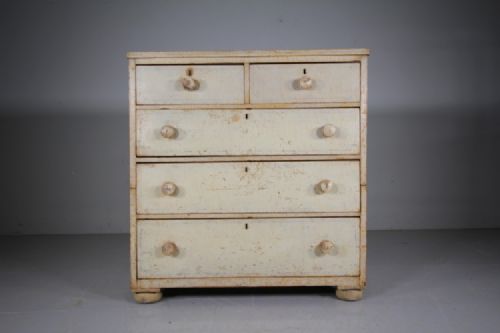
Many survivors retain their original paint schemes, from plain light grey and black finishes to simulated birch and decorative scumble work. These taller storage forms provide substantial capacity while utilising minimal floor space in a room.
How they were made
Construction relies primarily on pine timbers, utilising the softwood for both structural carcases and drawer linings. Joinery techniques connect the timber uprights and panels, often resulting in pieces built in two separate parts for easier transport.
Surface decoration involves specialised paint application, utilising original oil-based paints, stencilling, and scumble techniques to imitate finer hardwoods like birch or bamboo. Brass and iron hardware, including drop handles and key escutchein plates, furnish the drawers and doors alongside occasional ceramic elements.
Listings feature pieces spanning the Georgian, Regency, and Victorian periods, constructed primarily from pine with painted finishes.
What varies in quality
Quality rests significantly on the integrity of the surface finish and whether the piece retains its original paint. Items with untouched, period scumble glazes or authentic regional colour schemes command greater interest than later repainted surfaces.
Structural joinery and the selection of timber determine the durability of each cabinet. Pieces featuring clean dovetail joints, well-fitted drawers, and intact hardware demonstrate superior craftsmanship from their respective period workshops.
GEMLA FABRIKERS
The Painted Pine Tallboy Glossary
- Tallboy
- A tall chest of drawers, typically formed by stacking one cabinet section upon another to maximise vertical storage.
- Scumble
- A translucent layer of dark glaze applied over a lighter painted base coat and manipulated with combs or rags to simulate wood grain.
- Linen press
- A tall cupboard featuring upper sliding trays or shelves enclosed by doors, traditionally used for storing textiles and bed linens.
- Bonnet top
- An arched or curved upper hood on a cabinet, designed to provide additional interior headroom and architectural presence.
- Dovetail
- A traditional interlocking joint utilised in drawer construction, formed by interlocking wedge-shaped fingers.
Painted Pine Tallboy: Frequently Asked Questions
What is a painted pine tallboy?
A painted pine tallboy is a tall vertical storage unit made from softwood and finished with a decorative painted exterior. These pieces provide substantial drawer capacity within a compact footprint.
Surviving examples often display regional characteristics from English, Scottish, or Scandinavian workshops, utilising painted finishes to elevate the humble softwood material.
How do I identify original paint?
Original paint surfaces show natural wear, consistent craquelure, and integration with the underlying timber structure. Inspecting edges, corners, and protected areas reveals the historical layering of the finish.
Later overpainting often conceals the subtle patination and tool marks left by nineteenth-century decorators and country craftsmen.
Where were these pieces made?
The pieces originate from various domestic and continental European workshops active during the eighteenth, nineteenth, and early twentieth centuries. English country makers produced robust utility furniture, while Swedish and Hungarian workshops created distinctive painted storage.
Regional preferences dictated the choice of mouldings, proportions, and specific paint techniques such as scumbling or simulated graining.
How do I care for original paint?
Maintain painted pine surfaces by keeping them away from direct sunlight and fluctuating humidity levels. Dust gently with a dry, soft cloth and avoid chemical cleaning agents that might strip historic finishes.
Wax can be applied selectively to unpainted pine sections, but care is needed around fragile stencilled or scumbled areas.