

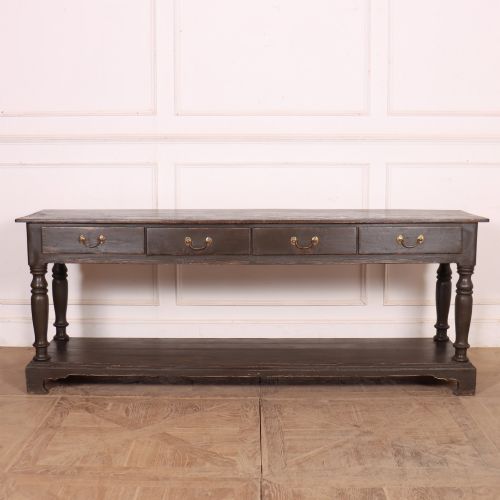
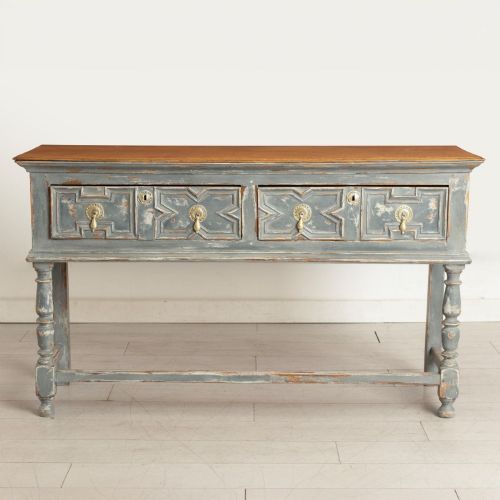
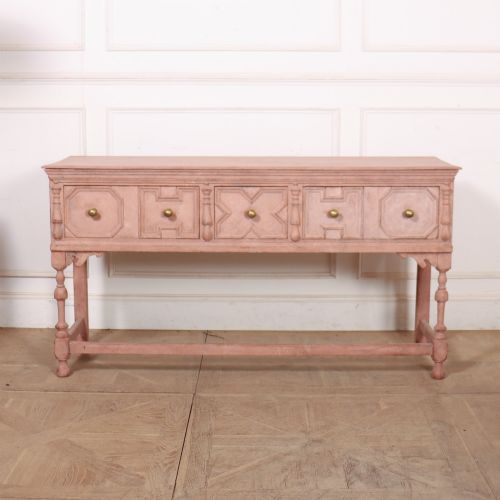
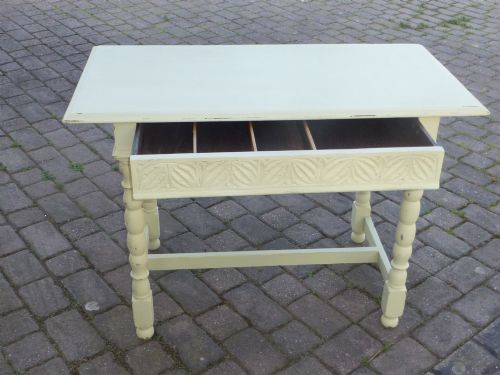

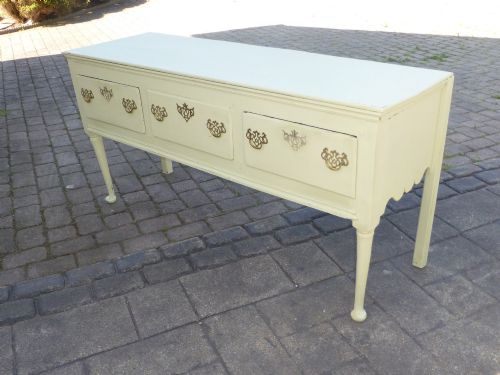
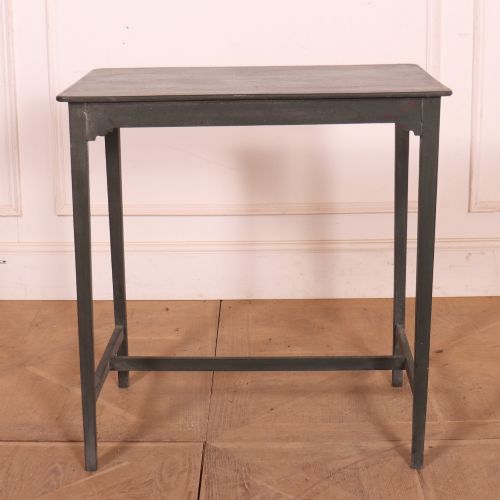


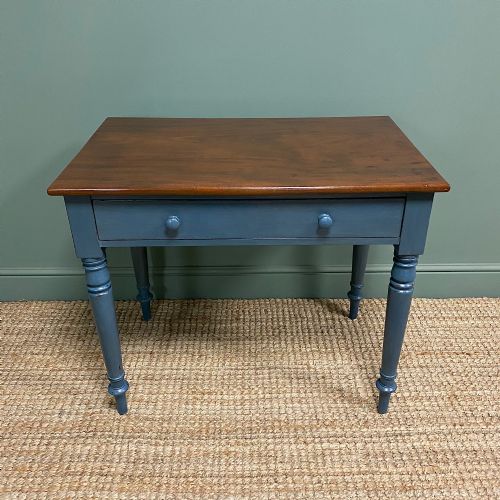


Painted Oak Console
These painted oak console pieces bring sturdy timber and painted finishes together, offering a practical surface for an entrance hall or living space.
Painted Oak Console
A painted oak console represents a fusion of robust cabinet timber and decorative surface coating, appearing primarily as console tables, dresser bases, side tables, and lamp tables. These forms originate from English, French, and Dutch traditions spanning the seventeenth, eighteenth, and nineteenth centuries.
Buyers seeking this phrase encounter various related furniture types, including drapers tables and pastry tables alongside standard console configurations. The seventeenth and eighteenth century examples often take the form of dresser bases, whilst later nineteenth century pieces frequently present as dedicated console or lamp tables.
Regional variations span English country styles, French provincial aesthetics, and Dutch Baroque influences. The physical manifestations range from simple single drawer hall tables to grander three drawer formats with potboards.
Materials and construction methods
Makers utilised solid oak for the primary structural framework, supplemented occasionally by pine and other woods for secondary elements like drawer linings or backing boards. Surfaces received coats of paint, while certain specialist tables incorporated marble tops for cold preparation work.
Hardware details included brass fixtures, which complemented the timber and paintwork. Construction relied on traditional joinery techniques suited to heavy oak furniture, designed to withstand daily domestic utility over centuries.
Painted Oak Console Retail Price Guide 2026
Typical asking prices for painted oak console among the pieces listed under this phrase on Sellingantiques today, from the lower quarter to the upper quarter. They describe what is for sale here now, not the wider market.
Some tables spent centuries holding pastry and linen before finding a quiet retirement in a modern hallway.
Distinguishing quality in construction and finish
The standard of a painted oak console rests upon the integrity of the underlying timber framework and the historical authenticity of the painted surface. Earlier examples from the seventeenth and eighteenth centuries demonstrate different joinery methods compared to nineteenth century revivals.
Proportion and utility define the better specimens, where drawer configurations and leg supports maintain structural balance. The interaction between the grain of the oak and the layers of historical paint creates visual depth absent in lesser items.
The Painted Oak Console Glossary
- Console table
- A table designed to stand against a wall, frequently secured to it or balanced on front legs. These items serve decorative and utilitarian functions in hallways and reception rooms.
- Dresser base
- A low cabinet featuring drawers and often a lower shelf, originating from kitchen and dining environments. They provide substantial surface area and storage beneath.
- Potboard
- An open lower shelf fitted between the legs of a dresser base or console. Originally utilised for storing pots and pans, it now offers display space.
- Drapers table
- A long, narrow table historically used in textile trade and mercers shops. Their generous proportions suit modern domestic use as serving or side surfaces.
Painted Oak Console: Frequently Asked Questions
Where should I place a painted oak console?
These pieces suit entrance halls, living rooms, and dining spaces where a narrow profile is advantageous. Their flat surfaces accommodate lamps, decorative objects, or everyday items.
Positioning them against a wall provides stability and creates an intentional focal point in a room. The painted finish allows them to integrate with various interior colour schemes.
How do I care for painted oak furniture?
Maintain the painted oak surfaces by dusting regularly with a soft, dry cloth. Avoid using harsh chemical cleaners that might damage the historical paint layers.
Keep the timber away from direct heat sources and excessive moisture fluctuations to prevent wood movement. Wax can be applied sparingly to unpainted oak sections to nourish the grain.
What is the difference between a console and a dresser base?
A console is generally built specifically as a wall table with lighter proportions, whilst a dresser base derives from kitchen furniture with deeper drawers and sturdier framing.
Dresser bases often include potboards or multiple rows of drawers designed for heavy domestic storage. Consoles tend to focus on display and surface utility.
How can I tell an 18th century piece from a 19th century one?
Eighteenth century pieces typically display hand-cut joinery marks, native oak timber characteristics, and patinated surfaces developed through extensive use. Their construction details reflect period specific cabinet-making traditions.
Nineteenth century examples often incorporate revival styles, such as Jacobean influences, and may exhibit different mechanical saw marks. Comparing the wear patterns and hardware helps determine the age.