






Painted Metal Vases
These painted metal vases bring lasting weight and rich colour to a room, spanning garden urns, classical pedestals, and decorative ewers.
Painted Metal Vases
When you search for painted metal vases, you encounter a range of heavy iron, copper, and gilt vessels spanning several centuries. The selection leans heavily towards nineteenth-century cast iron garden pieces alongside French and Asian decorative urns.
Forms vary from grand garden pedestals to table lamps and handled ewers. Many pieces combine painted surfaces with porcelain bodies or bronze mounts.
The periods represented stretch from the eighteenth century through the Victorian era and into the early twentieth century. Neoclassical and Rococo revival styles dominate the British and continental European examples.
How they were made
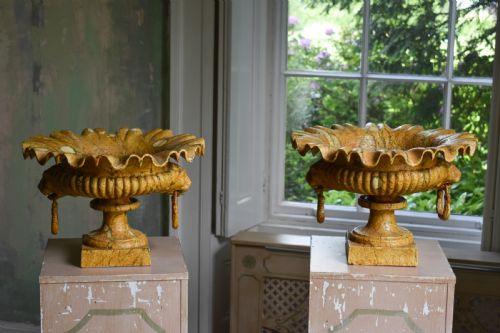
Cast iron provides the structural mass for the large garden urns and pedestals in the collection. Iron is poured into sand moulds to create crisp acanthus leaves and classical relief details.
Copper and brass serve as the base materials for enamelled and toleware vessels. Artisans apply pigmented paint and enamel finishes directly to the metal substrates before firing or curing.
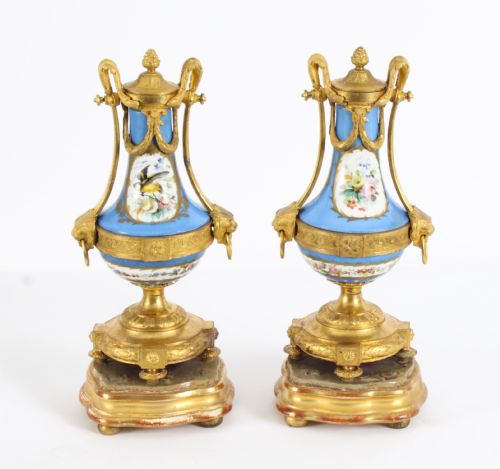
Gilt metal and ormolu mounts add decorative contrast to porcelain bodies. These metal collars and handles are cast separately and attached with mechanical fittings.
Painted Metal Vases Retail Price Guide 2026
Typical asking prices for painted metal vases among the pieces listed under this phrase on Sellingantiques today, from the lower quarter to the upper quarter. They describe what is for sale here now, not the wider market.
Materials span copper, brass, cast iron, and ormolu alongside hand-painted porcelain and enamel.
What varies in quality
The definition and depth of the cast relief ornament separate standard production from finer work. Crisp detailing on acanthus leaves and classical figures shows greater skill in the initial foundry mould.
The preservation of the original painted or enamelled surface dictates visual success. Hand-applied brushwork with subtle polychrome shading demonstrates superior craftsmanship compared to flat, uniform industrial coatings.
The integration of metal mounts with porcelain or stone elements reveals the maker's precision. Well-fitted ormolu collars and solid base construction ensure stability and enduring presence.
Ando·Samson·Sevres
The Painted Metal Vases Glossary
- Ormolu
- Gilt bronze mounted onto decorative objects, particularly popular in French and Victorian decorative arts. The technique involves applying a gold amalgam to bronze before heating.
- Cloisonne
- Enamelling technique where thin metal wires form compartments on a metal base to hold coloured paste. The piece is then fired and polished to a smooth finish.
- Ewer
- A large jug with a wide spout and a curved handle, traditionally used for holding water but frequently produced as a purely decorative vessel. Many antique examples appear in porcelain or metal.
- Famille Rose
- A major palette of Chinese ceramic glazes distinguished by opaque pink enamel, which was widely imitated in European factories during the nineteenth century.
Painted Metal Vases: Frequently Asked Questions
Where were cast iron garden urns placed?
Large cast iron urns were traditionally positioned at the focal points of Victorian gardens, flanking stone pathways, or set atop dedicated pedestal stands.
Their substantial weight allowed them to remain secure outdoors throughout the year without requiring permanent fixing.
How do I clean painted metal vases?
Painted and enamelled surfaces require gentle dusting with a soft, dry cloth to prevent abrasion of the delicate pigments and gilt highlights.
Water and chemical cleaning agents should be avoided unless handled by a professional restorer, as moisture can penetrate old paint layers.
Are these vases waterproof?
Many antique decorative metal and porcelain vessels are intended strictly for display rather than holding water and live floral arrangements.
Internal linings can degrade over time, so using a modern glass insert inside the vessel protects the antique interior from moisture damage.
What is Qing dynasty canton enamel?
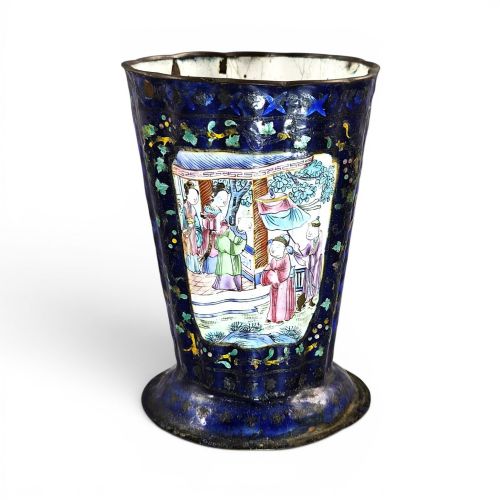
Canton enamel refers to painted copper wares produced in the Guangdong province of China primarily for export markets during the Qing dynasty.
These pieces feature intricate polychrome enamel designs applied directly to hammered copper bodies.