
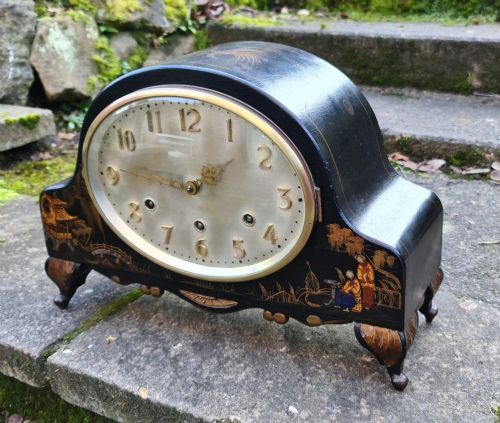
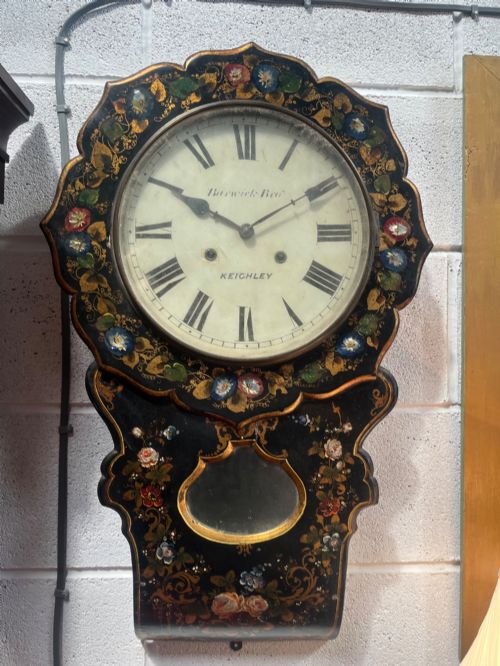
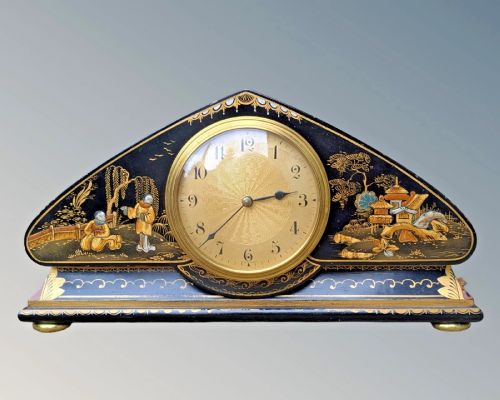
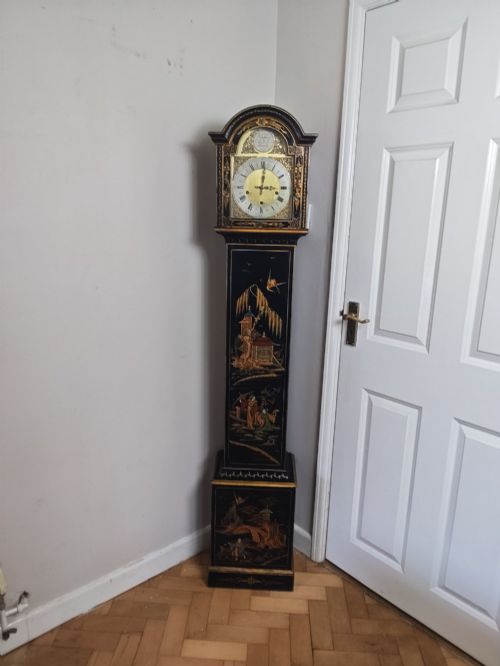




Painted Lacquer Clock
A painted lacquer clock brings rich colour and decorative detail to a room, ranging from small mantel pieces to tall longcase forms.
Painted Lacquer Clock
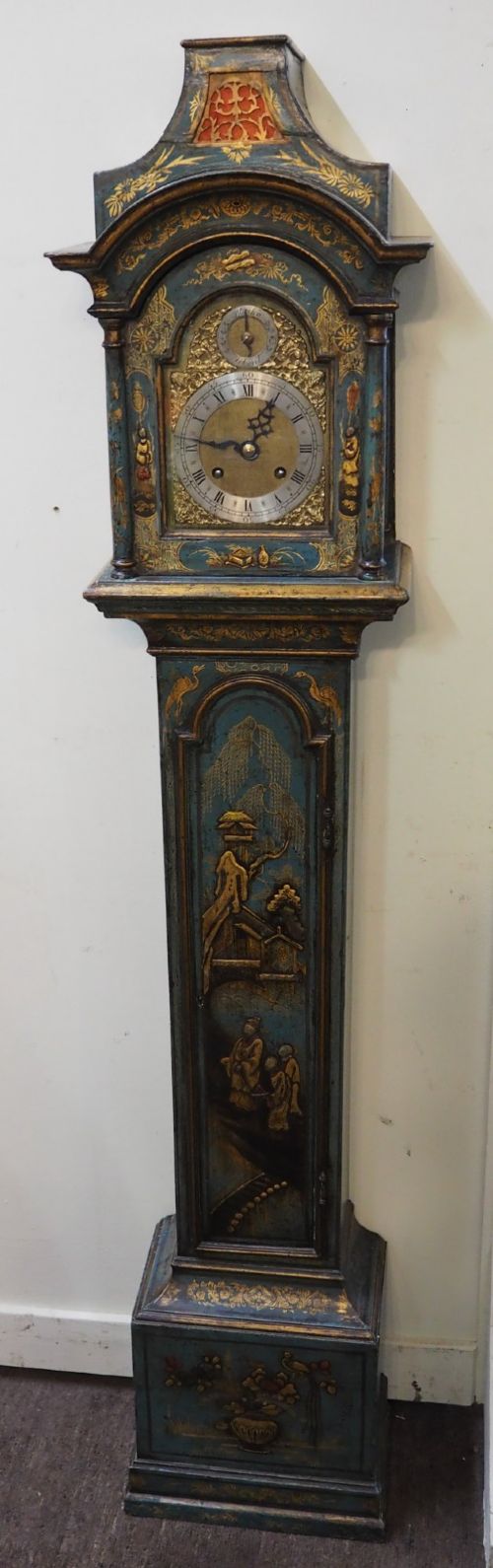
A painted lacquer clock covers a diverse group of timepieces spanning from the eighteenth century to the early twentieth century. When searching for a painted lacquer clock, buyers encounter formats including mantel clocks, wall hanging clocks, and grander longcase or grandmother clocks.
The aesthetic frequently leans towards Chinoiserie styles, with specific examples appearing in cream, green, or blue lacquer finishes alongside faux tortoiseshell. Pieces range from compact mantel clocks suitable for shelves to tall musical longcase clocks designed for hallways.
Origins and periods represented stretch from Georgian times through Victorian and Edwardian eras up to the 1930s. Buyers find both delicate smaller items and substantial architectural longcase clocks with painted decoration.
How they were made
These clocks utilise wood, papier-mache, and ebonised wood as bases for applied lacquer decoration. Brass and glass components work alongside enamel dials to complete the physical structure of the timepieces.
The finishing involves layered lacquer applied to wood or metal surfaces, often ornamented with painted Chinoiserie motifs. Movements vary from standard mantel mechanisms to musical systems and Westminster chimes housed within the decorated cases.
The listings include pieces spanning from the eighteenth century through Georgian, Victorian, and Edwardian periods up to the 1930s.
What varies in quality
The refinement of the painted decoration distinguishes different grades of work, with detailed Chinoiserie scenes showing greater artistic execution than simpler surfaces. The depth and integrity of the lacquer finish itself dictate the visual impact of the case.
Clock movements and associated hardware, such as brass fittings and enamel dials, contribute to the overall standard of the piece. Substantial longcase constructions and intact garniture sets demonstrate higher ambition in design and execution.
The Painted Lacquer Clock Glossary
- Chinoiserie
- A decorative style reflecting European interpretations of Chinese artistic traditions, frequently seen on lacquered clock cases.
- Longcase clock
- A tall freestanding pendulum clock enclosed in a wooden case, also referred to as a grandfather or grandmother clock depending on its height.
- Mantel clock
- A small domestic clock designed to sit on a fireplace mantelpiece or a shelf.
- Garniture set
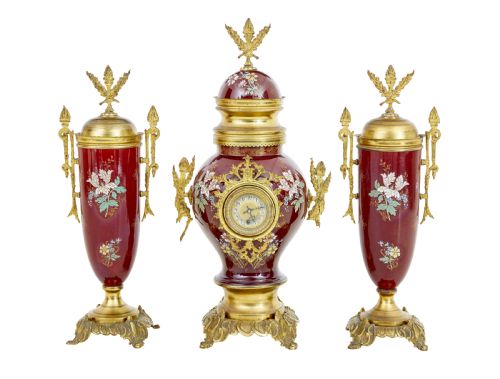
- A coordinated group of ornamental objects, typically comprising a central clock flanked by matching decorative pieces.
- Ebonised wood
- Timber treated with a finish to imitate the dark, dense appearance of ebony.
Painted Lacquer Clock: Frequently Asked Questions
What is a painted lacquer clock?
A painted lacquer clock is a timepiece housed in a wooden or papier-mache case treated with lacquer and decorative paint. These range from small mantel clocks to tall longcase clocks.
Styles often include Chinoiserie motifs in colours such as green, cream, and blue, spanning periods from the eighteenth century to the twentieth century.
Where do I put a mantel clock?
Mantel clocks are designed to sit on flat surfaces such as fireplace mantelpieces, shelves, or side tables. Their compact size allows them to fit easily into smaller domestic spaces.
When positioning a mantel clock, ensure the surface is stable and level to keep the movement running accurately.
What is a garniture set?
A garniture set consists of a central clock accompanied by matching decorative side pieces designed to be displayed together as a matched ensemble. They are typically placed on mantelpieces or large cabinets.
Materials can include decorative toleware or lacquered finishes that tie the matching items together visually.