





Painted Kitchen Shelf
A painted kitchen shelf brings honest utility and time-worn character to a room, offering both practical display and a anchor of domestic history.
Painted Kitchen Shelf
When you search for a painted kitchen shelf, you are looking at utilitarian storage fixtures and wall-mounted display units that have survived from past centuries. These pieces carry the marks of domestic labour, originating from country houses, farmhouses, and provincial kitchens where durability mattered above all else.
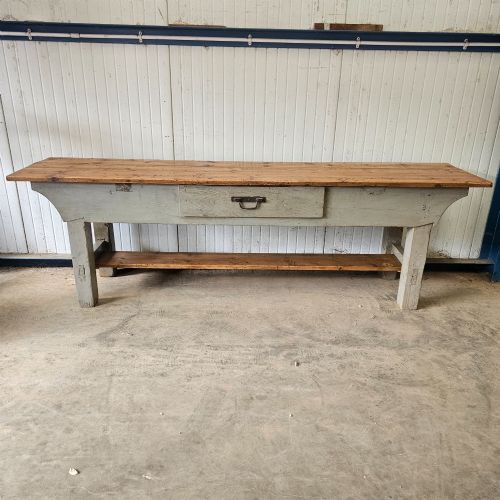
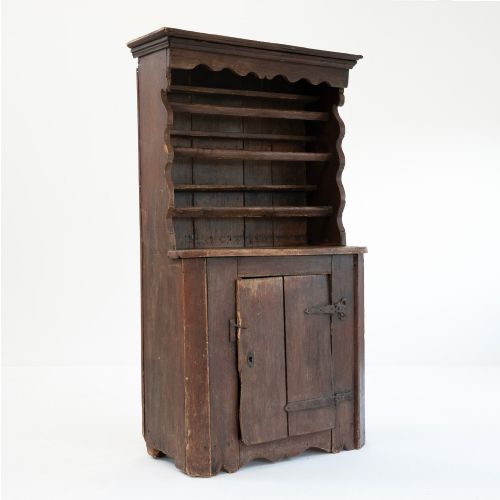
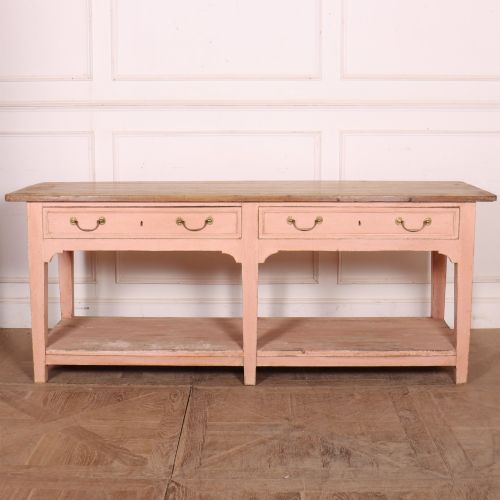
On this page, you are most likely to meet wall display shelves finished in historic paint colours, alongside broader categories of painted kitchen furniture such as dresser bases, potboard dressers, and worktables that incorporate integrated shelving. The periods represented span the eighteenth and nineteenth centuries, including items from around nineteen hundred.
The regional origins vary widely across the selection, featuring English, Scottish, Irish, and French examples. Styles lean heavily toward the rustic and traditional, encompassing English country, French provincial, and industrial aesthetics.
How they were made
Makers relied primarily on solid pine and oak for the structural carcass and shelving, selecting woods that could withstand the heavy demands of a working kitchen. Iron, wrought iron, and steel hardware such as brackets and hooks were frequently integrated for added strength.
Surfaces were traditionally finished with multiple coats of paint, now often showing a desirable patinated texture and flaking that reveals the layers beneath. Joinery techniques were straightforward and robust, designed to support heavy ceramics and provisions without sagging.
Painted Kitchen Shelf Retail Price Guide 2026
Typical asking prices for painted kitchen shelf among the pieces listed under this phrase on Sellingantiques today, from the lower quarter to the upper quarter. They describe what is for sale here now, not the wider market.
Many nineteenth-century work shelves still carry faint, stubborn rings left behind by centuries-old earthenware milk crocks and cider jugs.
What varies in quality
The distinction between ordinary utility and superior quality rests in the integrity of the original timber and the survival of an authentic painted surface. Pieces that retain their early or original paint layers without excessive modern intervention command greater attention.
Proportion and scale also dictate the character of the piece, with well-balanced dimensions and harmonious proportions setting finer examples apart from purely utilitarian workshop furniture.
Dubois of Lyon
The Painted Kitchen Shelf Glossary
- Potboard dresser
- A traditional storage unit featuring an open lower shelf, known as a potboard, traditionally used for storing heavy pots and pans. This form is common in farmhouse kitchens.
- Dresser base
- The lower section of a kitchen dresser, usually comprising drawers and cupboards topped by a solid surface, often paired with open shelving above. These pieces formed the central work station of the historic kitchen.
- Vaisselier
- A traditional French term for a plate rack or dresser designed for the display and storage of tableware. These items often feature open shelves combined with enclosed lower storage.
- Patina
- The surface sheen and texture developed through decades of use, cleaning, and ageing. A natural patina indicates genuine age and handling.
- Drapers table
- A long, sturdy table originally utilised in textile shops for folding cloth, frequently adapted for kitchen prep use due to its generous proportions and lower shelf storage.
Painted Kitchen Shelf: Frequently Asked Questions
How were painted kitchen shelves used historically?
These shelves served as everyday storage for frequently used crockery, spices, and provisions in busy domestic kitchens. They kept essential items within arm reach while enduring daily wear in damp and smoky environments.
Over time, as kitchen layouts evolved, many of these fixtures moved from utilitarian workspaces into dining rooms and pantries for decorative display.
How do I clean a painted shelf without damaging the finish?
Dust the surface gently with a dry, soft cloth to remove loose particles without disturbing delicate paint layers. Avoid harsh modern chemical cleaners and abrasive scrubbing pads, which can strip historic pigment.
If cleaning is necessary, use a lightly dampened cloth with mild soap, drying the wood immediately afterwards to prevent moisture damage.
How can I tell a nineteenth-century shelf from a newer reproduction?
Examine the timber closely for hand-tool marks, peg construction, and the natural oxidation that occurs over centuries of exposure to light and air. Older pine displays a distinct dry grain and surface irregularity that modern machinery cannot replicate.
The paint layers on older pieces should show natural craquelure and wear consistent with age rather than artificial distressing.
How do I mount a heavy wooden shelf safely?
Locate solid wall studs or masonry support points to bear the substantial weight of solid pine or oak timber. Utilise sturdy period-appropriate brackets or internal fixings that match the structural demands of the piece.
Distribute the weight evenly across the shelving once mounted to prevent undue stress on the ancient joints.