



Painted Glass Shade Lamp
A painted glass shade lamp brings glowing colour and pattern to a room, casting soft illumination through decorated glass.
Painted Glass Shade Lamp
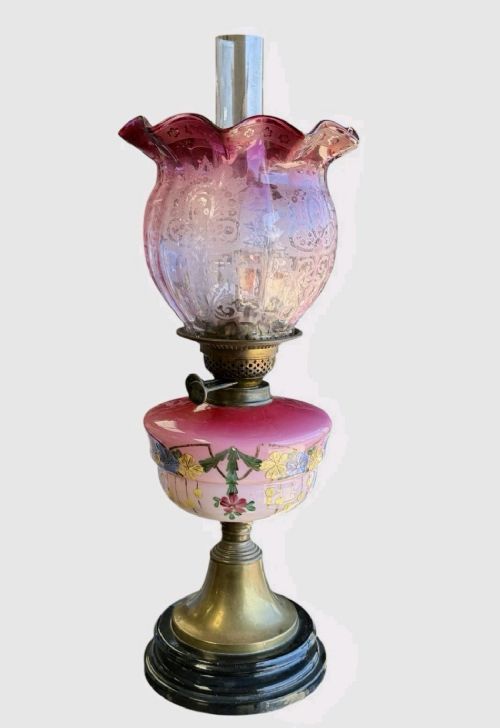
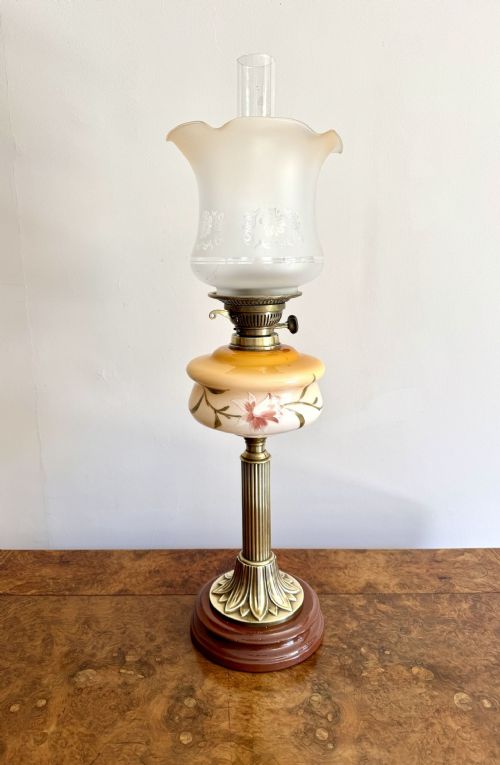
A painted glass shade lamp combines functional lighting with decorative artistry, originating predominantly from the nineteenth and early twentieth centuries. When you search for a painted glass shade lamp, you encounter pieces spanning Victorian, Edwardian, Art Nouveau, and Art Deco periods.
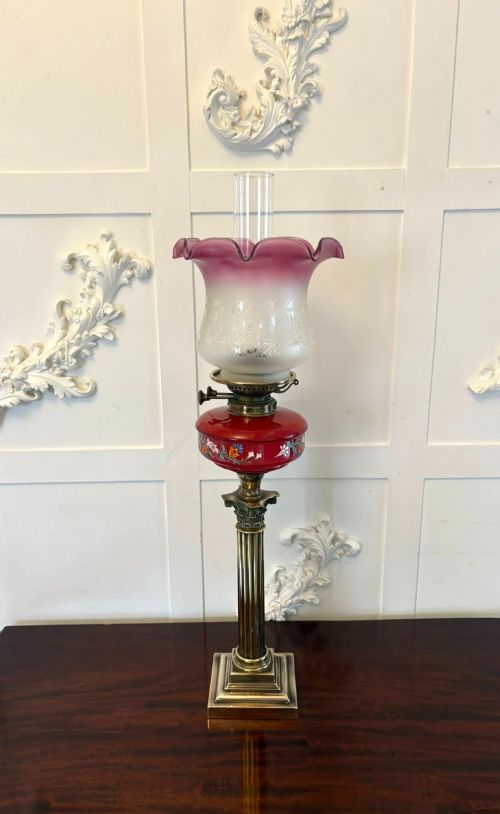
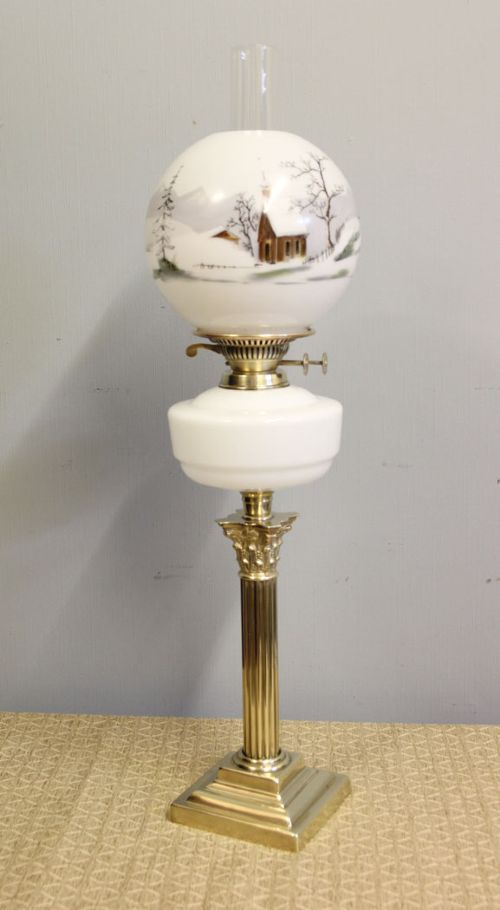
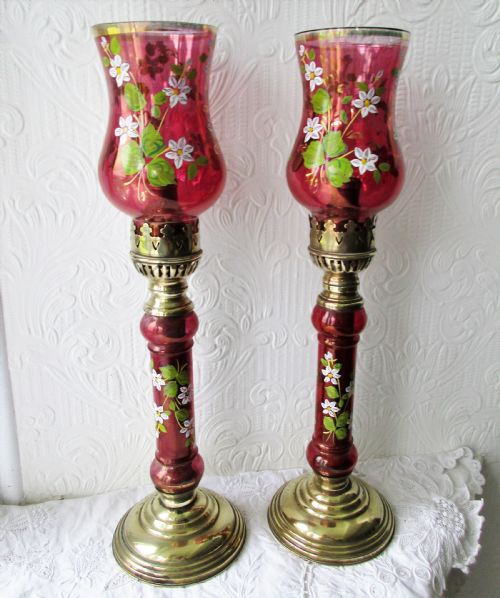
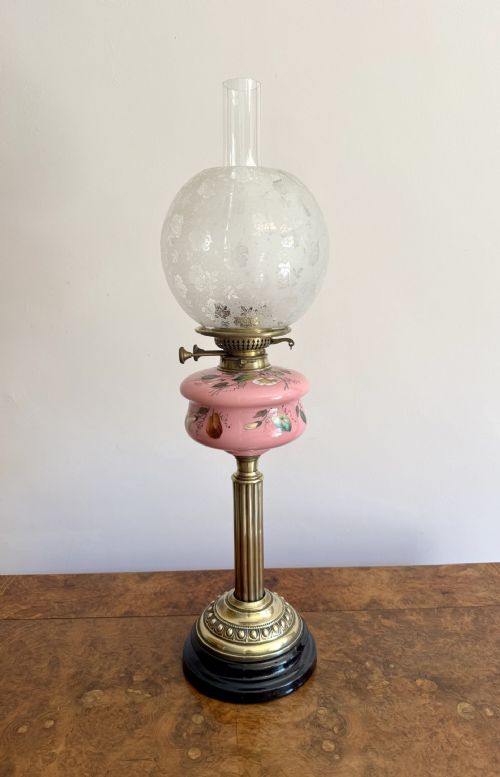
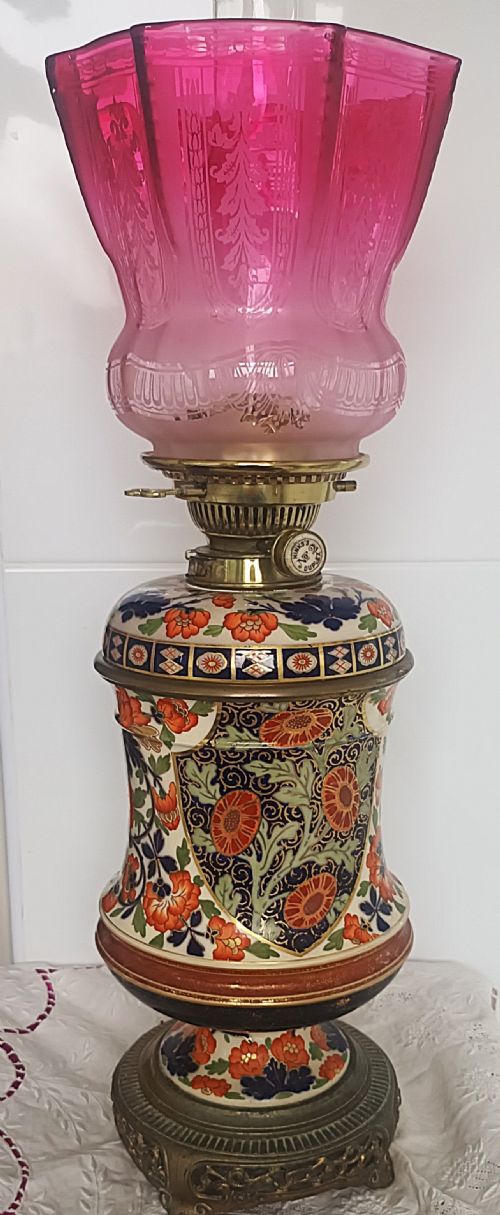
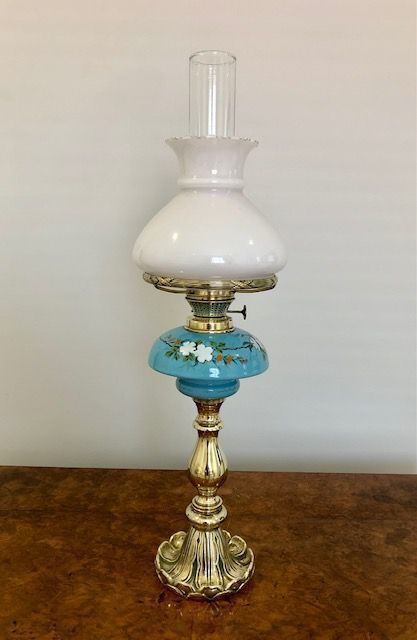
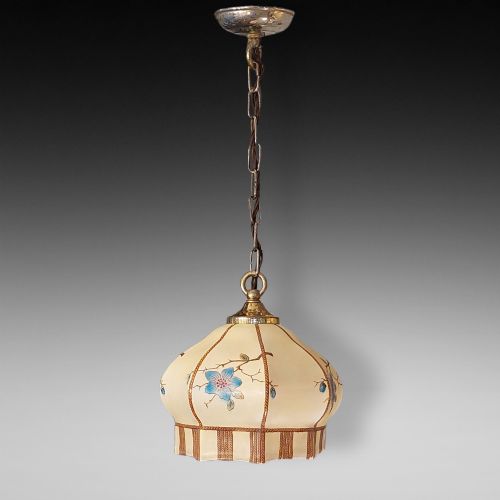
The most common form on this page is the oil lamp, often featuring a brass or ceramic base paired with an opaline, cranberry, or frosted glass shade. These pieces survive in various configurations, including table lights, hanging shades, and candle-lamps.
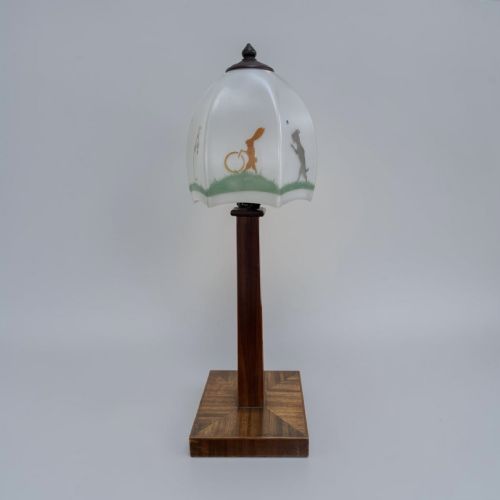
Examples range from restrained nineteenth-century designs with hand-painted fonts to geometric Art Deco ceiling lights and plafonniers. Each piece reflects the interior lighting technology and decorative tastes of its specific decade.
How they were made
Makers utilised brass and metal for structural columns and bases, frequently combining them with ceramic or porcelain bodies. Glass shades and fonts were blown or moulded, incorporating opaline, frosted, or cranberry glass.
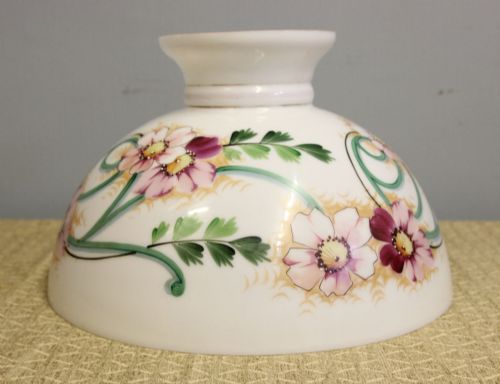
Decoration relied on hand-painted enamel and pigments applied directly to the glass surface, often fired to bond the colour. Metal components were cast, turned, and polished to create sturdy supports for the heavy glass reservoirs.
Painted Glass Shade Lamp Retail Price Guide 2026
Typical asking prices for painted glass shade lamp among the pieces listed under this phrase on Sellingantiques today, from the lower quarter to the upper quarter. They describe what is for sale here now, not the wider market.
Object types span table lamps, oil lamps, candle-lamps, and ceiling shades from the nineteenth century onward.
What varies in quality
Quality rests in the crispness of the brass casting, particularly on Corinthian columns and detailed mounts, alongside the weight and clarity of the glass. Superior pieces feature finely executed hand-painted details on the shades and fonts rather than simple printed motifs.
Proportion and material integration distinguish finer examples, where the brass, ceramic, and glass elements complement one another harmoniously. The depth of colour in cranberry and opaline glass also indicates superior material selection during manufacture.
Hinks·Taylor Tunnicliff
The Painted Glass Shade Lamp Glossary
- Font
- The oil reservoir of a lamp, usually positioned above the base and beneath the burner. It is frequently made of coloured or painted glass.
- Opaline glass
- A milky, translucent white glass often used for Victorian lamp shades and painted with floral or scenic designs.
- Cranberry glass
- A rich red-pink glass created by adding gold chloride to the molten batch, popular for nineteenth-century lighting.
- Duplex burner
- A double-wick mechanism found on Victorian oil lamps designed to produce a brighter flame.
- Plafonnier
- A ceiling-mounted bowl light or shade, common in Art Deco interiors.
Painted Glass Shade Lamp: Frequently Asked Questions
How do I date a lamp?
Examine the burner mechanisms, base materials, and stylistic motifs to determine the period of manufacture. Victorian pieces often feature heavy brass columns and floral painted fonts, while Art Deco items display geometric lines.
Comparing the construction methods of the brass work and the formulation of the glass helps narrow the decade. Patents stamped on burners also provide reliable manufacturing dates.
Were these lamps converted to electricity?
Many period oil lamps and candle-lamps undergo conversion to electricity for modern household use. This process typically involves running wiring through the original central column while retaining the historic shade and font.
Original oil lamp components such as burners and collars are frequently preserved during conversion. Buyers should inspect the wiring method to ensure it respects the physical integrity of the antique.
What is a duplex oil lamp?
A duplex oil lamp utilises a twin-wick burner system designed to provide stronger illumination than single-wick variants. These burners were standard on many quality nineteenth-century lighting pieces.
The mechanism allows the user to control two flames simultaneously through a pair of thumbwheels. This type of burner is frequently encountered on larger Victorian table lamps.
How should I clean painted glass shades?
Clean painted glass shades gently with lukewarm water and a mild detergent using a soft cloth. Avoid harsh scrubbing or abrasive cleaners that can damage the hand-painted enamel decoration.
Carefully dry the glass immediately after washing to prevent water spots. Painted surfaces require particular caution to preserve the original pigment.